Erich Zander Movies, TV Shows, and Filmography
Erich Zander
Art
Biography
No biography available.
Filmography Movies

Production

Ware für Katalonien
At the end of the 1950s, the production of optics in the German Democratic Republic has reached top quality and instigates interest in the West. When national demand rises strongly and at the same time the export to South America heavily decreases, the Volkspolizei - the GDR police force - starts to look into the case. Two seemingly unrelated cases are the starting point for the investigation by second lieutenant Schellenberg of the department for optics racketeering: An old woman who was arrested in the Berlin city railway for trying to smuggle a pair of binoculars to West Berlin, and a dead person in an area of allotments who was involved in obscure dealings with optical devices.
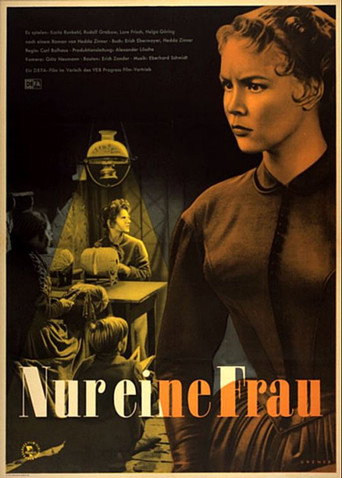
Only One Woman
The film tells the life story of Louise Otto Peters, who in the middle of the XIX century in Germany for the first time raised a voice of protest against the unfair treatment of women and their labor. She created the first "women's newspaper" in Germany. The daughter of a famous lawyer, Louise could have easily arranged her life by marrying the wealthy Baron Rodern. But she chose a different purpose in life - to fight for equal rights for women. Through her articles and public speeches, she won the authority and respect of ordinary people.

The Singing Ringing Tree
A brave prince must seek the fabled singing, ringing tree in order to win the heart of a beautiful princess.
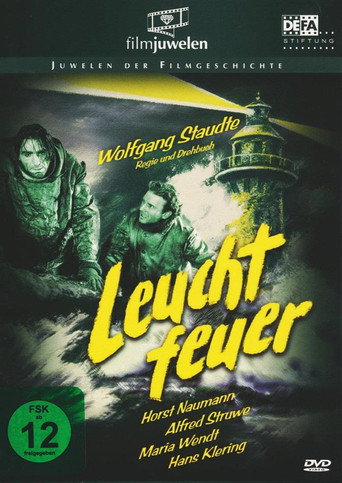
The Beacon
On a barren and stormy island, fishing families eke out a meager existence on what they can catch during summer, and what washes ashore during winter. But little has been washing ashore of late, and their situation worsens. Elders recall how twenty years ago, when the lighthouse keeper’s beacon went dark, a cargo ship broke apart on the cliffs. It proved a bountiful accident for the fishermen. Today people on the island view the conscientious lighthouse keepers with evil hungry eyes...

The Dreamy Mouth
The story begins at a concert during which Beethoven's Concerto in D major for violin and orchestra is performed. Romaine, a mysterious woman, is in the concert hall. Pierre, her husband, is first violin of the Orchester Colonne. That evening, she discovers Marcel, a brilliant concerto soloist, and falls in love with him. Pierre and Marcel are friends, which complicates the situation. Pierre invites his friend to the house, without suspecting what will happen. The young woman, trying to find a clever pretext for a one-on-one meeting, quickly reveals her feelings to Marcel.
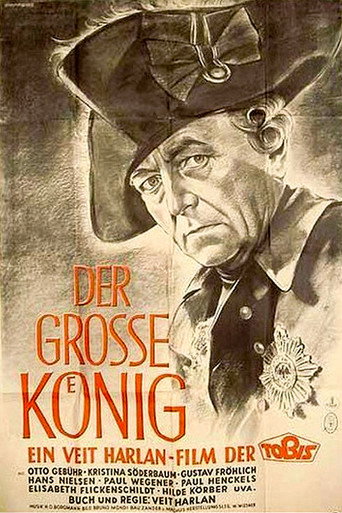
The Great King
King Frederick II (aka "Frederick the Great") of Prussia is engaged in a major battle against the Austrian army at Kunersdorf, and things aren't going well. The Austrians are inflicting major casualties, and his army is beginning to crumble. Defeat seems inevitable when a combination of events gives him hope that he may pull victory from the jaws of defeat after all.
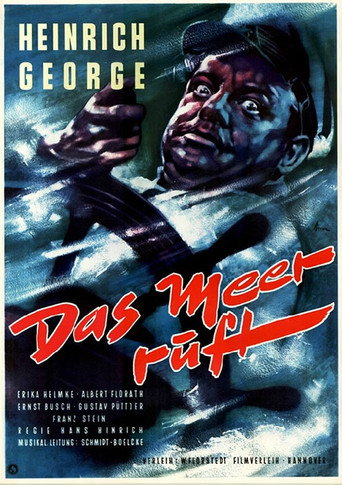
The Sea Calls
The Baltic captain Terje Wiggen works as a pilot on the island of Muhu. When the mate of the ship “Carola” calls in sick, he jumps at the chance of reviving his life as a sailor. WWI breaks soon after the departure. By and by the ship’s company gets worn down by dead calm. On account of the plague-ridden captain, Wiggen disposes of the contaminated water reserve. Discontent among the crew rises until they take the sole lifeboat and leave their mate behind. Wiggen unsuccessfully tries to bring the ship under control. At the last minute he is rescued off the Japanese coast. At his return he promises to never leave his wife and child again. But the German Imperial Navy begins to blockade the waterways of the island. Wiggen paddles to Sweden with the intention of smuggling provisions for his family. On his way back he is detained by a German captain. After five years of imprisonment he returns to Muhu once more. Wiggen is hellbent on vengeance. (Deutsche Kinemathek)
Love Can Lie
Dr. Ivar Andersson, introduced by his colleague, Sigrid Mall, is the new German teacher for the underclassmen in a girl’s high school. As is to be expected, there’s soon a whole swarm of girls vying for his attention, but none as much as Kerstin Dahlberg, who lives with her Aunt Betty. Andersson is more than aware of the girl’s feelings for him and it pains his conscience to discover, he’s as hot for her as she is for him. He tells Sigrid about the situation, who strongly recommends separation, but Andersson rejects this as desertion.
Napoleon at St. Helena
Napoleon at Saint Helena (German: Napoleon auf Sankt Helena) is a 1929 German silent historical film directed by Lupu Pick and starring Werner Krauss, Hanna Ralph and Albert Bassermann. The film depicts the final years of Napoleon between 1815 and 1821 during his period of exile on the British Atlantic island of Saint Helena following his defeat at Waterloo.

Dreaming Lips
The young Gaby is happily married to the musician Peter but cannot ignore the impression that his friend Michael, a violin virtuoso, makes on her. Even when Peter falls seriously ill, she cannot forget her love for Michael. Torn between the two men, Gaby sees only one way out...