Elvira Popescu Movies, TV Shows, and Filmography
Elvira Popescu
Acting
Biography
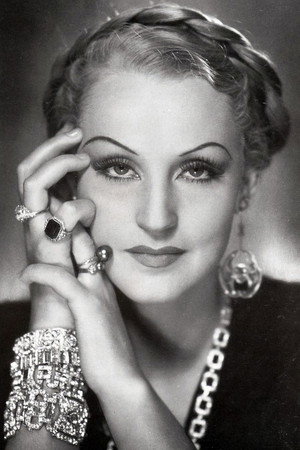
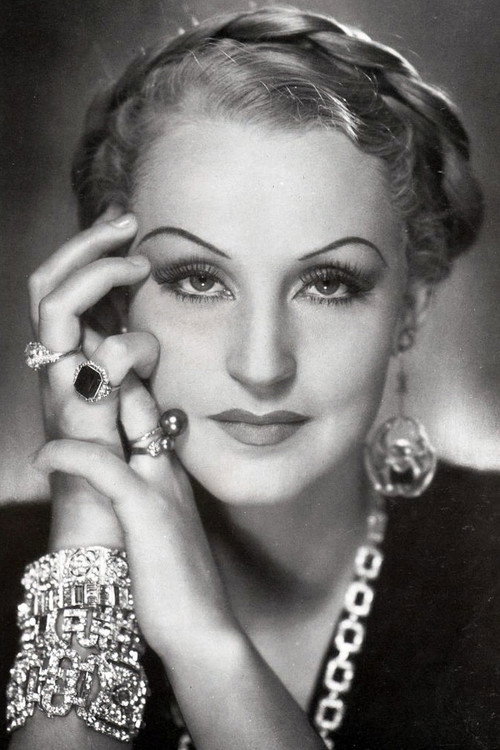
Elvira Popescu (10 May 1894 – 11 December 1993) was a Romanian-French stage and film actress and theatre director. During the 1930s and 1940s, she starred in a number of French comedy films. Born in Bucharest, Popescu studied drama at the Music and Drama Conservatory in her native city, under the guidance of Constantin Nottara and Aristizza Romanescu. In 1911 Grigore Brezeanu was making the first Romanian films to deal with fiction. He employed Popesco as well as other leading actors like Nottara and Romanescu. The first two films were called "Fatal Love" and "Spin a Yarn". No copies are known of these films. Popesco made her debut at the National Theatre Bucharest at age 16. In 1912, she played herself in the movie Independența României, directed by Aristide Demetriade. In 1919 she became artistic director of the Excelsior Theatre. In 1921, Popescu started Teatrul Mic, which she managed in parallel with the Excelsior. In 1923, she starred in the movie Ţigăncuşa de la iatac, directed by Alfred Halm. At the urging of Louis Verneuil, the French playwright, Popescu moved in 1924 to Paris. Under Verneuil's direction, she played the leading role in Ma Cousine de Varsovie, at the Théâtre Michel (1923). She also played in Tovaritch (1933), La Machine infernale (1954), Nina (1949), and La Mamma (1957). Later on, she was director of Théâtre de Paris (1956–1965), and Théâtre Marigny (1965–1978).[5] At age 84, she played again in La Mamma. Elvira Popescu also played in movies, such as La Présidente (Fernand Rivers, 1938), Tricoche et Cacolet (Pierre Colombier, 1938), Ils étaient neuf célibataires (Sacha Guitry, 1939), Paradis perdu (Abel Gance, 1940), Austerlitz (Abel Gance, 1960),[6] and Purple Noon (René Clément, 1960). Shortly after her debut in 1910, Popescu married comedian Aurel Athanasescu and they had a daughter named Tatiana. After a few years, she divorced, and married Ion Manolescu-Strunga, Minister of Industry and Commerce (who was to die in Sighet prison in the 1950s). Her third husband was Count Maximilien Sébastien Foy (born in Paris on 17 April 1900, died in Neuilly-sur-Seine on 11 November 1967). She died in Paris at age 99, and was interred at Père Lachaise Cemetery. Source: Article "Elvira Popescu" from Wikipedia in English, licensed under CC-BY-SA 3.0.
Filmography Movies
Acting
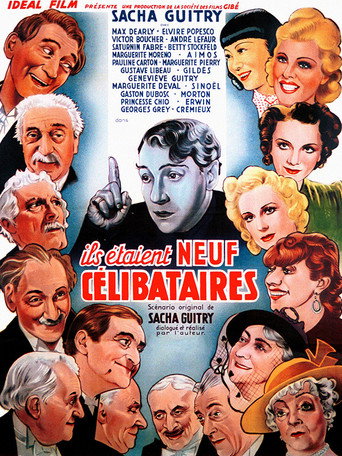
Nine Bachelors
Nine Bachelors is a 1939 French comedy film directed by Sacha Guitry and starring Guitry, Max Dearly and Elvire Popesco.[1] An opportunist dreams up a new scheme to make money when the French government passes a law forbidding foreigners from living in France. It's French title is Ils étaient neuf célibataires.
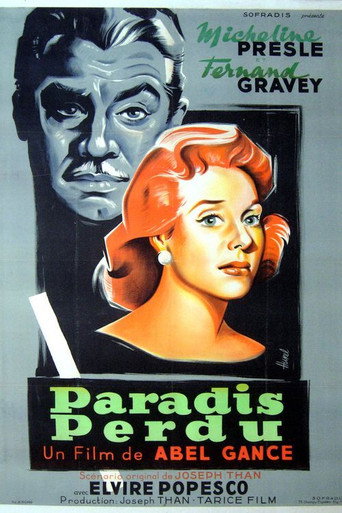
Four Flights to Love
In pre-World Ward I in Paris, a budding artist, Pierre LeBlanc, falls in love and marries Janine, a dressmaker's assistant. Pierre has a flair for designing clothes, and he and his bride live in a blissful paradise, until the war breaks out and he becomes a soldier. Janine dies in childbirth and, no longer desiring to live, Pierre volunteers for a dangerous patrol behind German lines. While recuperating in the hospital from a wound he received on the mission, Pierre spends his time drawing sketches of dresses. He becomes rich and famous after the war. Years later, after devoting himself to his daughter, Pierre seeks a marriage with a girl no older than his daughter. A conflict develops and to ensure his daughter's happiness, Pierre sacrifices his own plans.
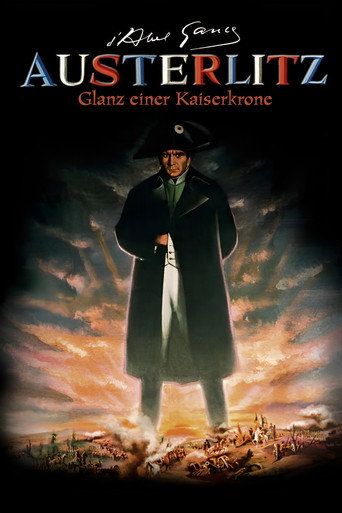
The Battle of Austerlitz
Napoleon Bonaparte crowns himself emperor and fights the English, Austrians and Russians in 1802.
Une femme chipée
Hélène, married to Larsonnier, has developed a crush for Germont, her neighbor. One night, she is abducted and she discovers that her kidnapper is none other than Germont. But, to her dismay, he does not act out of love for her : his only motivation is money, which he proves by asking her husband a five-Million-franc ransom. After a long hesitation, Larsonnier finally pays the sum and Hélène returns to him. As for Germont, chased by the police, he goes on the loose... Some time later, Hélène is kidnapped one more time, and again by Germont! But this time around, this the elopement of her dreams.
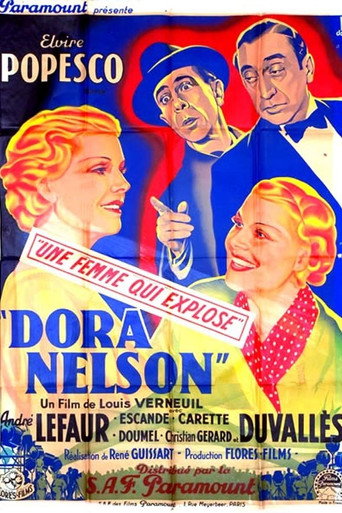
Dora Nelson
Dora Nelson, a famous actress, leaves both her husband Philippe de Moreuil and the role she was playing in a movie directed by Nivert, to follow her lover Santini in Italy. But she soon realizes that Santini deceives her with a girl named Elsa. In vexation she decides to return to her husband and to her career. Unfortunately for her, Suzanne Verdier, a little working girl, has in the meantime replaced her not only in the film she had left unfinished but in her husband's heart as well. Dora eventually understands she must step aside.
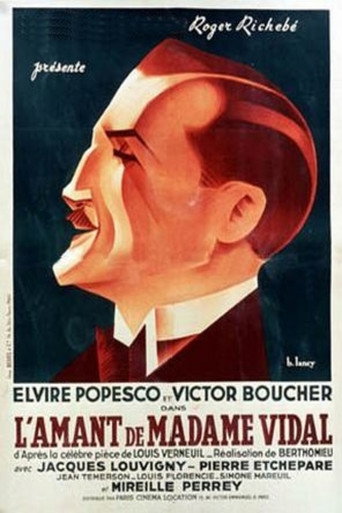
L'Amant de madame Vidal
Catherine Vidal is a featherbrained wife who imagines that her husband cheats on her. To wash away the alleged stigma, Catherine hires a young man who will pose as her lover. The (double) trouble is that not only is Catherine's husband innocent but that Catherine and her "employee" fall in love for good as well.
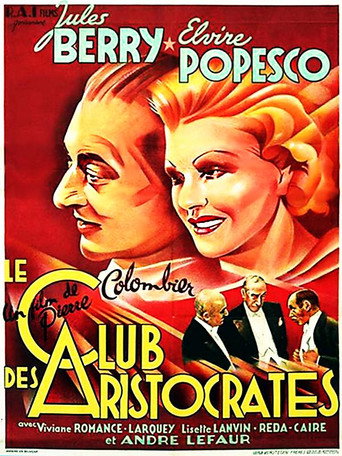
Le Club des Aristocrates
Serge loves living it up but painting the town red has a price... too high for him! What to do then? Alfred, his servant and former pickpocket, has the solution : steal of course! No sooner said than done ! Or rather: No sooner said than tried... For when Serge, assisted by his mistress Gloriane acting as bait, he tries to rob a jeweler on the Place Vendôme of a precious diamond bracelet, he realizes that a gang of thieves have preceded him. Later on, he will learn that the boss of the gang is a Polish noblewoman, Countess Waldapowska.
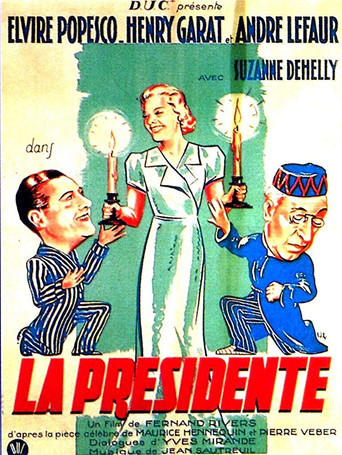
La Présidente
Vérotchka, a vivacious theater actress touring in a provincial town, is turned out of her hotel by orders of Monsieur Tricointe, the stern president of the local law court. In a rage, the actress knocks at Tricointe's door with a view to protesting against the treatment she is given. She goes about it so well that she ends up being accommodated by the president himself. This is the moment Jean-Pierre Gaudet, the Minister of Justice, chooses to pay an unannounced visit to his friend Tricointe. There he mistakes Vérotchka for Madame Tricointe and the president does not dare to contradict Gaudet. A lot of absurd situations ensue.
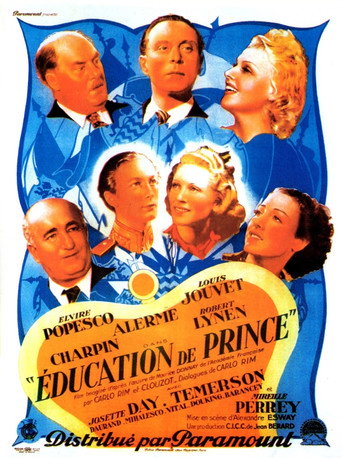
Bargekeepers Daughter
Prince Sacha studies in Paris and cares more for Marianne than about Silistrie, the country his family was exiled from. But Chautard, a French financier, who has business there (the country is rich in oil), wouldn't mind a little political stability. So why not restore the ancient royal family to the throne? But is Prince Sacha up to his role ? And will Marianne make a suitable princess?
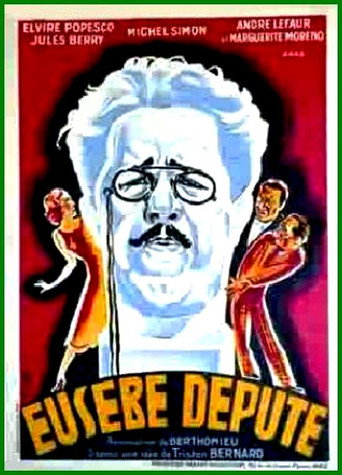
Deputy Eusèbe
Eusèbe Bonbonneau, a solicitor's clerk, learns one day that a candidate bearing his name runs for election as a member of parliament. In fact Frazier, a crooked businessman, has urged an accomplice to impersonate Eusèbe, in order to obtain, through this straw man, authorizations for the creation of a casino in Sanceau-les-Nains and to make big money out of it. Eusébe decides to go to Paris to investigate. In the capital he meets Mariska, an exuberant actress who encourages him to try to get elected. As a result, thanks to her the true Bonbonneau becomes a member of parliament and the crook's accomplice is arrested. But Frazier is not impressed and, changing tactics, he starts manipulating Eusèbe.
Gallery