Else Jarlbak Movies, TV Shows, and Filmography

Else Jarlbak
Acting
Biography
No biography available.
Filmography Movies
Acting

Rekrut 67 Petersen
It all happens over two days and—naturally—and in particular—two nights. A perfectly ordinary girl gets herself into a lot of trouble because of her slightly too big heart, which exposes her to trials and temptations she cannot overcome without the help of little white lies and pretence. She manages to overcome almost all obstacles, but loses her heart.
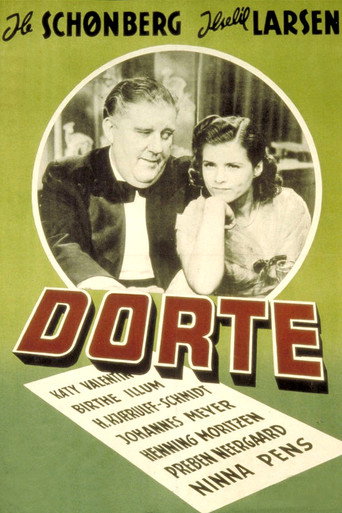
Dorte
A train pulls into Copenhagen Central Station, and 16-year-old Dorte gets off. She needs to find some people on a road somewhere near Svanemøllen. Here, in a beautiful villa, lives Asger Haensen, a director who runs a large company in Copenhagen. He lives with his two children, Margot and Steen. Asger Haensen lives a superficial and overly expensive life—among other things, he has an expensive girlfriend. In the evening, the doorbell rings at the director's house. Outside stands Dorte with a letter that must be delivered to him personally. The letter reveals that Dorte is the result of a small youthful mistake on the part of the director. So Dorte stays in the house. Dorte does not quite fit into the elegant home. But she is feisty—and brings life to the house!

Pas paa svinget i Solby
The priest in Solby borrows 2,000 kroons from the parish council treasury to pay for one of his parishioners' hospital stays in Germany. Marianne, the rich man's daughter, is to be a bridesmaid in Aalborg and is leaving Copenhagen for Jutland. In Solby, she drives too fast through the town, which is why she has a car accident and ends up in the priest's garden! She immediately starts to lead everyone around the rectory, which Aunt Marie is definitely not happy about. The priest, on the other hand, is attracted to the girl. They swim in the lake and go to a ball together, which leads to Mrs. Larsen coming in to talk to the bishop. After Marianne has returned to Copenhagen, the bishop announces his arrival at the rectory. Where will the priest now find the 2,000 kroons? The priest has a number of friends who are trying to help him, but he also receives unexpected help from the bishop.
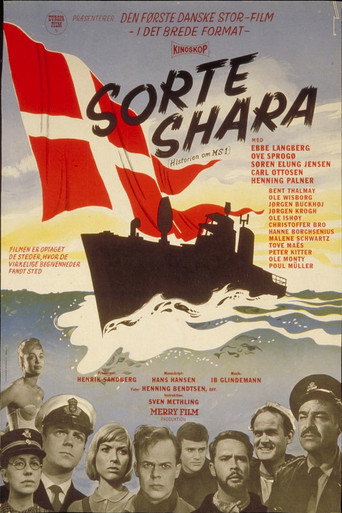
Sorte Shara
Based on a true story from the fateful day of August 29, 1943, when the Germans disarmed the Danish army and navy. The minesweeper MS 1 plays the leading role in the film about the ship that refused to surrender. The commander, Captain U.H. Gad, camouflaged the boat as a tugboat under the name 'Sorte Shara'. With Sweden as its destination, the boat set sail and experienced hours of excitement as it approached the German observation posts.

Incognito
The wealthy Olaf Brammer is the real owner of a nationwide company that trades in household goods. But he has no say, as the authoritative general manager Schram manages both the business and Olaf Brammer with a sure hand. The situation at work, defeat in love and a dead goldfish make Olaf Brammer depressed, and he decides to travel away from it all.

The Red Horses
The old renowned Landboskole is spreading a new team of Agricultural Candidates after completing the Course.

Frk. Kirkemus
The young Ms. Holm gets the job as private secretary to Director Berg and it quickly becomes clear that she is unusually active and enterprising. Ms. Kirkemus, as Berg has named her, brings life to the entire office and a business trip to Stockholm, where half the staff participates, becomes no less festive thanks to her. But Ms. Kirkemus has fallen in love with her director and it doesn't really suit her that Berg is meeting another girl in Stockholm and then the antics get even more intense...

Teatertosset
A lost hat brings a powerful director and an aspiring actress together.

Lynet
Peter Blom, called Lynet, escapes from prison, and at the same time the unemployed actor Poul Quist sees his portrait in the newspaper, in connection with a film company wanting to make a film about Lynet, and is looking for someone to play the lead role. Since the resemblance between Blom and Quist is striking, Quist approaches the film company and then the pranks start to take off, when Quist pretends to be Lynet. The film director thinks that he really is Lynet and sees a sensation by giving him the role.

Det hændte i København
The film could just as well have been called "Where there is room in the heart, there is also room in the house," because it is actually about an old, seasoned people person's solution to the housing problem. He solves it in his own – admittedly unusual – way, but he solves it! Had he been a little more discreet, his invention would never have been discovered – and he could have lived the rest of his life carefree. But this experienced judge of character – whom we call "the Professor" – had one major flaw: his overly big heart for the small and unfortunate members of society in general and the homeless in particular. It is this unfortunate heart that sets the film in motion and accelerates the events.
Gallery