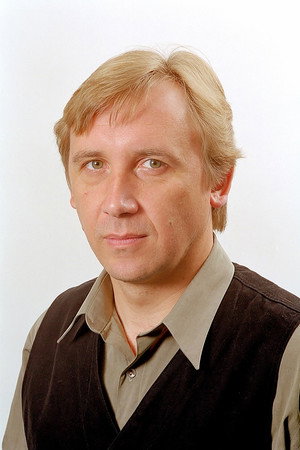
Elmo Nüganen Movies, TV Shows, and Filmography

Elmo Nüganen
Directing
Biography
Elmo Nüganen (born February 15, 1962 in Jõhvi) is an Estonian theatre director, film director, and actor. He has been the artistic director of the Tallinn City Theatre since 1992. He was a graduate of the Estonian Academy of Music and Theatre in 1988 and then a professor at the academy in 1998–2002 and 2008–2012. He directed the war films Names in Marble from 2002 and 1944 from 2015. Names in Marble was seen by more than 168,000 people in Estonia and was selected for the 2003 Taormina Film Fest, while 1944 had the highest opening-week audience numbers in Estonian film history and became the country's submission for the Academy Awards. Nüganen has received multiple awards for his work in theatre, including the Estonian Annual Theatre Award for Best Director in 1992, 1995, 2000, 2007, and 2010, and the Estonian National Cultural Award in 1996, 1999, and 2009.
Filmography Movies
Acting
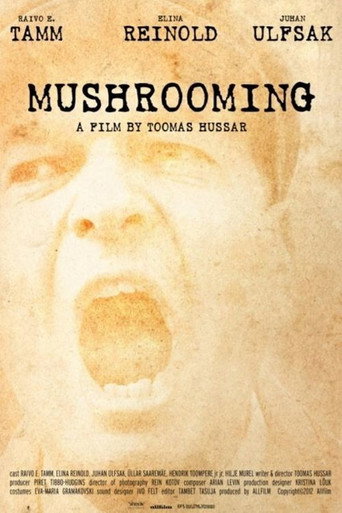
Mushrooming
Politician Aadu Kägu goes to the mushroom forest with his wife Viivi to rest his nerves from the reputation campaign. They are joined by a voter, penniless rock star Zäk. In order to avoid common mushroom forests, they drive to some countryside at random. Soon the trio discovers that they are lost, at the same time a media scandal breaks out - the investigative press suspects that Kägu has misused state money. The fight for honor, life and death begins, both in the forest and in the city.
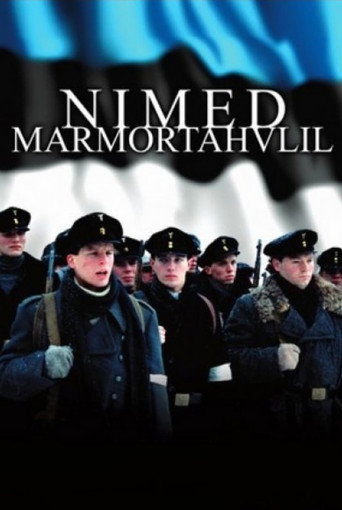
Names in Marble
Despite peaceful speeches, the army of the Soviet Russian is attacking Estonia, and the country's government is declaring a mobilization for all. Henn Ahas, the son of a poor family, hesitates to go to war.
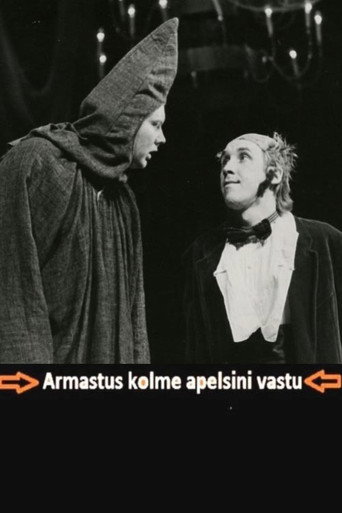
Love for Three Oranges
"Love for Three Oranges" is the first play by Carlo Gozzi (December 13, 1720 - April 4, 1806). He wrote it in 1761. The play is based on a parody of the fairy tale "Love Against Three Oranges". It was originally written as canovaccio (the explanation of the content on which commedia dell'arte actors improvise the text), but later Gozzi also added some dialogue instructions and critical explanations.
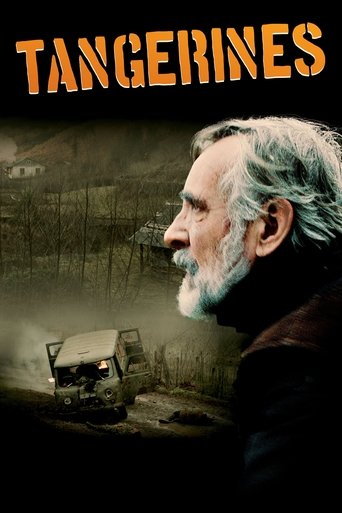
Tangerines
War in Abkhazia, 1992. An Estonian man Ivo has stayed behind to harvest his crops of tangerines. In a bloody conflict at his door, a wounded man is left behind, and Ivo is forced to take him in.
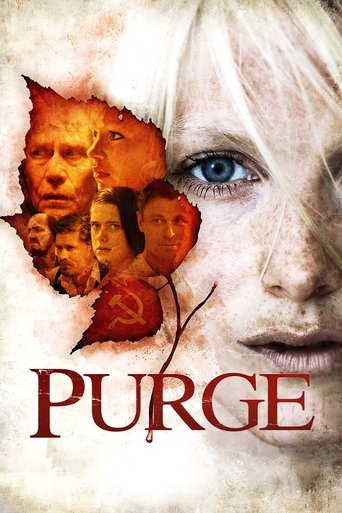
Purge
Aliide experienced The Great Terror under Stalin’s regime, and decades after her hometown people were deported to Siberia, she lives alone in an isolated house. One night, she finds a young woman in her yard – Zara has just escaped from the claws of the Russian mafia that held her as a sex slave. Survivors both, Aliide and Zara engage in unearthing each other’s motives and gradually their stories merge into one, revealing the tragedy of a family during the cruelest years in Estonian history.
August välja
A short film about an old actress Leida Rammo who tries to complete an unfinished theatre house project.
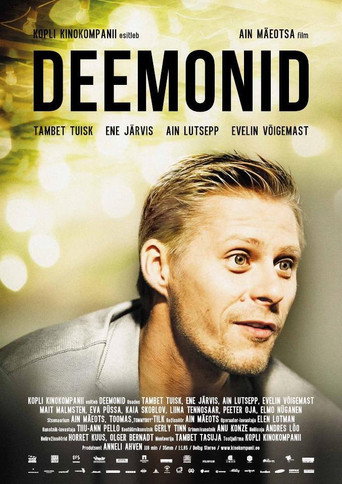
Demons
When Joko, Ants and Reeda, all in their own good reasons, first enter a casino, they can't possibly be aware of the very existence of the demons inside them. Soon enough, they will know. But then it is already too late and their lives are suddenly caught in a fatal vortex.
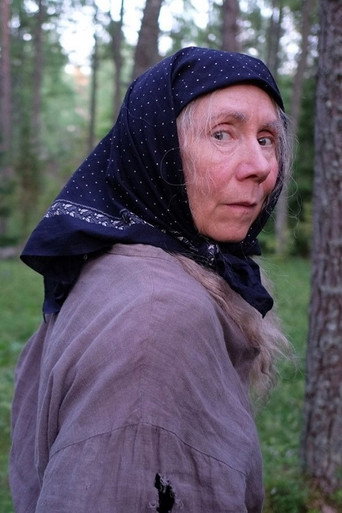
Conversation
The Old Woman lives in a deep Estonian forest, alone and isolated. Her parents came here to settle to raise and educate their children in the right way. They all died long ago. The Old Woman leads her farm, until one day her world almost collapses due to the intrusion of a lost stranger.
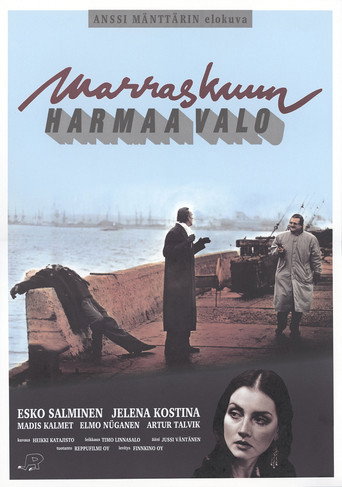
Marraskuun harmaa valo
Kari Syysmäki, a Finnish Businessman is on a vacation with his wife in Tallinn. When his wife is away a young man enters their hotel room with a gun. He tells to the businessman that he has just tried to rob a bank, but accidentally shot one of the clerks. Now he's hiding from the cops. But when the bank robber forgets his gun on the table, Syysmäki grabs it and shoots him in the back. After that Syysmäki refuses to travel back to Finland with his wife. He stays in Tallinn and soon he's about to face both the cops and the mob of Estonia.

Portugal
Karina and Martin are in a pleasent relation where everyday life flows in an effortlessly accustomed way and no small misbehaviours can shake it’s rush. Life is good. Perhaps it’s this perfection and frequent patterns that make them finally pose a question – is everything to be expected in life? This is a story about following the yearning of your soul. Longing for something other than the present and having the courage to be deliberately lost.
Production
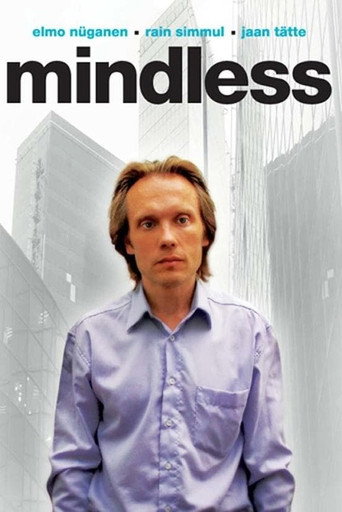
Mindless
A rich businessman moves to countryside to give his life a meaning.
Names in Marble
Despite peaceful speeches, the army of the Soviet Russian is attacking Estonia, and the country's government is declaring a mobilization for all. Henn Ahas, the son of a poor family, hesitates to go to war.
Mindless
A rich businessman moves to countryside to give his life a meaning.
Names in Marble
Despite peaceful speeches, the army of the Soviet Russian is attacking Estonia, and the country's government is declaring a mobilization for all. Henn Ahas, the son of a poor family, hesitates to go to war.

Melchior the Apothecary: The Ghost
In the middle of the night, a drunk town guard happens to meet the daughter of a rich merchant… who drowned herself into a well 10 years ago. Soon after the town guard falls dead from the tower. This is followed by two other suspicious deaths. Doubting the existence of the ghost, Melchior has a hunch that these ‘accidents’ are part of a heinous crime. Tracking down the killer, his path will cross with heretics, old feuds and dark family secrets.
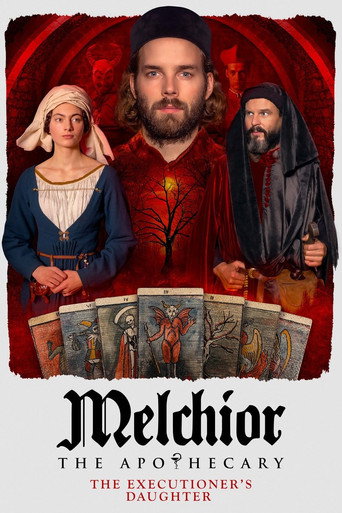
Melchior the Apothecary: The Executioner's Daughter
Melchior’s bride Keterlyn happens to witness an attack on a young man. The victim, who has lost his memory, does not know who he is and how he ended up in a Tallinn. A ring found at the scene leads Melchior to the trail of the nocturnal brotherhood, questions are also raised by the troupe of freaks who performed on fair day. Ominous signs suggest that not only is the stranger recovering from a murder attempt at risk, but Melchior and Keterlyn as well. At the same time, an inquisitor known as a ruthless witch hunter arrives in town. Melchior's ability to "speak to the dead" and to notice invisible traces of murder have raised the suspicion that he may be a dangerous heretic. And the place of the enemy of the church is at the stake…
Love for Three Oranges
"Love for Three Oranges" is the first play by Carlo Gozzi (December 13, 1720 - April 4, 1806). He wrote it in 1761. The play is based on a parody of the fairy tale "Love Against Three Oranges". It was originally written as canovaccio (the explanation of the content on which commedia dell'arte actors improvise the text), but later Gozzi also added some dialogue instructions and critical explanations.
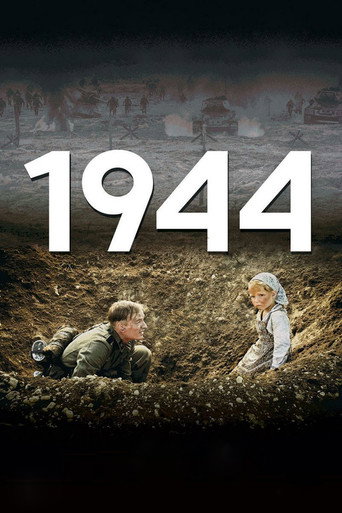
1944
The events of the war in 1944, from the Blue Hills to Sõrve Peninsula. Shown through the eyes of Estonian soldiers who had to pick sides and fight against fellow brothers. Choices have to be made, not only by the soldiers, but also by their loved ones.
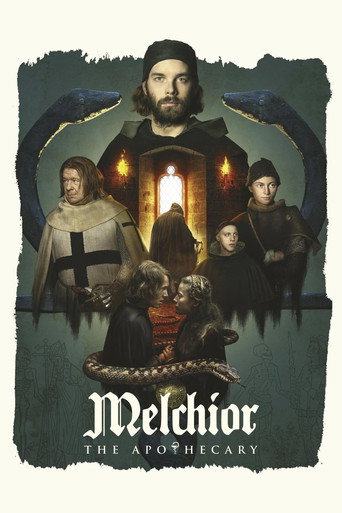
Melchior the Apothecary
In medieval Tallinn, a famous knight who is freed from the pirates of the Baltic Sea is murdered. The hero's head is cut off and his mouth is stuffed with coins. The gold chain he bought the same day is missing. The bailiff orders Melchior, an apothecary, to investigate the crime. The clever young man discovers that the slain was looking for a mysterious "Tallinn prisoner" and the traces lead to the Dominican monastery. A fabulous sequence of bloodwork is unleashed - anyone who comes into contact with this secret is in danger of dying.
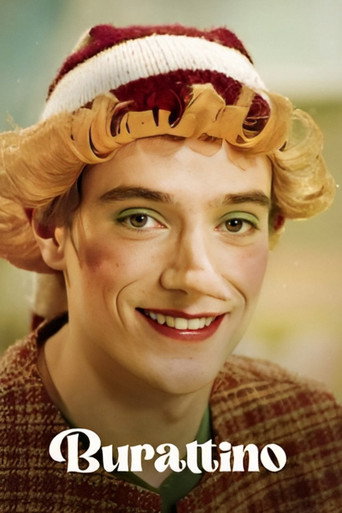
Burattino
Born from the fairytale of Alexei Tolstoy, a lively story about a curious tree boy Burattino who gets into an unexpected adventure.
Gallery