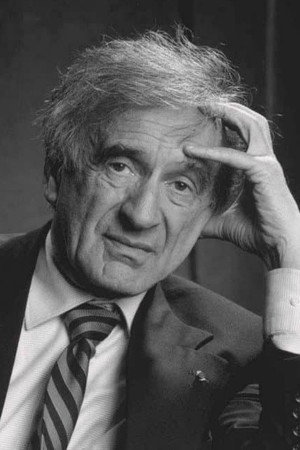
Elie Wiesel Movies, TV Shows, and Filmography
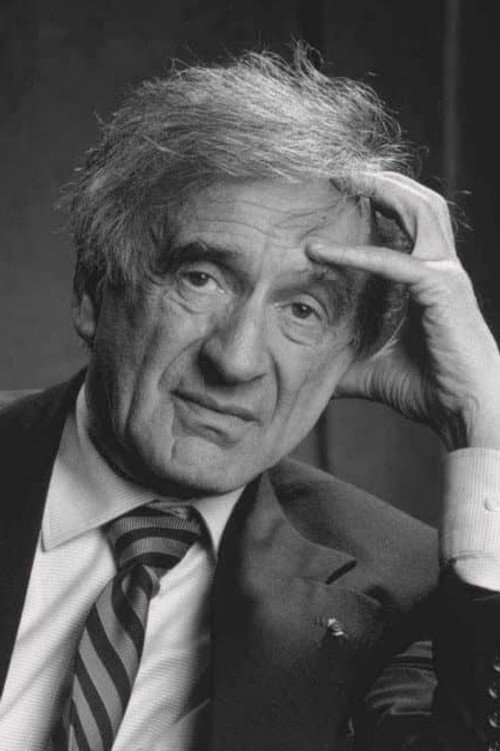
Elie Wiesel
Writing
Biography
Elie Wiesel (born Eliezer Wiesel, Yiddish: אליעזר װיזעל Eliezer Vizel; September 30, 1928 – July 2, 2016) was a Romanian-born American writer, professor, political activist, Nobel laureate, and Holocaust survivor. He authored 57 books, written mostly in French and English, including Night, a work based on his experiences as a Jewish prisoner in the Auschwitz and Buchenwald concentration camps. He was a professor of the humanities at Boston University, which created the Elie Wiesel Center for Jewish Studies in his honor. He was involved with Jewish causes and human rights causes and helped establish the United States Holocaust Memorial Museum in Washington, D.C. In his political activities, he also campaigned for victims of oppression in places like South Africa, Nicaragua, Kosovo, and Sudan. He publicly condemned the 1915 Armenian genocide and remained a strong defender of human rights during his lifetime. He was described as "the most important Jew in America" by the Los Angeles Times in 2003. Wiesel was awarded the Nobel Peace Prize in 1986. The Norwegian Nobel Committee called him a "messenger to mankind", stating that through his struggle to come to terms with "his own personal experience of total humiliation and of the utter contempt for humanity shown in Hitler's death camps", as well as his "practical work in the cause of peace", Wiesel delivered a message "of peace, atonement, and human dignity" to humanity. The Nobel Committee also stressed that Wiesel's commitment originated in the sufferings of the Jewish people but that he expanded it to embrace all repressed peoples and races. He was a founding board member of the New York Human Rights Foundation and remained active in it throughout his life. Elie Wiesel was born in Sighet (now Sighetu Marmației), Maramureș, in the Carpathian Mountains of Romania. His parents were Sarah Feig and Shlomo Wiesel. At home, Wiesel's family spoke Yiddish most of the time, but also German, Hungarian, and Romanian. Wiesel's mother, Sarah, was the daughter of Dodye Feig, a Vizhnitz Hasid and farmer from the nearby village of Bocskó. Dodye was active and trusted within the community. Wiesel's father, Shlomo, instilled a strong sense of humanism in his son, encouraging him to learn Hebrew and to read literature, whereas his mother encouraged him to study the Torah. Wiesel has said his father represented reason, while his mother Sarah promoted faith. Wiesel was instructed that his genealogy traced back to Rabbi Schlomo Yitzhaki (Rashi), and was a descendant of Rabbi Yeshayahu ben Abraham Horovitz ha-Levi. Wiesel had three siblings—older sisters Beatrice and Hilda, and younger sister Tzipora. Beatrice and Hilda survived the war, and were reunited with Wiesel at a French orphanage. They eventually emigrated to North America, with Beatrice moving to Montreal, Quebec, Canada. Tzipora, Shlomo, and Sarah did not survive the Holocaust. ... Source: Article "Elie Wiesel" from Wikipedia in English, licensed under CC-BY-SA 3.0.
Filmography Movies
Acting
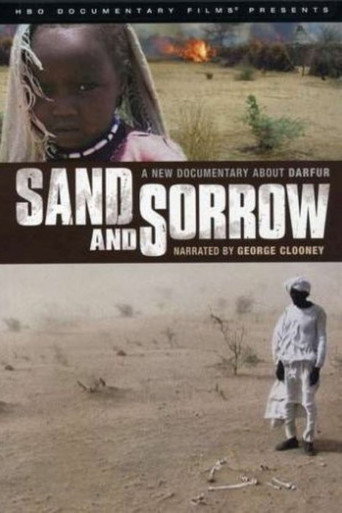
Sand and Sorrow
A documentary about the events that led to the rise of Darfur's Arab-dominated government and the international community's "legacy of failure" to respond to the genocide carried out in the country.
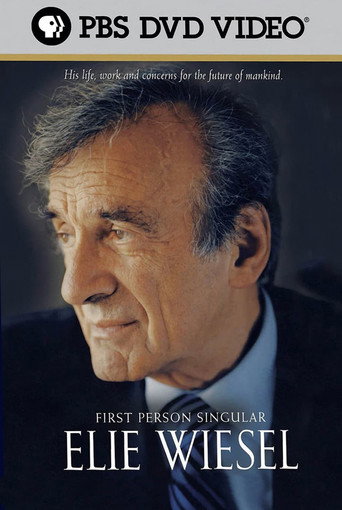
Elie Wiesel: First Person Singular
Visual biography of Nobel Prize-winning author, Holocaust survivor, and human rights activist Elie Wiesel.
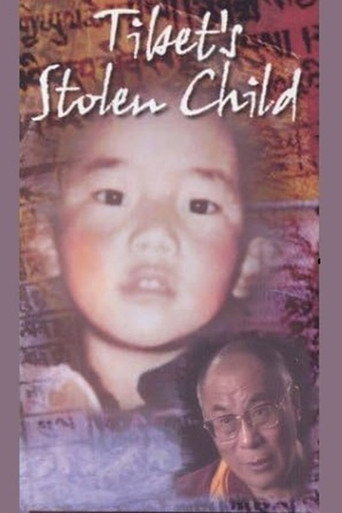
Tibet's Stolen Child
A film about the abduction of Tibet's second highest ranking Lama by the Chinese authorities.
Sighet, Sighet
Elie Wiesel, a survivor from Sighet, a town from which a thousand Jews were deported to the ovens of Auschwitz, returns, unknown and unseen, a silent witness to the town where he was born and grew up.
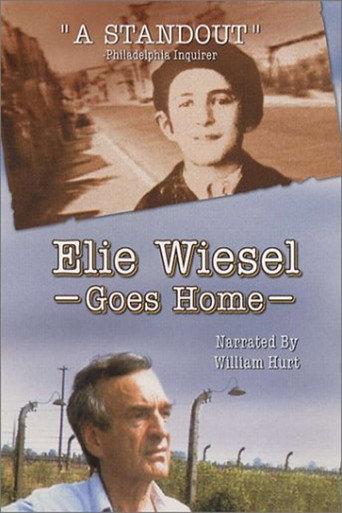
Elie Wiesel Goes Home
A documentary chronicling the adolescent years of Elie Wiesel and the history of his sufferings. Eliezer was fifteen when Fascism brutally altered his life forever. Fifty years later, he returns to Sighetu Marmatiei, the town where he was born, to walk the painful road of remembrance - but is it possible to speak of the unspeakable? Or does Auschwitz lie beyond the capacity of any human language - the place where words and stories run out?
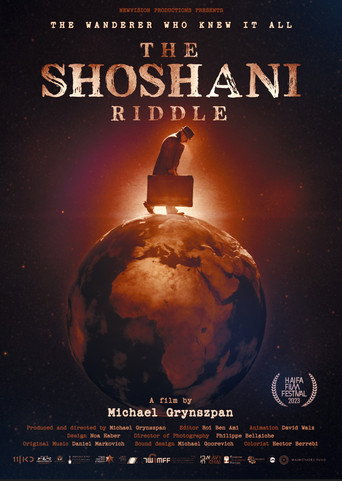
The Shoshani Riddle
No one knows his real name; he is only known as Mr. Shoshani. He was an eternal nomad, a mad genius, who attracted disciples such as Nobel Prize winner Eli Weisel and renowned philosopher Emmanuel Levinas. Mr. Shoshani is one of the unsolved riddles of the 20th century, he is among the 10 most mysterious people of all time.
A Special Presentation Oprah and Elie Wiesel at Auschwitz Death Camp
Oprah and Night author Elie Wiesel travel to the Auschwitz death camp in Poland. See the Holocaust through the eyes of a survivor.
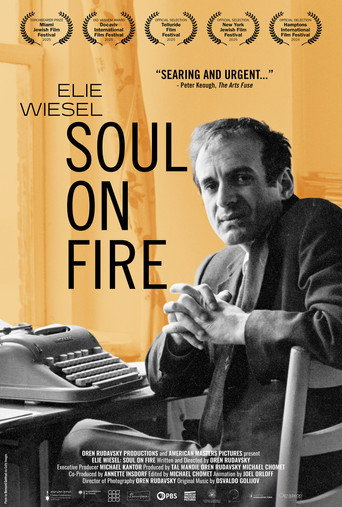
Elie Wiesel: Soul on Fire
"Sometimes I'm afraid the tale might be forgotten. Sometimes I'm afraid it is forgotten already." Told primarily through his own eloquent words, the film seeks to understand the man behind the searing and widely read memoir Night. Penetrating at the heart of the known and unknown, the film dives into the author’s legacy as one of the most influential survivors of the trauma of the Holocaust.
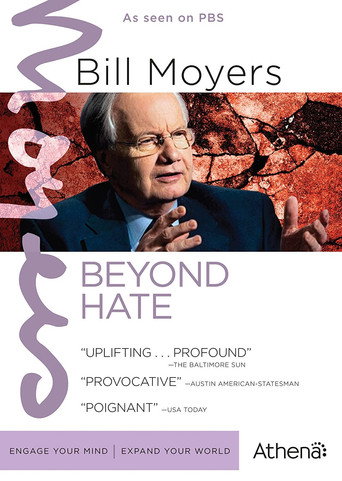
Bill Moyers: Beyond Hate
Hate has many faces: racism, anti-Semitism, homophobia, sectarianism, domestic violence. But do we really understand its roots, and are there practical ways to cope with it? What is hate doing to us? And what does hate do for us?
Production
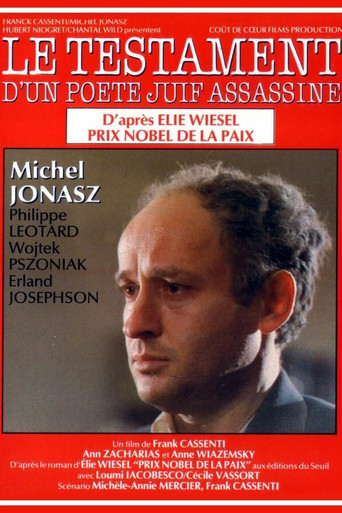
Le Testament d'un poète juif assassiné
This somber drama chronicles the writings of Paltiel Kossover (Michel Jonasz), a Rumanian Jew who was incarcerated in a Stalinist prison. Zupanev (Erland Josephson) is a sympathetic court registrar who smuggles the documents and later presents them to the poet's son Grisha (Vincent David).
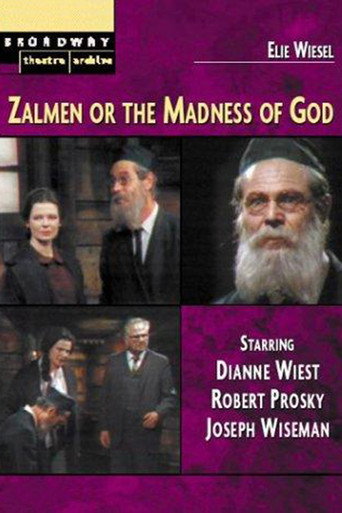
Zalmen, or The Madness of God
This play takes place during Yom Kippur in a post-Stalinist Russian synagogue, where a Rabbi waits for a Western acting troupe and gets extremely angry about the repression of Jews in the Soviet Union.
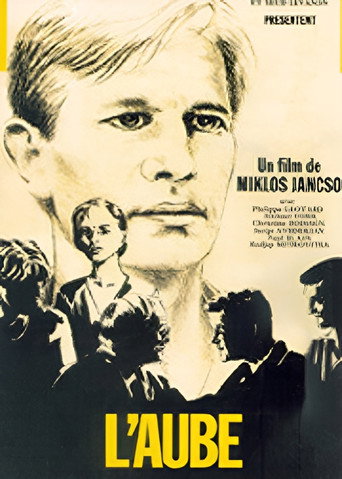
The Dawn
In a drama in which even Gad has a role as well as Michael York, it is certain that serious issues are at stake. Set during the time before the state of Israel was created and established, a British officer has been captured by a band of Jewish resistance fighters with the intent of killing him at dawn. One of the Jews was sentenced to die after being captured by the English, and this death will be in retaliation. The trouble is that a young and ambivalent fighter is left holding the officer captive with orders to shoot him at the pre-arranged time. It is a long night of soul-searching before the Jewish soldier comes up with a solution to his quandary.
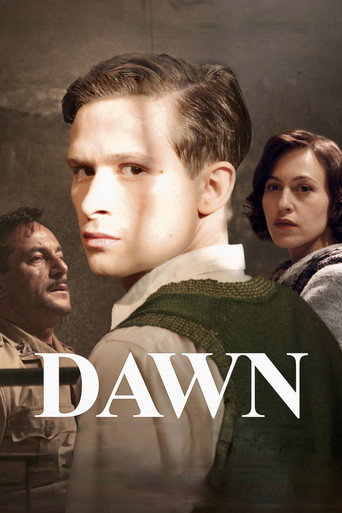
Dawn
The story is set in Palestine in 1947, during the British mandate period. The Zionists are fighting for the establishment of a Jewish state, and four comrades in arms pressure the young Elisha to overcome his moral qualms and fully commit to the armed struggle.
Elie Wiesel Goes Home
A documentary chronicling the adolescent years of Elie Wiesel and the history of his sufferings. Eliezer was fifteen when Fascism brutally altered his life forever. Fifty years later, he returns to Sighetu Marmatiei, the town where he was born, to walk the painful road of remembrance - but is it possible to speak of the unspeakable? Or does Auschwitz lie beyond the capacity of any human language - the place where words and stories run out?
Gallery