Eduardo Manet Movies, TV Shows, and Filmography
Eduardo Manet
Directing
Biography
No biography available.
Filmography Movies
Acting

In the Heat of the Cold Years
In Havana in the nineteen sixties, there were 140 movie theaters. Only a dozen remain today. For ten years, the cinema industry was a pillar of the Cuban Revolution, but the regime’s hardening and the economic recession precipitated its decline. Fifty years later, only a dozen movie theaters are still running in Havana, while a new generation of bold filmmakers struggles for the very existence of Cuban cinema. In the Heat of the Cold Years tells the story of Revolutionary Cuban cinema through the memories of a choral of elder filmmakers, such as Luciano Castillo, the director of the national film archives, as he scrambles for the preservation of this crumbling cultural legacy, and through a group of young Cuban filmmakers struggling to make their first feature film.

Short Memory
In this thriller, a UNESCO translator stumbles across a group which is hiding and supporting Nazis and facilitating their travel around the world. She had been given an assignment to study the work of a writer who recently had died, and the conspiracy is revealed in materials he left behind. She comes upon a young man who is going through the writer's papers, and she immediately assumes he must be one of the conspirators. However, he soon convinces her of his innocence in that regard, and the two together begin a search for the ringleader.
Production
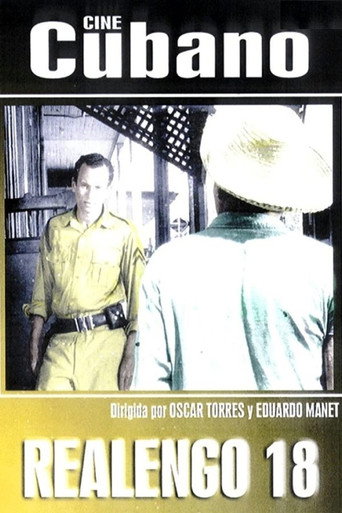
Realengo 18
A group of peasants of Realengo 18 must face the greed of an American company trying to evict them from their place. One of the peasants will have to deal with the conflict of seeing her son join the rural guard who represses them.
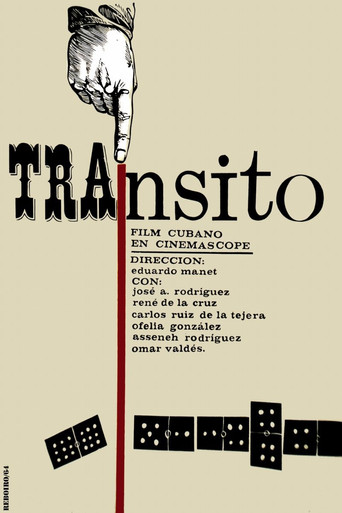
Transit
A doctor committed against the revolution decides to escape in a boat. A criminal friend introduced him to a modest revolutionary family to cover it up. During the events aspects of a society in transition are reflected.
Transit
A doctor committed against the revolution decides to escape in a boat. A criminal friend introduced him to a modest revolutionary family to cover it up. During the events aspects of a society in transition are reflected.
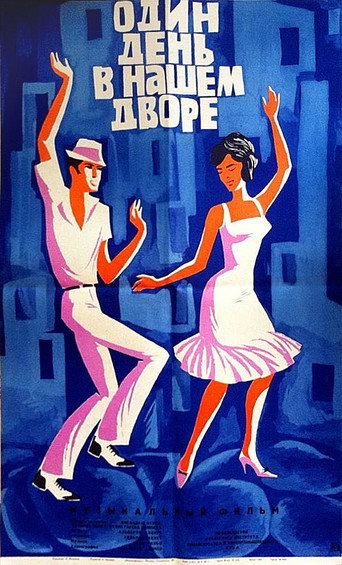
Un día en el solar
The daily life of the residents of one house, most of whose lives, in accordance with the customs of southern countries, take place in the courtyard, reflects the national character, the customs of the common people, their talent, and, most importantly, the new things that each new day brings to life in Cuba in the 1960s.
El negro
Condemns racial discrimination in Cuba from the colonial era until the Triumph of the Revolution.
Vroum-vroum
A family in a car that seems to be speeding through the night. We learn that the father, a pharmaceutical sales representative, has contaminated his entire family by testing hormone pills... changing men's voices to women's voices, and vice versa.
Un día en el solar
The daily life of the residents of one house, most of whose lives, in accordance with the customs of southern countries, take place in the courtyard, reflects the national character, the customs of the common people, their talent, and, most importantly, the new things that each new day brings to life in Cuba in the 1960s.
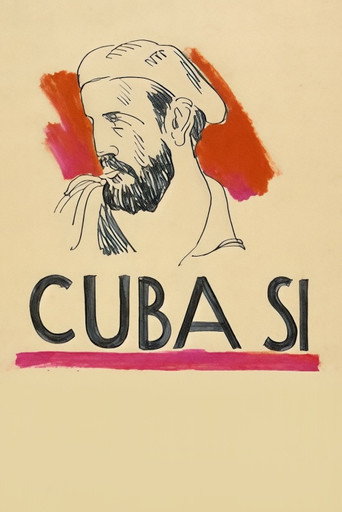
¡Cuba Sí!
Chris Marker’s documentary traces the course of the Cuban Revolution, from its early optimism to the aftermath of the Bay of Pigs invasion. Through on-the-ground footage and interviews—including two with Fidel Castro—the film captures the spirit and contradictions of a nation in transformation.
El huésped
One winter morning in 1963, a Civil Aviation captain arrives in Gibara. A taxi driver takes him to the guest house of Elena, a lady belonging to the old bourgeoisie of the place. At first, Elena and the other guests treat the newcomer coldly, but when they learn that he is a captain in the US Civil Aviation Authority (who has come to Cuba to exchange medicine for the invaders at Playa Girón), the situation changes. A dazzling romance begins between Elena and the captain, but the ending will be unexpected.
El huésped
One winter morning in 1963, a Civil Aviation captain arrives in Gibara. A taxi driver takes him to the guest house of Elena, a lady belonging to the old bourgeoisie of the place. At first, Elena and the other guests treat the newcomer coldly, but when they learn that he is a captain in the US Civil Aviation Authority (who has come to Cuba to exchange medicine for the invaders at Playa Girón), the situation changes. A dazzling romance begins between Elena and the captain, but the ending will be unexpected.