Edita Gruberova Movies, TV Shows, and Filmography
Edita Gruberova
Acting
Biography
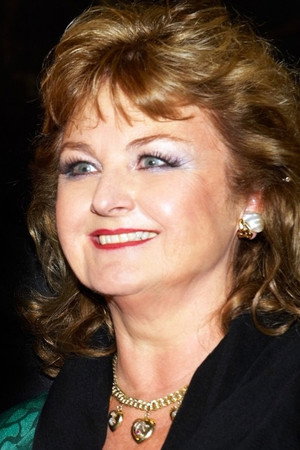
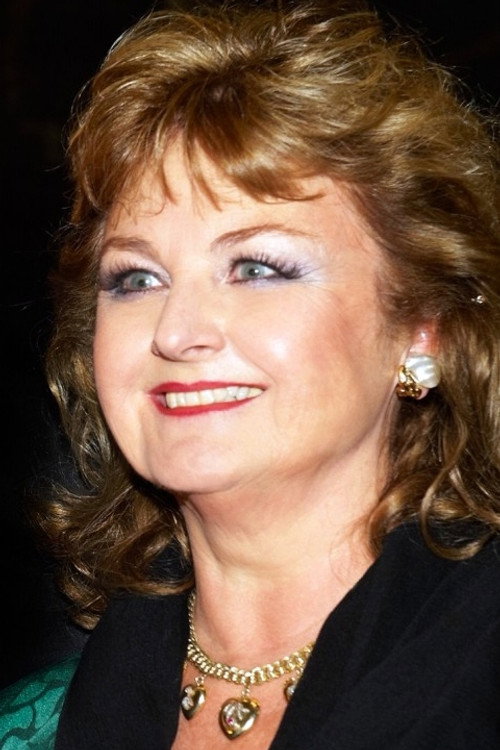
Edita Gruberová (23 December 1946 – 18 October 2021) was a Slovak coloratura soprano. She made her stage debut in Bratislava in 1968 as Rosina in Rossini's Il barbiere di Siviglia, and successfully auditioned at the Vienna State Opera the following year, which became her base. She received international recognition for roles such as Mozart's Queen of the Night in Die Zauberflöte and Zerbinetta in Ariadne auf Naxos by Richard Strauss. In her later career, she explored heavier roles in the Italian bel canto repertoire, such as the title role in Donizetti's Lucia di Lammermoor, and Elvira in Bellini's I puritani. In 2019, she portrayed Elisabetta in Donizetti's Roberto Devereux, who leaves her throne, concluding a stage career performing leading roles over 51 years. She is remembered as the "Slowakische Nachtigall" (Slovak Nightingale), and as prima donna assoluta. Edita Gruberová was born on 23 December 1946 in Rača, Bratislava, to a German father and a Hungarian mother. As an anti-communist, her father survived a five-year prison sentence for treason. Her father drank and she developed a close relationship with her mother. She sang in a school choir and in the children's choir of the broadcaster. The pastor of the parish where she prepared for Confirmation accompanied her when she sang solos at church, and prepared her in piano playing to pass the exam to enter the conservatory. Gruberová began her musical studies at the Bratislava Conservatory (Konzervatórium v Bratislave), where she was a student of Mária Medvecká. She then continued at the Academy of Performing Arts in Bratislava (VŠMU). While studying there, she was a singer of the Lúčnica folk ensemble and appeared several times in the Slovak National Theatre. She would later study with Ruthilde Boesch in Vienna. In 1968, Gruberová made her operatic debut at the National Theatre in Bratislava as Rosina in Rossini's Il barbiere di Siviglia. After winning a singing competition in Toulouse, she was then engaged as a soloist of the opera ensemble of the J. G. Tajovský Theatre in Banská Bystrica, Slovakia, from 1968 to 1970. Among her roles was Eliza Doolittle in Loewe's musical My Fair Lady. Since communist Czechoslovakia was going through normalisation, during which the borders to non-communist countries were closed, Medvecká surreptitiously arranged for an audition for Gruberová at the Vienna State Opera in the summer of 1969. She was immediately engaged, and made her breakthrough the following year when she appeared as the Queen of the Night in Mozart's Die Zauberflöte. In 1971, Gruberová decided to emigrate to the West. She became a member of the Vienna State Opera in 1972, where she was only given secondary and supporting roles in her early years. She was invited to perform at many of the most important opera houses in the world, especially in coloratura roles. Gruberová made her debut at Glyndebourne in 1973 as the Queen of the Night. She became an Austrian citizen in 1974. ... Source: Article "Edita Gruberová" from Wikipedia in English, licensed under CC-BY-SA 3.0.
Filmography Movies
Acting
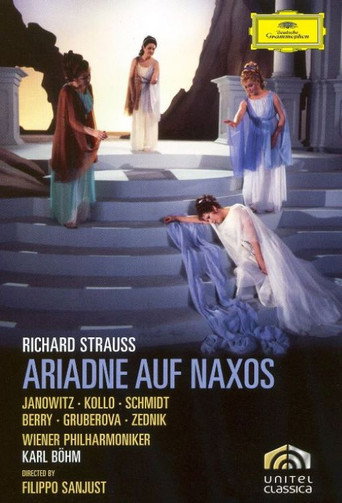
Strauss: Ariadne Auf Naxos
Opera in one act with prologue. Based on the production of the Vienna State Opera by Filippo Sanjust. Libretto by Hugo von Hofmannsthal
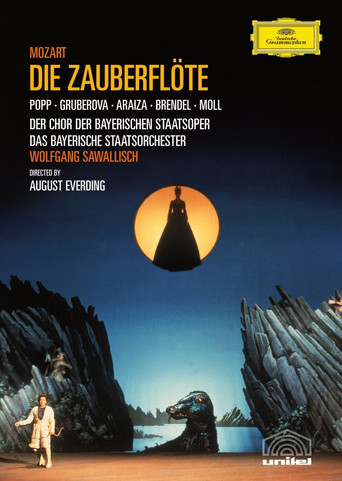
The Magic Flute
The Queen of the Night enlists a handsome prince named Tamino to rescue her beautiful kidnapped daughter, Princess Pamina. Aided by the lovelorn bird hunter Papageno and a magical flute that holds the power to change the hearts of men, young Tamino embarks on a quest for true love, leading to the evil Sarastro's temple where Pamina is held captive.
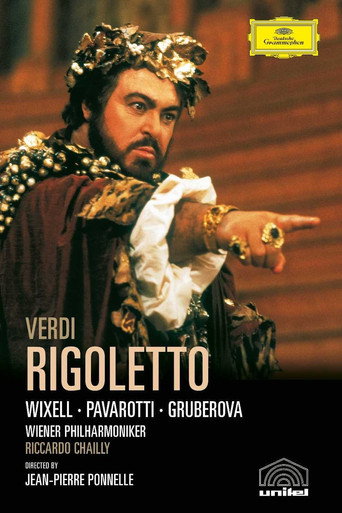
Verdi: Rigoletto
Rigoletto is a jester in the court of the Duke of Mantua. He has a hunch-back and he's rather unattractive, but he's good at his job of humiliating the courtiers for the amusement of the Duke. The courtiers, of course, are not amused. The Duke is a ladies man who feels his life would be meaningless if he couldn't chase every skirt he sees. In fact, we learn as the opera begins that he's recently been noticing a young lady every Sunday on her way to church, and he's vowed to have his way with her. What nobody realizes is that the girl is the jester's beloved daughter, Gilda, and that Gilda has seen the Duke every Sunday and is smitten with him. Suddenly Count Monterone appears at court, furious that the Duke has seduced his daughter. Rigoletto ridicules Monterone, the Duke laughs, and Monterone casts an awful curse on both of them. Later, the courtiers discover that Rigoletto is secretly living with Gilda...
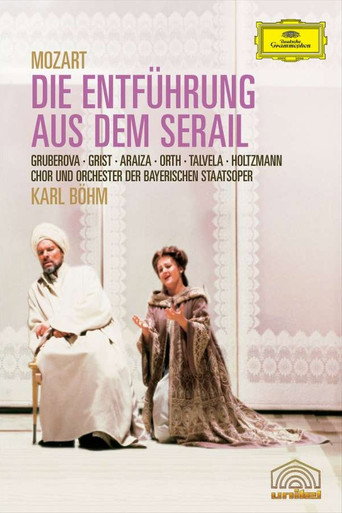
Die Entführung aus dem Serail
Production of Mozart's opera about the Spanish nobleman who seeks to rescue his beloved Konstanze from the hands of the Pasha. Karl Bohm conducts the Chorus and Orchestra of the Bayerischen Staatsoper with the right balance of serious purpose and light lilting lyricism. This production, staged by August Everding with set and costume design by Max Bignens, was filmed from a live television production relayed on the First Programme (Channel 1) of German television on 25 April 1980,
Don Giovanni
The 2004 Opus Arte DVD release of Wolfgang Amadeus Mozart's Don Giovanni (recorded at Teatro alla Scala in 1987) is highly regarded by English-language critics as a definitive "traditional" production, notable for its legendary collaboration between conductor Riccardo Muti and director Giorgio Strehler.
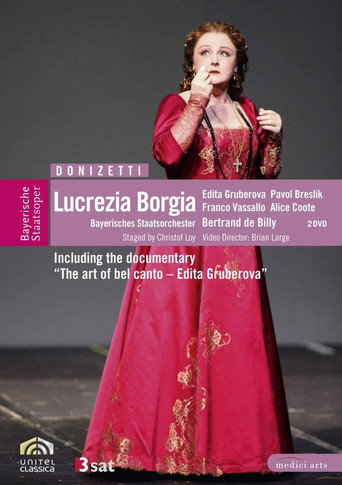
Lucrezia Borgia
Live from Munich 2009
Roberto Devereux
Live from Munich, 2005. London, 1601: love, lust and a death sentence at the English royal court - that's just the mix for great Italian opera. Roberto Devereux - an opera for a sovereign, a work for Edita Gruberová! The prima donna assoluta of bel canto triumphs in this drama. Either an opera house can acquire the services of "la Gruberová" - or they can forget putting on this opera.
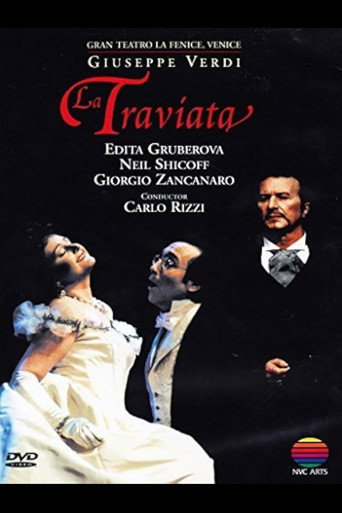
La Traviata
La Traviata was recorded at what was one of Venice's most exquisite 18th-century opera houses, La Fenice, tragically destroyed by fire in 1996, and now rebuilt. This glorious house is where La Traviata was premiered in 1853. In this memorable performance, Slovak soprano Edita Gruberova takes the leading role of Violetta, the tragic heroine, persuaded by Alfredo's father, Giorgio, to sacrifice her happiness with Alfredo for the sake of family honor.
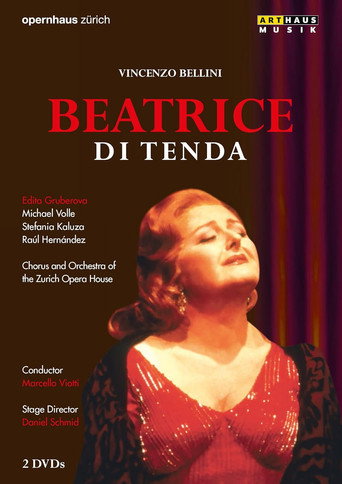
Beatrice di Tenda
Live performance from the Zurich Opera House, January 2002.
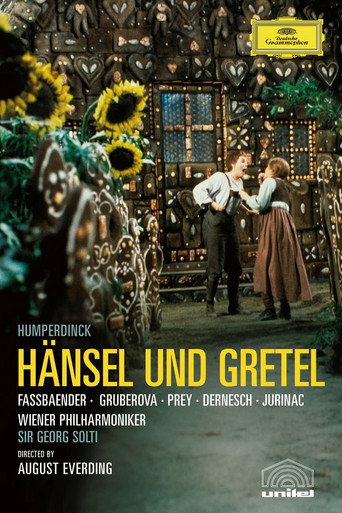
Hänsel und Gretel
Engelbert Humperdinck's beloved musical fairy tale HÄNSEL UND GRETEL is brought to life by Sir Georg Solti and an illustrious cast - all part of a shimmering production that continues to enchant audiences of all ages.
Gallery