Ed Bishop Movies, TV Shows, and Filmography
Ed Bishop
Acting
Biography
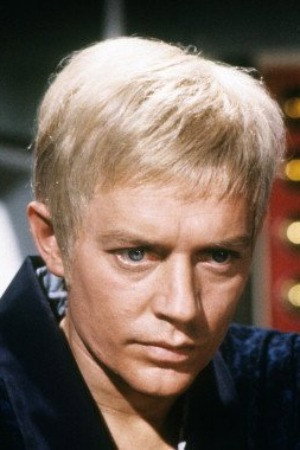
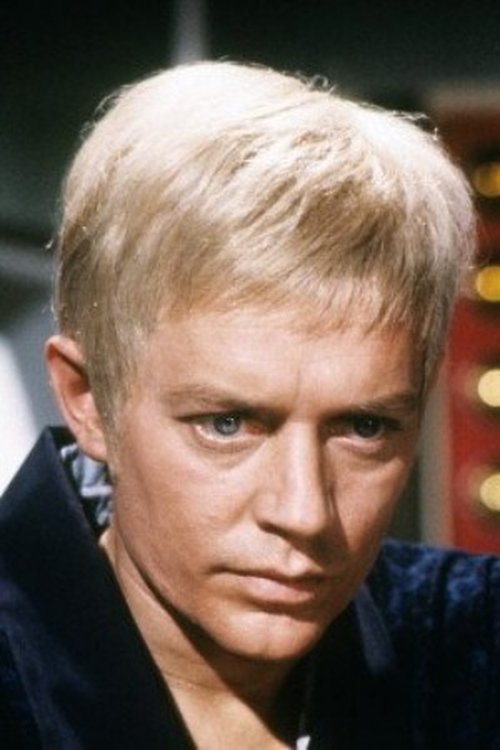
George Victor Bishop (11 June 1932 – 8 June 2005), known professionally as Ed Bishop or sometimes Edward Bishop, was an American actor. He was known for playing Commander Ed Straker in UFO, Captain Blue in Captain Scarlet and the Mysterons and for voicing Philip Marlowe in a series of BBC Radio adaptations of the Marlowe novels by Raymond Chandler. Bishop made his film acting debut as an ambulance driver in Stanley Kubrick's 1962 movie Lolita. He played an American astronaut going to the Moon in the film The Mouse on the Moon (1963) and also appeared in The Bedford Incident (1965) and Battle Beneath the Earth (1967). He had small speaking roles in the James Bond films You Only Live Twice (1967) and Diamonds Are Forever (1971), but was not included in the film credits for either. He appeared in a second Kubrick film, 2001: A Space Odyssey (1968), in which he played the Captain of the Aries 1B Moon shuttle. The role initially featured dialogue but this was later cut from his scenes. Bishop appeared in various film and television projects created by producer Gerry Anderson. He provided narration, in addition to the voice of Captain Blue, for Anderson's Supermarionation puppet series, Captain Scarlet and the Mysterons (1967), and appeared in Anderson's science-fiction film Doppelgänger (1969). Perhaps his most prominent screen role was that of Commander Ed Straker in Anderson's science-fiction series UFO (1970–71). Bishop's dark hair was initially dyed blond for the role, though he eventually wore a blond wig instead. In later years, he appeared in films such as Twilight's Last Gleaming, Saturn 3, Silver Dream Racer, and The Lords of Discipline. He provided vocal work for the 1974 animated TV series of Star Trek, and appeared as Lieutenant Colonel Harrity in the final episode of the British World War II prisoner-of-war drama Colditz. In the 1980s, he made several appearances on The Kenny Everett Television Show, Whoops Apocalypse (he also appeared in the subsequent film), and had a role in the children's television series Chocky's Children. He continued to act on film, TV and radio, usually in British and European productions, and was a frequent guest at science fiction conventions. He and fellow Anderson actor Shane Rimmer (a Canadian actor who often worked in the UK) joked about how frequently their professional paths crossed and termed themselves "Rent-a-yank". They appeared together as NASA operatives in the opening of You Only Live Twice and as United States Navy sailors in The Bedford Incident, as well as the 1983 film of the Harold Robbins novel The Lonely Lady. In 1989, Bishop was reunited with Rimmer and another Anderson actor, Matt Zimmerman, in the BBC Radio 4 adaptation of Sir Arthur Conan Doyle's A Study in Scarlet. He and Rimmer also toured together in theatre shows, including Death of a Salesman in the 1990s, and they both appeared in the BBC drama-documentary Hiroshima (2005), one of Bishop's last TV projects.
Filmography Movies
Acting
2001: A Space Odyssey
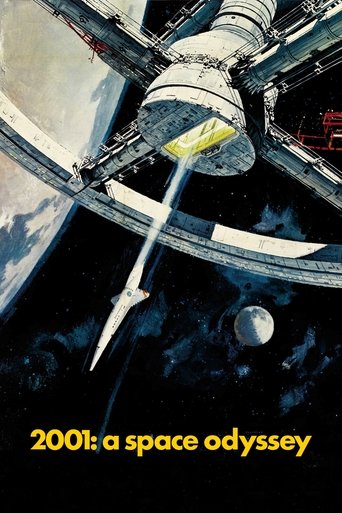
Humanity finds a mysterious object buried beneath the lunar surface and sets off to find its origins with the help of HAL 9000, the world's most advanced super computer.
Into Infinity
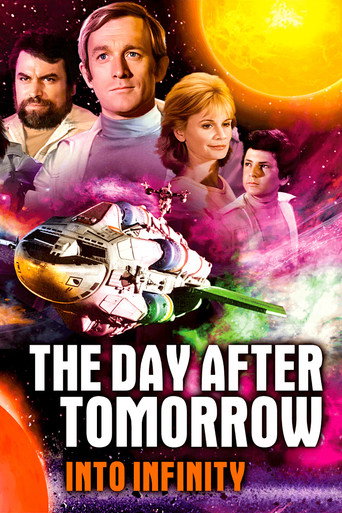
The spaceship Altares, with a photon drive capable of accelerating it to the speed of light, leaves an Earth-orbiting space station. The Altares crew, two families of scientific specialists, journey at light speed with time-dilation to Alpha Centauri, where they launch several satellites to transmit information on the Centauri star system back to Earth and guide future manned vessels in exploring. The Day after Tomorrow (also known as Into Infinity in the United Kingdom) is a 1975 British science-fiction television special produced by Gerry Anderson between the two seasons of Space: 1999. It stars Brian Blessed, Nick Tate, Joanna Dunham, Katherine Levy and Martin Lev. It aired in the United States on NBC as part of the network's Special Treat childrens series in December 1975, and in the UK on BBC1 in December 1976.
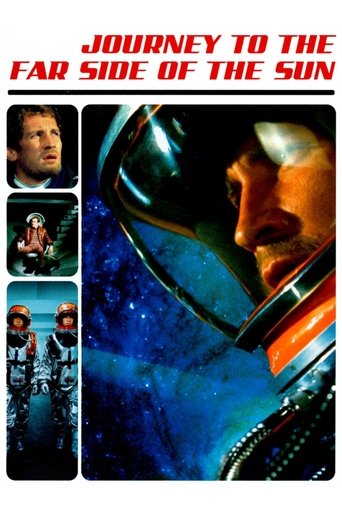
Doppelgänger
A planet is discovered in the same orbit as Earth's but is located on the exact opposite side of the sun, making it not visible from Earth. The European Space Exploration Council decide to send American astronaut Glenn Ross and British scientist John Kane via spaceship to explore the other planet.
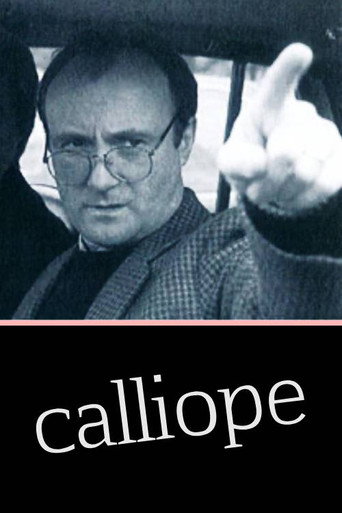
Calliope
A writer begins to discover that his femme fatale character has come to life in the real world.
The Candy Show
Geoffrey loves the Candy Show, it's the only colour in his monochrome world. But when the Candy-Pink's long-suffering lodger, Max Magenta, goes missing; he pays the price for being the show's number-one fan.

The Lonely Lady
A young screenwriter allows others to exploit her in the hopes of "making it" in Hollywood.
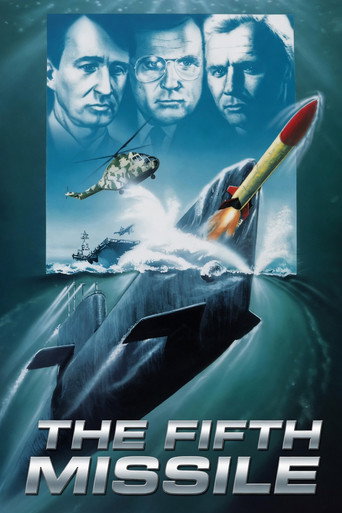
The Fifth Missile
The crew of a Polaris submarine, on a training mission simulating an attack on Russia, is stricken by toxic poisoning. One of the poison's effects is to make its victims hallucinate, and the sub's captain imagines that he has been given an order to actually attack Russia. He prepares to do exactly that.
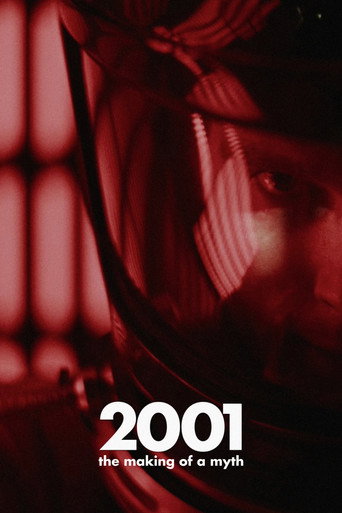
2001: The Making of a Myth
The making of Stanley Kubrick's classic space epic, presented by James Cameron, including unseen footage.

Pets
Naive, but brash and sultry teenage runaway Bonnie finds herself lost and adrift in America. The lovely young lass runs afoul of a colorful array of evil oddballs who all treat her like an object.
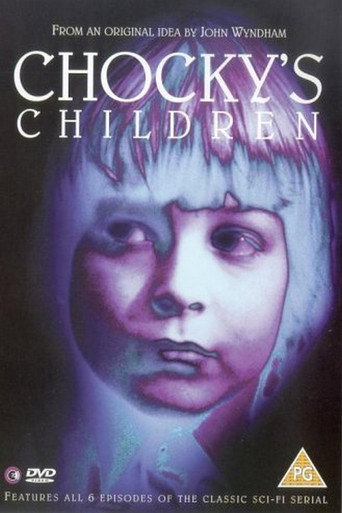
Chocky's Children
A year has passed since Matthew said goodbye to his alien friend, and in the summer holidays he meets Albertine, a mathematical prodigy, with whom he discovers he can communicate telepathically. One day Chocky returns to warn Matthew that they are both in danger. When he returns to tell Albertine, he finds she has disappeared.
Gallery