Acting
No biography available.
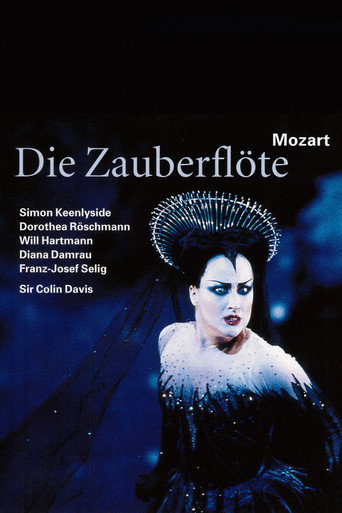
The Queen of the Night enlists a handsome prince named Tamino to rescue her beautiful kidnapped daughter, Princess Pamina. Aided by the lovelorn bird hunter Papageno and a magical flute that holds the power to change the hearts of men, young Tamino embarks on a quest for true love, leading to the evil Sarastro's temple where Pamina is held captive. The internationally renowned Mozart interpreter Sir Colin Davis conducts the chorus and orchestra of the Royal Opera House and a glittering cast in David McVicar's 2003 production of the opera Mozart wrote in the final year of his life, recorded live at Covent Garden.
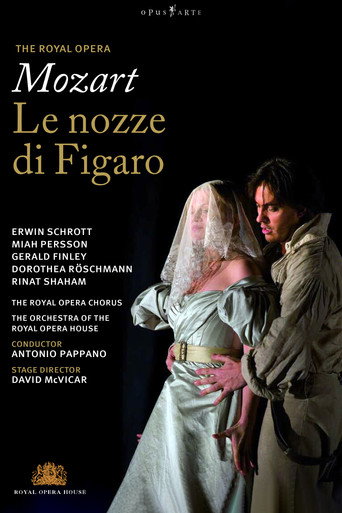
David McVicar's spellbinding production of LE NOZZE DI FIGARO is set in 1830s post-revolution France, where the inexorable unravelling of an old order has produced acute feelings of loss. In the relationship between Finley's suave, dashingly self-absorbed Count and Röschmann's passionately dignified Countess, which lies at the tragic heart of the opera, the sexy ease between a feisty Figaro (Erwin Schrott) and a sassy Susanna (Miah Persson) is starkly absent, the tenacious spark between Marcellina (Graciela Araya) and Bartolo (Jonathan Veira) suggesting what might be rekindled. The production is superbly complemented by the beauty of Paule Constable's lighting and Tanya McCallin's evocative sets. Antonio Pappano conducts (and accompanies the recitatives) with invigorating wit and emotional depth.
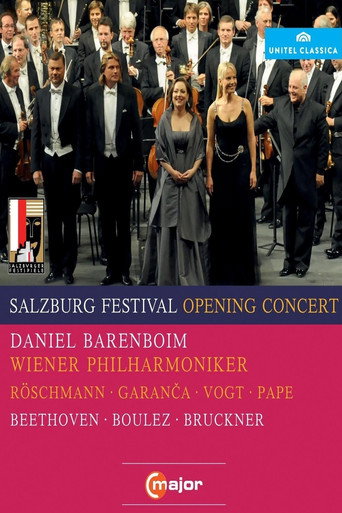
This recording features the opening concert of the Salzburg Festival in 2010, in which the Festival celebrated its 90th anniversary and the 50th anniversary of the Great Festival Hall. Daniel Barenboim conducts the Vienna Philharmonic and Chorus State Opera Vienna with Dorothea Roeschmann, Franz Josef Selig, and Rene Pape in works by Beethoven, Boulez, and Bruckner.
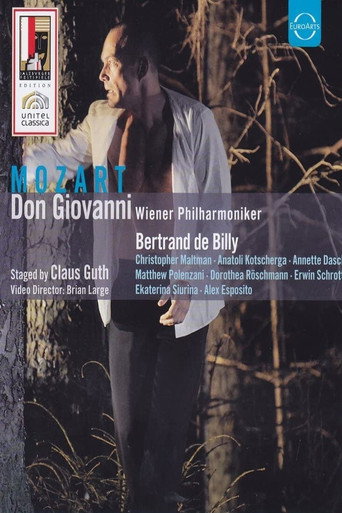
A striking interpretation of Mozart's opera that became a sensation at the 2008 Salzburg Festival. This is not only a rethinking of the place and time of the opera, but also a deep disclosure of the characters' characters, their ambiguous inner world. A simple, at first glance, plot is turned by the creators of the play into a dynamic psychological thriller.
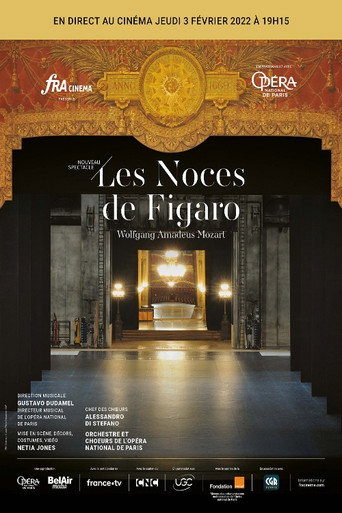
The Marriage of Figaro is one of the most emblematic operas in the repertoire. Brahms spoke of it as a “miracle” and the Countess' complaint still resonates today as one of the most heartbreaking musical pages. It was by resuming Beaumarchais' comedy, which caused a scandal in Parisian society, that Mozart and his librettist Da Ponte began their first collaboration. The play was banned by Joseph II in 1785 at the Vienna Theater. Is it because it exposed too much to the forefront the contradictions of an already faltering regime, ready to collapse with the French Revolution? Netia Jones preserves the very essence of Beaumarchais' play by questioning human relationships with humor but not without mischief, in a production which confuses reality and fiction to the point of asking, like the Count: "Are we playing a comedy?" »
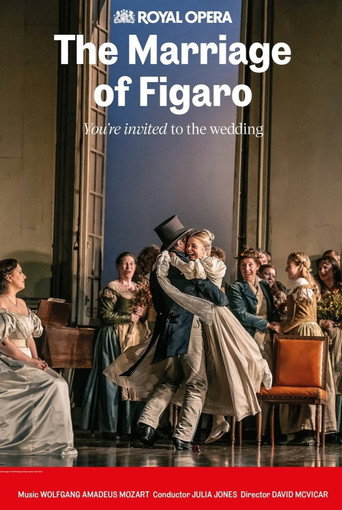
Servants Figaro and Susanna are filled with excitement on their wedding day, but there’s a hitch: their employer, the Count Almaviva, has dishonourable intentions of his own towards the bride-to-be. With more twists than a page boy’s stockings, the story of Mozart’s comic opera will surprise and delight you at every turn. Come for the music and stay for the cross-dressing hilarity, all unfolding over the course of one crazy, topsy-turvy day in the Almaviva household. Antonio Pappano conducts a truly international cast in David McVicar’s timeless production.
Live from Munich 2004
Dorothea Roeschmann, Katharina Kammerloher, Hanno Mueller-Brachmann, Werner Guera, Daniela Bruera, and Roman Trekel star in this 2002 Deutsche Staatsoper production of the Mozart opera conducted by Daniel Barenboim.
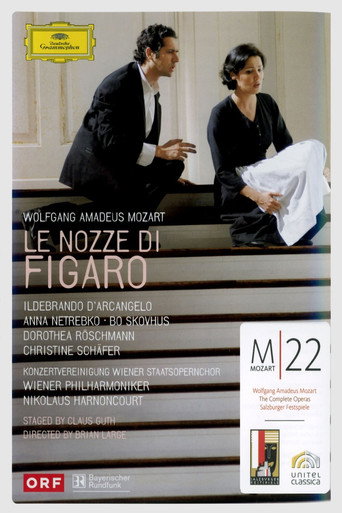
This release contains the celebrated 2006 production of Mozart's Nozze di Figaro that was directed for the stage by Claus Guth at that year's Salzburg Festival. Ildebrando D'Arcangelo takes the title role, and gets support from Anna Netrebko as Sussanna, Bo Skovhus as Il Conte Di Almaviva, and Dorothea Roschmann as La Contessa. Nikolaus Harnoncourt conducts the orchestra.
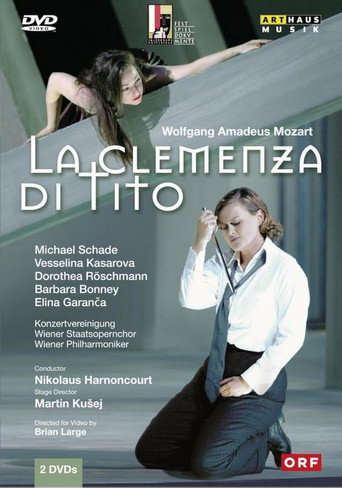
The 1791 La Clemenza di Tito (or 'The Clemency of Titus') marked Wolfgang Amadeus Mozart's final opera seria. With a libretto by Metastasio (edited slightly by Caterino Mazzolà), the work dramatizes the palace intrigues surrounding emperor Titus's attempts to coronate a new bride and the envious Vitellia's attempts to have Titus assassinated (with the help of Titus's friend Sextus) following the deposition of Vitellia's emperor father. Stage director Martin Kušej mounted Tito in August 2003, at the Felsenreitschule in Salzburg; a film of that live performance now appears in this home video release. The cast includes Michael Schade as Titus, Vesselina Kasarova as Sextus and Dorothea Roschmann as Vitellia. The Wiener Staatsopernchor, under the baton of Nikolaus Harnoncourt, provides musical accompaniment; Jens Kilian designed the sets.