Dominique Gonzalez-Foerster Movies, TV Shows, and Filmography
Dominique Gonzalez-Foerster
Directing
Biography
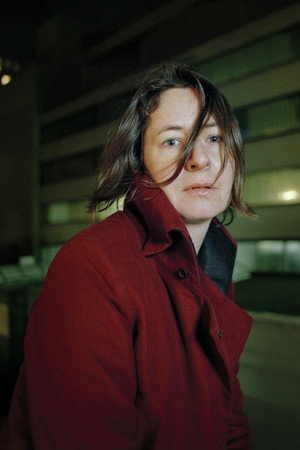
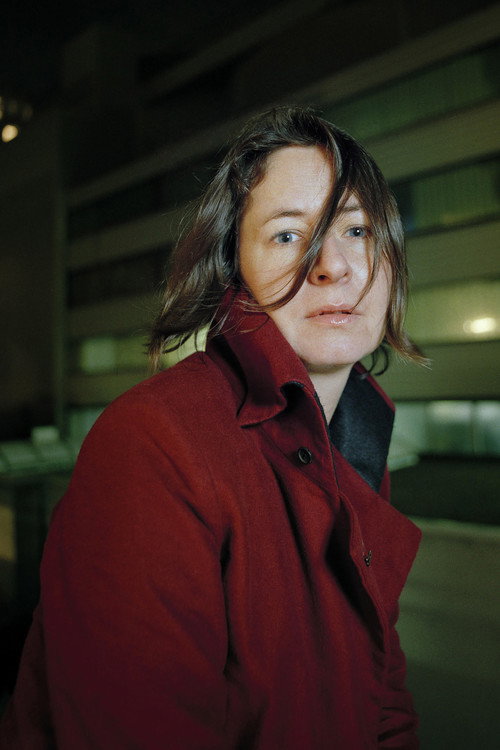
Dominique Gonzalez-Foerster is a French filmmaker, artist and an influential figure in international contemporary art. She is known for her great variety of work in video projection, photography, and spatial installations. Since 2010 she has worked with Tristan Bera on various projects, including exhibitions, films, magazines and performances.
Filmography Movies
Acting

Cavite
After arriving in Manila to attend his father's funeral, a Filipino-American is lured into a conspiracy by a mysterious voice on the other end of his cellphone. In order to save the lives of his surviving family members, the expat must perform a series of dangerous tasks amid the labyrinth of the Filipino underworld.
Chew the Fat
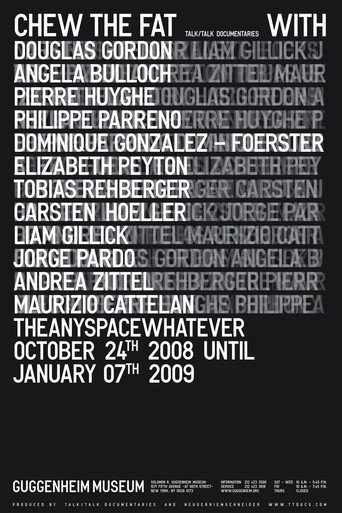
"Chew The Fat" (Informal) - To have a long friendly conversation with someone. In the film project 'Chew The Fat', the artist Rirkrit Tiravanija, living in New York portraits a group of 12 artists (Douglas Gordon, Angela Bulloch, Pierre Huyghe, Philippe Parreno, Dominique Gonzalez - Foerster, Elizabeth Peyton, Tobias Rehberger, Carsten Hoeller, Liam Gillick, Jorge Pardo, Andrea Zittel, Maurizio Cattelan). The artists, all chosen by Tiravanija, belong to the same generation as himself and, like him, have advanced during the nineties to achieve international success. Most importantly, all are good friends of Tiravanija. This creates a particularly relaxed situation in which conversation can flow naturally between the two with personal issues coming up as easily and often as those to do with work or career.
Diner Noir Istanbul
A nature-hating aesthete, Jean des Esseintes attempts to furnish and decorate a country home where he will be able to live without ever again having to deal with the outside world.
Production
Christophe… Definitely
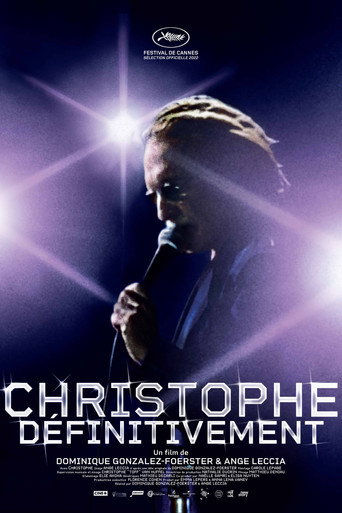
This intimate and musical documentary about the French megastar Christophe will have you screaming like a fan, as it tells the story of the unforgettable and nocturnal musician, author of the legendary song Aline (most recently featured in Wes Anderson’s The French Dispatch).
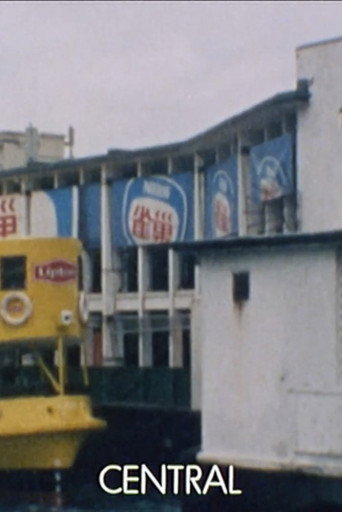
Central
French artist Dominique Gonzalez-Foerster created the 35mm film Central in 2001. The second of a loose trilogy of films set in different waterfront locations, Central unfolds at the Star Ferry terminal in the titular area of Hong Kong, with a Cantonese voiceover guiding the work’s narrative.
Gloria
Gloria consists of a 5-minute looped tracking shot in a park in the centre of Rio, in Brazil. This park is a copy of a French-style garden, but does not have perfectly straight contours. The tropical climate and the abundance of the vegetation constantly overruns all human efforts to make it a sophisticated park. A woman’s voiceover soliloquises the tropicalisation of this garden and the possibilities for fictions that she could create in this place. - New Media Encyclopedia
Romilly
“Romilly” follows a young girl in school uniform larking amongst the bunk beds in the Turbine Hall with a group of friends. We focus on her captivating face, her red hair and rosebud mouth, as she chats with her friends, looks at her hand-held screen, reclines, and sleeps on the bunks. - LEFFEST
Atomic Park
Atomic Park is a place in the White Sands desert (New Mexico), not far away from Trinity Site, where the first atom bomb exploded in 1945. This national park provides an ambivalent landscape, as well suited for a picnic as for ballistic tests. A white desert, like a natural exhibition hall every movement can provoke diverse interpretations. Like a faint echo we hear Marilyn Monroe's desperate monologue and accusation about man's violence from The Misfits (1961). - Torino Film Festival
No Return
Noreturn examines Gonzalez-Foerster's own 2008 Turbine Hall installation TH.2058, which imagined the gigantic space fifty years in the future as a dystopian nightmare of steel bunk beds under the watchful gaze of Louise Bourgeois' Spider, an H. R. Giger-like touch. In the video, she unleashes a group of schoolchildren on the installation and watch as they move from playfulness to a recognition of the installation's menace, finally huddling under a Henry Moore sculpture. - TIFF
De Novo
In De Novo she turns the camera on herself, divulging the complicated thought processes behind the works she made for her five different invitations to present at the Venice Biennale. The video shows her unafraid to question the contexts of her own work in relationship to an ongoing inquiry into the nature of exhibition, exposition and narrative mythologies. - TIFF
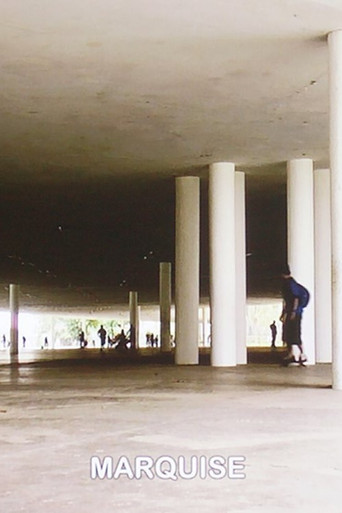
Marquise
For her contribution to the 2006 São Paulo Biennial, Dominique Gonzalez-Foerster used the work of Oscar Niemeyer as a starting point for an exploration of the relationship between the exhibition space and the urban context, through an intervention in which she reproduces and multiplies existing columns, reconfiguring the reading of the rhythm and proportions of modern architecture. The Marquise, in Sao Paulo’s Parque Ibirapuera, an enormous concrete canopy designed by Niemeyer in 1954, is therefore the subject and setting of this film, in which the artist reveals her interest in ‘tropical modernism’ and develops certain recurrent themes in her work, such as ideas of shelter, playground or potential space. - MNAC
Île de beauté
Subjective observations of Corsica and Japan, accompanied by an eclectic soundtrack.
Riyo
A Japanese teenager slacker gets a call from Riyo, a young girl he met during his vacation.
Gallery