Acting
No biography available.
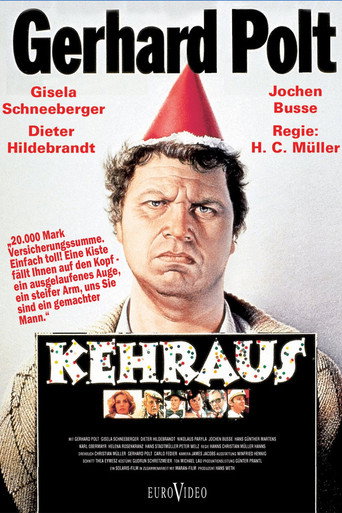
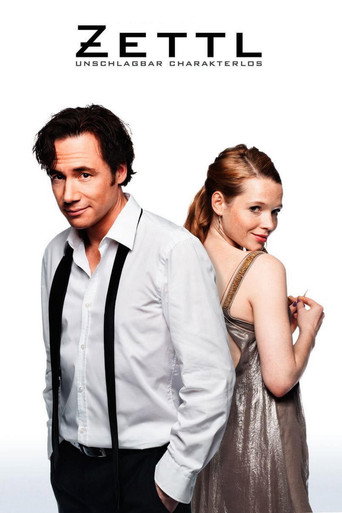
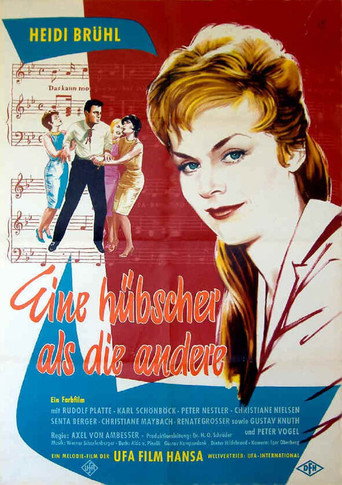
Ferdinand Weitel, a forklift driver, is desperate: Insurance agent Arno von Mehling, a true sales talent, has had contracts signed in record amounts. Now Weitel is wandering through the corridors of the insurance company trying to save what can still be saved - on Shrove Tuesday of all days. The department for customer service and complaints is in a colorful mood and has no ear for Weitel's worries. Finally, secretary Annerose Waguscheit takes heart and tells him about the evening carnival ball "Traum-Police", where he can safely find Mr. Mehling.
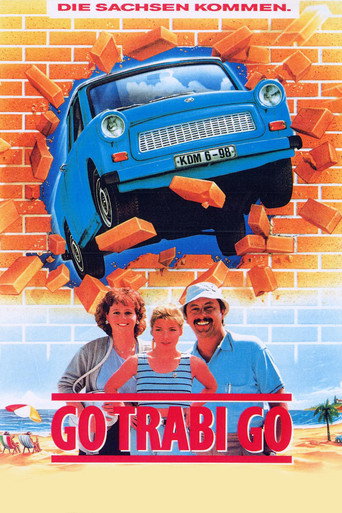
Family Struutz lives in Bitterfeld (GDR). After the fall of the wall, they take the opportunity to go on holiday with their car, an old Trabant. They simply want to visit Italy. But there are some incidents during their journey.
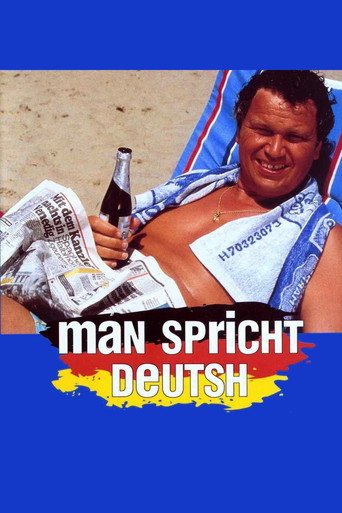
A very middle-class Bavarian family spend the last day of their Mediterranean vacation on the beach, day-dreaming and muttering racist remarks about Italian people.
Documentary about the history of German television.
A social satire in which a chauffeur accidentally becomes the editor of an online newspaper.
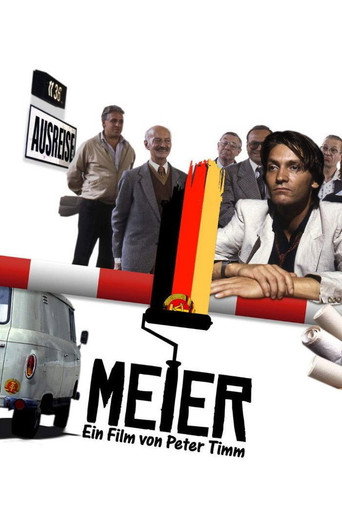
Meier, a paperhanger in East Berlin, inherits from his father in West Berlin. With this money he wants to fulfil himself the dream of his life: a journey around the world. He buys a forged West German passport and pretends to go on a trip to Bulgaria while he really is off to see the free world. When he wants to return to East Berlin he finds himself in an unbelievable predicament and his double life begins. He can't keep away from his East German friends. As with all the best comedies, the action builds up to an eventual crisis. It's a light comedy, which won several national Film Academy Awards. The film is very political, with lots of political jokes/innuendos which only Germans will understand. One is left feeling what a total obscenity that stupid Wall was, dividing one people for 30 years (1-2 Generations) simply by the coincidence on where you just happen to be in the early morning on the 13th August 1961.
A satirical journey through 30 years of post-war West German history, from 1957 to 1987, focusing on the divergent paths of two school friends, Ulli and Willi. Ulli immerses himself in the counterculture movements of the 1960s and 1970s, while Willi pursues a conventional political career.
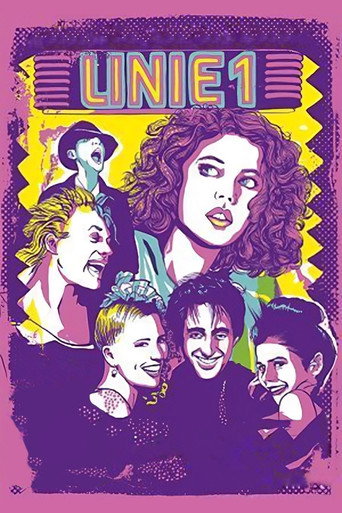
Film version of the musical by the same name: Sunnie, a girl from the province, comes to Berlin to meet rock star Johnnie who had given her his address after a concert. On the subway to Kreuzberg, Sunnie becomes acquainted with a couple of strange people, among them "asphalt cowboy" Bambi. Bambi tells Sunnie that Johnnie’s address in Kreuzberg does not exist. Together, Sunnie and Bambi try to find the rock star in bustling metropolitan Berlin.
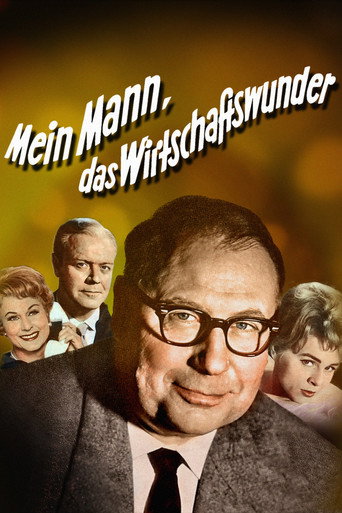
It would be a feast for the press if it became known that Alexander Engelmann, boss of Engelmann-Werke, captain of industry and sole owner of one of the largest corporations, was the driver of paymaster Paul Korn during the war... a bad driver, by the way. At least that's what Paul, who is now Engelmann's driver, claims. Paul takes care of pretty much everything that concerns Engelmann's private life, but especially Julia, Alexander's six-year-old daughter, who grows up in the motherless household like a charming but wild plant - pretty to look at, but extremely prickly. She needs a mother! But how does Engelmann find a woman who isn't just speculating on the millions? It goes without saying that a lot goes wrong during the search. But thanks to the prudent and level-headed Paul, the right woman is found for Engelmann and a suitable mother for Julchen.
This Oscar nominated documentary serves not only as a remembrance but a lesson and a warning for the future. It follows the plight of Europe's Jews during the terrifying period from 1933 until the final defeat of the Third Reich in 1945. Never before had the world seen such contempt for human life on such a grand scale, the murder of an estimated 6 million Jews, with countless others persecuted. During the 1930s a wave of national fervor swept through a tumultuous Germany; people looked for answers, and the politicians were all too willing to point the finger of blame towards the Jewish population. Few, if any, could have foreseen how the views of one man would unfold…that man was Adolf Hitler.
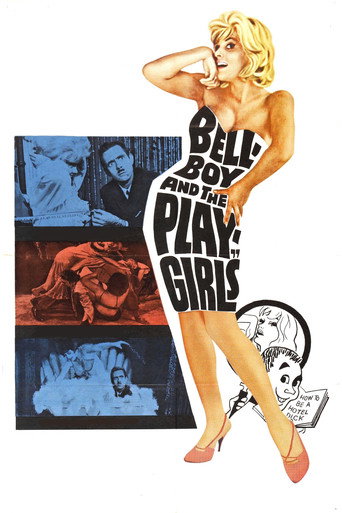
A re-edited U.S. release of the 1958 West German film Mit Eva fing die Sünde an (Sin Began with Eve), The Bellboy and the Playgirls (1962) features roughly fifteen minutes of new color footage directed by Francis Ford Coppola and edited by Jack Hill. The added material follows a bellboy who dreams of becoming a private detective and spies on a group of women at the hotel—lingerie sales representatives who give him more than enough to investigate.
During rehearsals for a provocative stage play, director Gregor clashes with young actress Dinah, who resists performing an intimate love scene. To challenge her views, he guides the cast through a series of imaginative theatrical tableaux spanning the history of love, art, and desire. As rehearsal and fantasy blur, past ideals confront modern attitudes, forcing the actors to reconsider what intimacy and morality mean both onstage and off.