Denis Ducroz Movies, TV Shows, and Filmography
Denis Ducroz
Directing
Biography
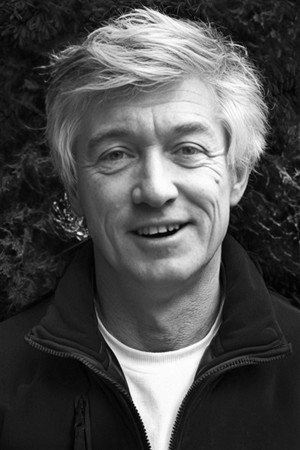
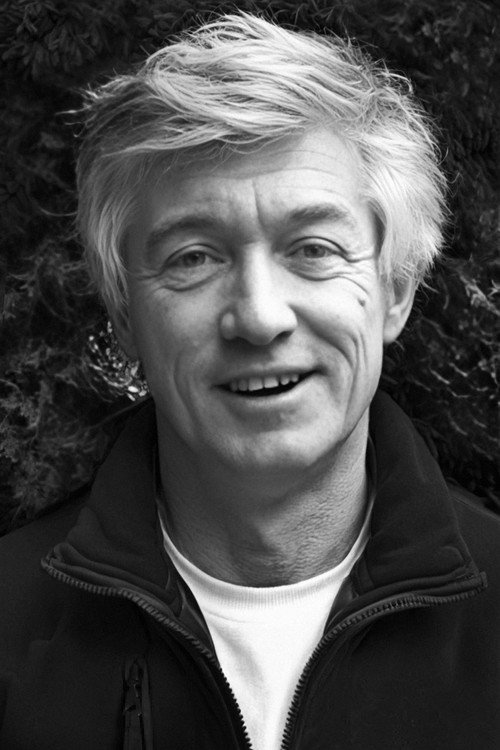
Denis Ducroz, born in 1949, is a French Chamonix-based mountain guide, filmmaker, director, and writer. He has established himself as one of the most active filmmakers in the field of high mountain and expeditions, both as a cameraman and director, collaborating on numerous films dedicated to the mountain world. His audiovisual output has expanded over time to include social, economic, environmental, and cultural themes, while remaining focused on the world's mountains and their populations. Among the most notable is "Les inconnus du Mont-Blanc" (1986), a film that recreates the first ascent of Mont Blanc by Jacques Balmat and Michel Paccard, immersing the viewer in the minds of the mountaineering pioneers. He also directed "Le Refuge des Cosmiques" (1991), a documentary produced as part of the "Montagne" collection for France 3 Grenoble, which traces the history and reconstruction of the Cosmiques refuge at the Col du Midi, on the Mont Blanc massif. He says: "Television allowed me to travel extensively and to decipher something other than the Vallot guide. I read, from the authoritative pens of a mountaineer and a sociologist, that mountain cinema didn't exist because filmmakers knew nothing about the mountains and mountaineers were barely capable of skewering their exploits. Double praise." In his sixties, Denis Ducroz turned to writing novels, publishing in 2016 N’approchez Pas De L’Île Dawson, a story inspired by an expedition to Patagonia, which earned him the 2017 Henri Queffélec Prize awarded by the Livre & Mer festival in Concarneau. He continued his literary work with Le Pont De Neige (2018) and a biography of the famous mountaineer Valery Babanov (2023). His career demonstrates a deep passion for the mountains, which he explores through adventure, images, and writing.
Filmography Movies
Acting

La Face de l'Ogre
Several mountaineers attempt to climb La face de l'Ogre near Chamonix. Their starting point is a small mountain hotel from where many tourists observe them. Among these is Hélène, who has been staying there for a few weeks but who is excluded by the other tourists. Then she meets a city girl named Marion and they immediately become friends. She tells him that she is waiting for her husband who has tried to climb the mountain and should be back any day. But then the weather turns sour, which causes hope to wane but also brings women together in anxiety. Finally the weather improves and Marion's husband comes back but not Hélène's and she must finally accept the truth.

Women of K2
On some peaks in 2003, the statistics are impressive. For the K2 dubbed "wild mountain" or "ruthless mountain", only 240 reached the summit and more than 60 perished in the ascent. An unimaginable rate of one death in four to survive. And these statistics are even worse At the start of the 2004 climbing season, only five talented and determined women had reached the 8,616-meter summit of K2, but only two made it out alive. , they too perished while climbing other peaks of 8000 meters, these five women all disappeared in the mountains.
Patagonie Force 10
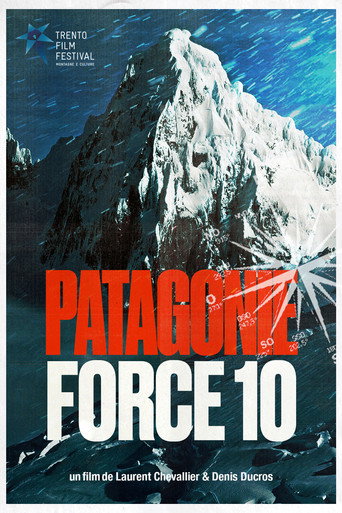
A team of 12 men, 5 sailors, a doctor, a writer, a film crew, and 3 mountaineers, Jean-Marc Boivin, Thierry Leroy, and Dominique Marchal, set off by sailboat from Mar del Plata in Argentina to reach Riso Patron in Chile, via the Strait of Magellan, the Patagonian Channels, and Falcon Fjord. Their goal is to climb Riso Patron and then make the first crossing of the Campo de Hielo Sur glacier, or Hielo Continental Patagónico, to meet up with the sailors in Puerto Williams on Navarino Island in Chile, a village at the end of the world. After three attempts and an accident for Leroy, who was repatriated, they gave up, crossed the glacier and rejoined the boat, to set off for Cape Horn to climb the South face, knowing that the weather was good one day a month... On January 20, 1983, Jean-Marc Boivin and Dominique Marchal succeeded in making the first ascent of the South face of Cape Horn.
Under The Eye Of Qomolangma
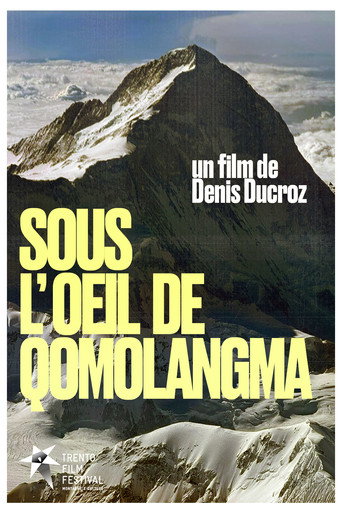
The French High Mountain Military Group (G.M.H.M.) expedition to Everest in 1981, led by General Pierre Astorg, took place on the north face of the mountain. Fifteen military climbers participated in this expedition, which lasted approximately ninety days. Their goal was to reach the summit by following a siege approach, but despite their efforts, the expedition failed to reach the summit. The French military, engaged since the beginning of March on the north face of Everest (8,848 meters), gave up less than 300 meters from the summit. The climbers, Jean-Claude Mosca, Hervé Sachetat, and Hubert Giot, gave up on setting up Camp 7, the last planned intermediate camp, at 8,600 meters. Poor weather conditions and the physical condition of the expedition members were the reasons for the failure of this meticulously prepared expedition...
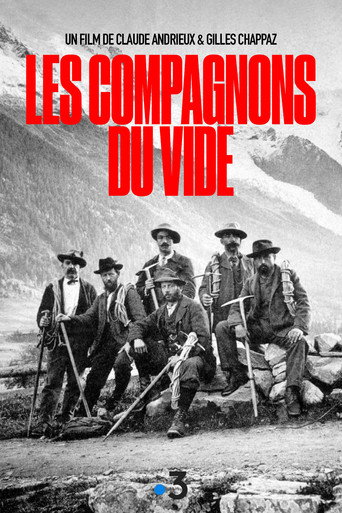
The Companions Of The Void
"Les Compagnons Du Vide" (The Companions of the Void) is a documentary made in 1989 by Claude Andrieux and Gilles Chappaz, broadcast in two parts on the FR3 program "Montagne." The film explores the history of the mountain guide profession through portraits of mountain guides, showcasing the diversity of this high-risk occupation. It also delves into the intimate relationship between the climbing team and the client, using the example of prestigious guides. The documentary follows these teams on major climbs around Chamonix, on Mont Blanc, and on La Meije in the Écrins massif.
Production

Trilogy for One Man
The most legendary 'sequence' ever achieved by a mountaineer: on 12 and 13 March 1987, in 40 hours, 26-year-old Christophe Profit managed to climb three of the highest north faces in the Alps, in winter: Grandes Jorasses, Eiger, and Matterhorn. But over and above this 'coverage' of the feat, we discover the wings, the story behind the project, the peaks and troughs of the preparations for it, and the personality of the man behind the climbs, a dancer on sheer rock faces, focusing all the energy and reflexes of life itself in his fingertips.
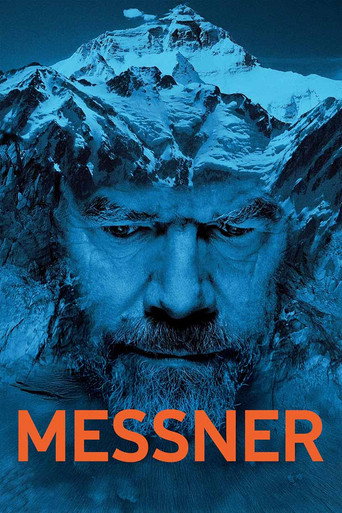
Messner
Born in 1944 in South Tyrol, Reinhold Messner was introduced to climbing peaks by his father as a child. He has since climbed the fourteen mountains of the world culminating at more than 8,000 meters, and notably has to his credit the first ascent of Everest alone and without oxygen in 1980. This portrait is made up of the story given by mountaineer of his journey as well as testimonies from his loved ones and traveling companions. The interviews are interspersed with reconstructed scenes and extracts from archive films recounting his exploits. But there is no question here of becoming hagiographic, because Messner also draws his strength from his failures. When he's not climbing or roaming the desert, this troublemaker devotes his energy to various causes. In his Juval castle, located in his native South Tyrol, he exhibits the equipment of his expeditions as well as various objects, notably Tibetan. He has also written around fifty works to date.

The World Is Not Enough
Greed, revenge, world dominance and high-tech terrorism – it's all in a day's work for Bond, who's on a mission to protect a beautiful oil heiress from a notorious terrorist. In a race against time that culminates in a dramatic submarine showdown, Bond works to defuse the international power struggle that has the world's oil supply hanging in the balance.
Piège Blanc
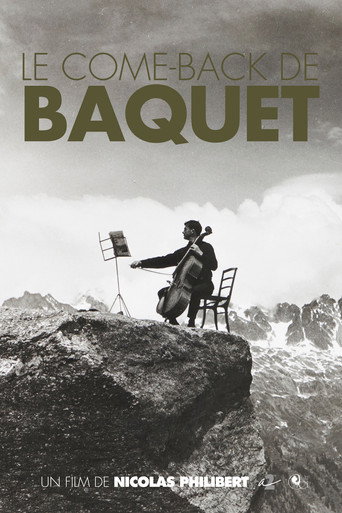
Baquet's Comeback
July 1956: like every summer, the actor and cellist Maurice Baquet temporarily deserts the stage and the cinema studios to go to Chamonix where the mountaineer Gaston Rebuffat is waiting for him. A few days later, the two men achieved a historic first, that of the south face of the Aiguille du Midi (3,842 m), a magnificent wall rising like a rampart above the Vallée Blanche. July 1988: to pay tribute to the memory of his friend Gaston, now deceased, Maurice Baquet once again climbed this wall suspended between heaven and earth with the man who, 50 years his junior, is considered one of his best contemporary mountaineers: Christophe Profit.
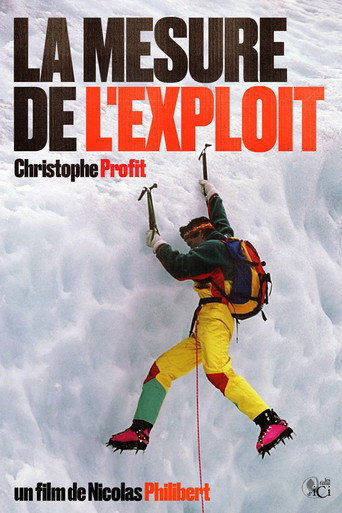
The Measure of the Feat
A film about the preparation of the "Trilogy For a Single Man," about the medical and nutritional monitoring of French mountaineer Christophe Profit during his climbing "trilogy" and the period of intensive training that preceded one of the most fabulous "chains" ever made by a mountaineer. On March 12 and 13, 1987, Christophe Profit, then 26, successfully climbed the three largest north faces of the Alps in winter in 40 hours: Grandes Jorasses, Eiger, Matterhorn. But beyond this coverage of the event, it is the behind-the-scenes that is revealed, the story of this project, the ups and downs of its preparations and the personality of its author, a dancer of the verticals, who concentrates at his fingertips the energy and reflexes of life itself.
Patagonie Force 10
A team of 12 men, 5 sailors, a doctor, a writer, a film crew, and 3 mountaineers, Jean-Marc Boivin, Thierry Leroy, and Dominique Marchal, set off by sailboat from Mar del Plata in Argentina to reach Riso Patron in Chile, via the Strait of Magellan, the Patagonian Channels, and Falcon Fjord. Their goal is to climb Riso Patron and then make the first crossing of the Campo de Hielo Sur glacier, or Hielo Continental Patagónico, to meet up with the sailors in Puerto Williams on Navarino Island in Chile, a village at the end of the world. After three attempts and an accident for Leroy, who was repatriated, they gave up, crossed the glacier and rejoined the boat, to set off for Cape Horn to climb the South face, knowing that the weather was good one day a month... On January 20, 1983, Jean-Marc Boivin and Dominique Marchal succeeded in making the first ascent of the South face of Cape Horn.
Patagonie Force 10
A team of 12 men, 5 sailors, a doctor, a writer, a film crew, and 3 mountaineers, Jean-Marc Boivin, Thierry Leroy, and Dominique Marchal, set off by sailboat from Mar del Plata in Argentina to reach Riso Patron in Chile, via the Strait of Magellan, the Patagonian Channels, and Falcon Fjord. Their goal is to climb Riso Patron and then make the first crossing of the Campo de Hielo Sur glacier, or Hielo Continental Patagónico, to meet up with the sailors in Puerto Williams on Navarino Island in Chile, a village at the end of the world. After three attempts and an accident for Leroy, who was repatriated, they gave up, crossed the glacier and rejoined the boat, to set off for Cape Horn to climb the South face, knowing that the weather was good one day a month... On January 20, 1983, Jean-Marc Boivin and Dominique Marchal succeeded in making the first ascent of the South face of Cape Horn.
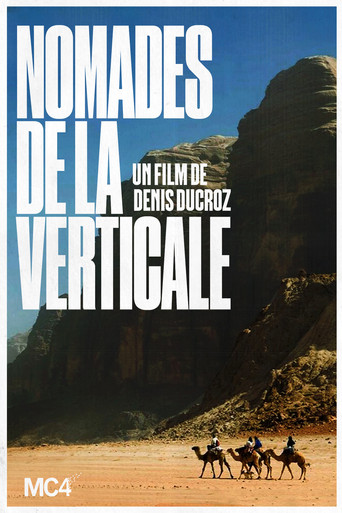
Vertical Nomads
The documentary chronicles the journey and climbs of a group of young French people on the cliffs rising above Wadi Rum, in the desert south of Jordan, guided by two very athletic local Bedouins. The climbers set out to discover new, isolated places, fueled by a spirit of adventure. These places were little known, at least as climbing areas in 1988.
Vertical Nomads
The documentary chronicles the journey and climbs of a group of young French people on the cliffs rising above Wadi Rum, in the desert south of Jordan, guided by two very athletic local Bedouins. The climbers set out to discover new, isolated places, fueled by a spirit of adventure. These places were little known, at least as climbing areas in 1988.
Gallery