Directing
No biography available.
Documentary on the legendary talk-radio comic legend Phil Hendrie, who influenced a legion of great comedic minds through his innovative and relatively short-lived, off-the-wall radio show.
Jim Moir (aka Vic Reeves) explores Video Art, revealing how different generations ‘hacked’ the tools of television to pioneer new ways of creating art that can be beautiful, bewildering and wildly experimental.
An intervention in the middle of the street.
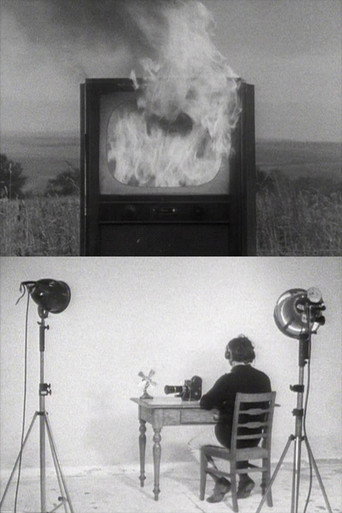
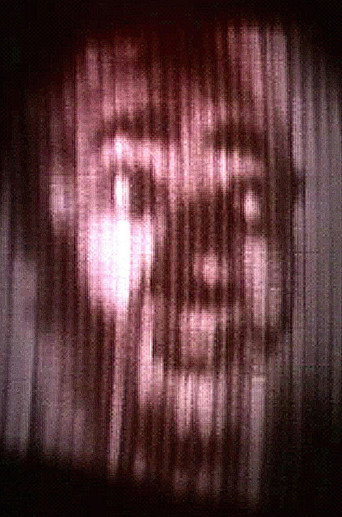
Between is a highly-wrought piece of structuralism which makes no concessions to its audience…it implicates viewers in what is happening on the ‘other side’ of the screen… and one is fully conscious of the role of the photographer. The camera is made to approach a lit screen in a viewing theatre before turning full circle to approach the projector… the trip was made only once, but the sequence is repeated by an intricate process using successive generations of prints – a print from a print etc… Here there is a progressive deterioration of ‘quality’ and the image breaks up into signs and symbols and finally into abstract fragments. What we have then is a clear case of art as truth through fabrication, with the imperative that the fabrication, the contrivance, must be revealed…
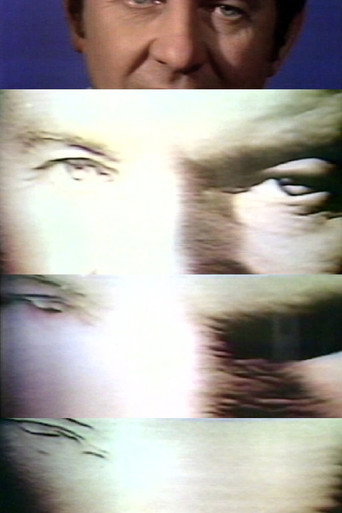
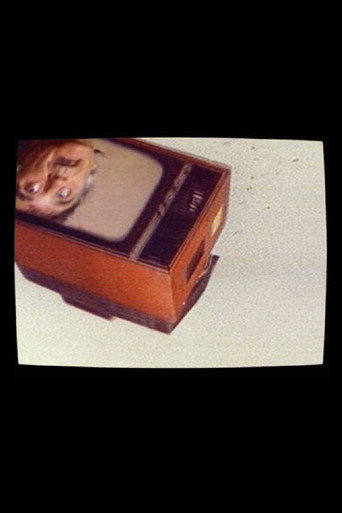
Commissioned by BBC TV as the unannounced opening piece for their Arena video art programme, March 1976. Programme produced by Mark Kidel, conceived by Anna Ridley and presented by David Hall. 'Richard Baker [the well known newsreader] describes the essential paradoxes of the real and imagined functions of the TV set on which he appears. The second shot is taken optically off a monitor, the third copied from the second, and so on, until there is a complete degeneration of both sound and image, removing the newsreader from his position of authority...' - Tamara Krikorian, Art Monthly, February 1984.
This surface and Edge [also being screened in this programme] are two of 5 Films (View, This surface, Actor, Edge, Between) made by David Hall and Tony Sinden in 1973. These works investigated the primal conditions of cinema itself. The films explore the relationship between screen image and spatio-temporal illusion – the materiality of the screen in relationship to the image as representation. Ideas that each artist would continue to explore after collaboration. But further to these concerns, these films mark a vital phase in the process of both artists as they sought to create a body of work with intellectual rigour without sacrificing the imaginative and aesthetic qualities of art.
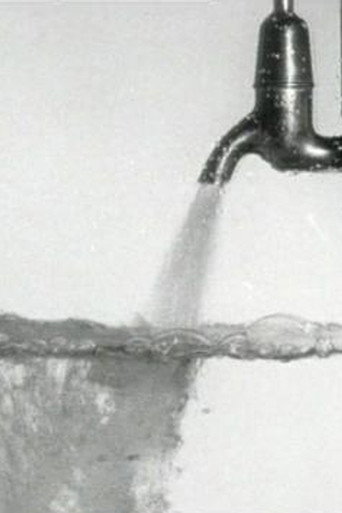
Conceived and made specifically for broadcast, these were transmitted by Scottish TV during the Edinburgh Festival. The idea of inserting them as interruptions to regular programmes was crucial and a major influence on their content. That they appeared unannounced, with no titles, was essential.. These transmissions were a surprise, a mystery. No explanations, no excuses. Reactions were various. I viewed one piece in an old gents club. The TV was permanently on but the occupants were oblivious to it, reading newspapers or dozing. When the TV began to fill with water newspapers dropped, the dozing stopped. When the piece finished normal activity was resumed. When announcing to shop assistants and engineers in a local TV shop that another was about to appear they welcomed me in. When it finished I was obliged to leave by the back door. I took these as positive reactions… – D.H.
Experimental film about early television
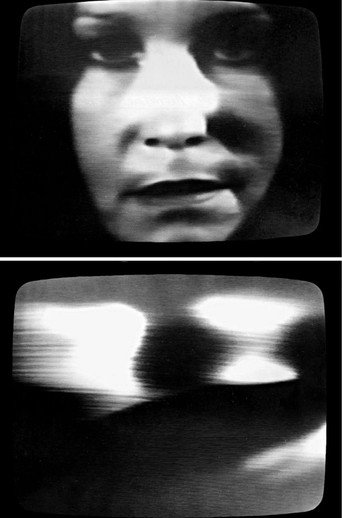
This is a Video Monitor is an attempt to construct a wholly ‘videological ‘ experience, and is built on an initial take of a woman describing the paradox of the real and imagined functions of the monitor on which her image appears…
Commissioned by MTV Networks, produced by Annalogue, and transmitted worldwide (unannounced) through 1993-94.’Conceived in the spirit of the 1971 pieces, TV Interruptions 93 were shot or post-produced using advanced colour video technology, electronic effects and a refinement gained over Hall’s 25 years work in time-based media. Taken together, they constitute a potted summary of Hall’s preoccupations in video and television, and perhaps of the progression of video art as a ‘genre’…
Ten works commissioned by the Scottish Arts Council were broadcast, unannounced, by Scottish TV in August/September 1971. Later, seven were compiled as TV Interruptions (7 TV Pieces).