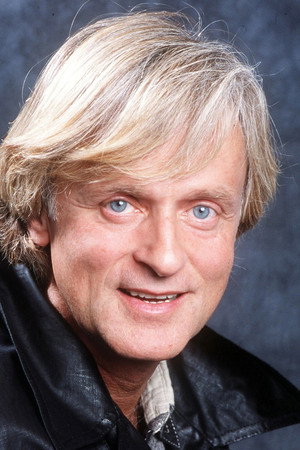
Dave Movies, TV Shows, and Filmography

Dave
Acting
Biography
Wouter Otto Levenbach (born 4 May 1944), known as Dave, is a Dutch Francophone singer who had a string of number one hits in France in the 1970s. A native of Amsterdam, he resides in Paris. Dave was born in Amsterdam. His father was Jewish and an English teacher by trade; his mother was a classical dancer. He has two brothers, Marteen and Lucas, and a sister, Elsbeth. He learned to play the guitar at age 14. He became a very spiritual person who prayed frequently and even planned to study theology; however, he eventually chose to study law. Among other things, he was inspired by Jack Kerouac's On the Road , a revolutionary novel which encouraged young people to leave home and learn life "on the road", and to communicate with others. Passionate about the sea and rivers (a love which he owes to his grandfather), he left the Netherlands by boat with 1,000 guilders in his pocket (about two months' living expenses). He met Eddie Barclay, the executive for Barclay Records, in Saint-Tropez in 1968; Barclay was responsible for launching Dave's career in show business. On 26 February 1969, he participated in the Nationaal Songfestival, the Dutch pre-selection contest for that year's Eurovision Song Contest with a song called "Niets gaat zo snel", but did not win. In Summer 1969 he reached the Dutch Top 40 charts for the first time with "Nathalie", peaking at No. 28. From 1971 to 1974, he was one of the actors in the musical Godspell, making friends with actor Daniel Auteuil, who would become his best friend. In 1974, he released his first hit "Trop Beau", a French adaptation of The Rubettes' hit "Sugar Baby Love"; later, he released "Vanina", his first number one single in France, an adaptation of Del Shannon's "Runaway", adapted into French by Patrick Loiseau. These were followed in 1975 by the three hits "Mon cœur est malade", "Dansez maintenant" and "Du côté de chez Swann". His self-titled first album was released at the end of 1975. By that time, he did not only have great success in France and Belgium, but also in his country of origin the Netherlands, where "Dansez maintenant" was a number 1 hit in the top 40 and "Du côté de chez Swann" made the top 10 too. His later hits included "Lettre à Hélène" (1978), "Comment ne pas être amoureux de vous" (1978) and "Allo Elisa" (1979). In the 1980s, his popularity waned following the advent of FM radio in France. He still had an audience due to live performances and his classic hits. However, he himself likened the ebb to a "crossing of a very pretty desert". In 1993, he released a new album, then in 1994, he made a comeback following the release of a greatest hits album, which sold more than 200,000 copies. He later recorded a new album entitled Toujours le même bleu, which included a title single from which enables him to hit the charts once again. It is also around this time that he came out as homosexual. ... Source: Article "Dave (singer)" from Wikipedia in English, licensed under CC-BY-SA.
Filmography Movies
Acting
Nighting Eighties – Les années 80 en 16 tubes
Musicians Sarah Murcia and Albinde la Simone revisit some of the decade's most memorable songs ("Vertigo de l'amour," "Marcia Baila," "Billie Jean," "Careless Whisper," "Like a Virgin," "In Between Days," "Take on Me," and "Ghostbusters"), with the collaboration of artists such as Dave, who surprises us with an inspired cover of Eurythmics' "Sweet Dreams." It is also an opportunity to pay a vibrant tribute to Alain Bashung and Fred Chichin (the late half of Les Rita Mitsouko), whose talent and originality illuminated these years of creative diversity.
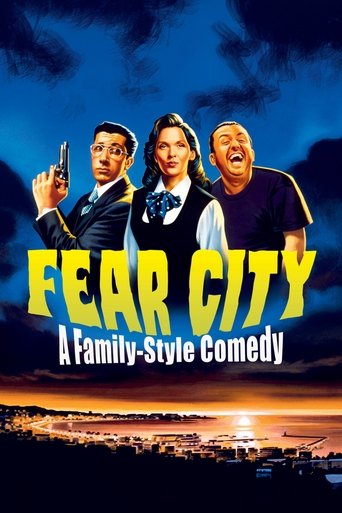
Fear City: A Family-Style Comedy
A second-class horror movie has to be shown at Cannes Film Festival, but, before each screening, the projectionist is killed by a mysterious fellow, with hammer and sickle, just as it happens in the film to be shown.
Les Enfoirés - Les Enfoirés en chœur de 1985 à aujourd'hui
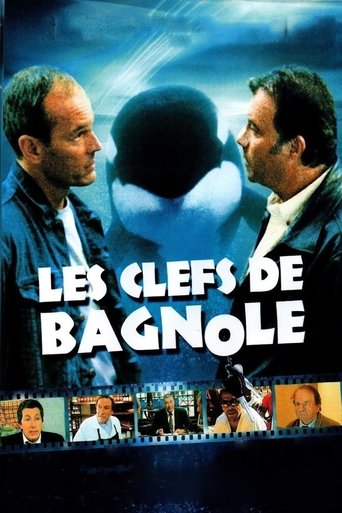
The Car Keys
Who would think losing car keys could lead us that far ? Be careful, adventure is on every street corner...
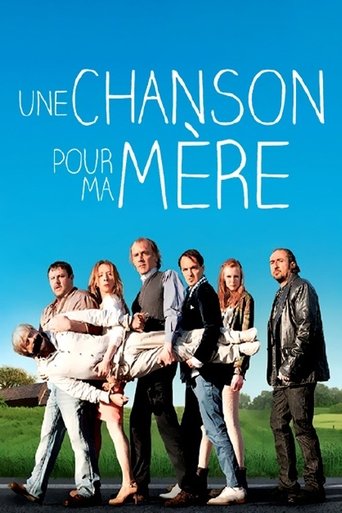
A Song For Mama
With their beloved mother only a few days to live, her children decide to give her a surprising parting gift: bring Dave, a lifelong fan, to her bedside in the Ardennes. But even though everyone adores her, brothers, sister and brother-in-law are not on the best of terms and cooperation is not their strong point. For her sake, however, they will overcome their resentments, drawing from their love the energy and the madness necessary to carry out their project. Finding Dave and luring him to the Ardennes will be no easy task.
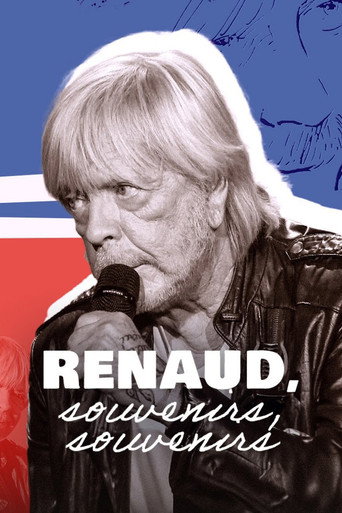
Renaud, souvenirs, souvenirs

Poltergay
Marc and Emma move into a new house but have no idea that their basement was a gay nightclub. To make matters worse, the club was destroyed by fire, and now the house is haunted by the ghosts of five gay clubbers.

Tout le monde chante : les stars relèvent le défi
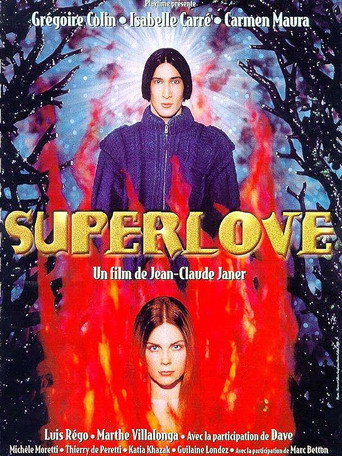
Superlove
The Virgin Mary appears to Mario, a provincial barber who dreams of becoming a successful singer. He introduces her to his parents who decide to adopt her and give her a room in their house. The presence of the Holy Mother will soon break the monotony of the household. Teresa, Mario’s mother, starts to talk to a chandelier. Carolina, his sister, thinks she has become invulnerable and begins to hit her teacher. As for Mario, he thinks he has been invested with a special mission, to tell the truth at all times to everyone he meets. It soon turns out the Virgin is not what she pretends to be…
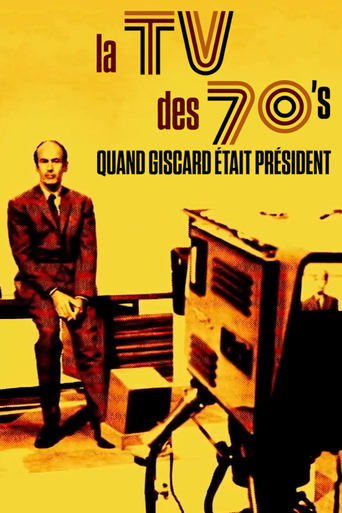
La TV des 70's : Quand Giscard était président
In May 1974, Valéry Giscard d'Estaing became President of the Republic and wanted to bring about a new era of modernity. One of his first decisions was to break up the ORTF with the creation of three new television channels: TF1, Antenne 2 and FR3. Three new public channels but autonomous and competing. It is a race for the audience which is engaged then, and from now on the channels will make the war! This competition will give birth to a real golden age for television programs, with variety shows in the forefront. The stars of the song are going to invade the living rooms of the French for their biggest pleasure. This unedited documentary tells the story of the metamorphosis of this television of the early 1970s, between freedom of tone, scandals, political intrigues and programs that have become mythical.
Gallery