Darío Moreno Movies, TV Shows, and Filmography
Darío Moreno
Acting
Biography
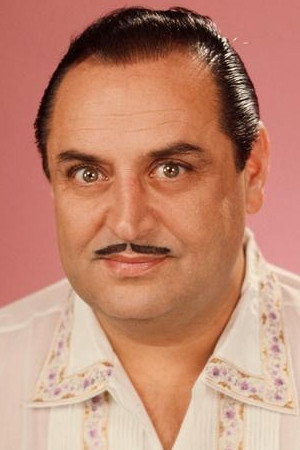
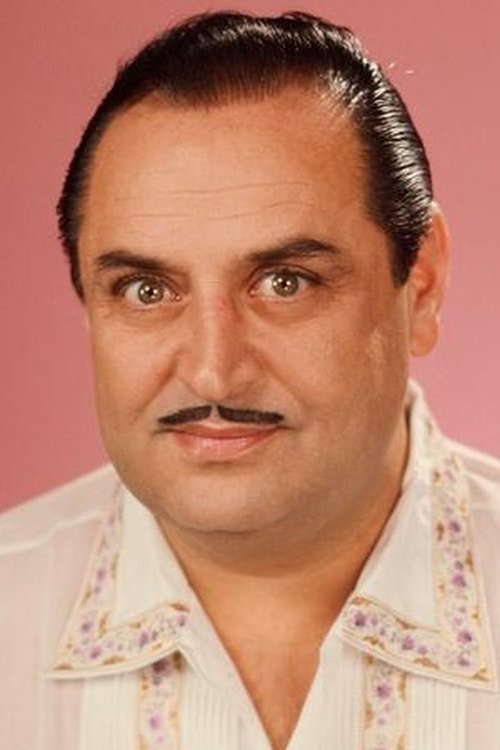
David Arugete (3 April 1921 – 1 December 1968), commonly known under his stage name Darío Moreno, was a Turkish-Jewish polyglot singer, an accomplished composer, lyricist, and guitarist. He attained fame and made a remarkable career centred in France which also included films, during the 1950s and the 1960s. He became famous with his 1961 song Brigitte Bardot. Darío Moreno was born to a large Jewish family. He was orphaned in early childhood when his father, who worked in a train station in Aydın, was shot dead under tragic circumstances. He was placed in the Sephardic orphanage of Izmir (Nido De Guerfanos) by his mother and remained there until he was four. After a primary education in the Jewish educational establishments of Izmir, he had many odd jobs during his early youth. He put great effort into continuing his education while simultaneously working to make a living. He started working as an errand boy in the law firm of the city's prominent lawyers, and he was eventually trained to become a clerk in the office. In the evenings, he would study French in Izmir's Central Library. With a guitar that had fallen into his hands by chance, he also learned to play the guitar, mainly on his own with occasional tutoring from acquaintances. He started singing at Bar Mitzva celebrations as a second job. In his early twenties, he had already become a well-known singer in Izmir, and particularly among the Jewish community. During his military service in the Turkish Army, he was employed as a singer in officers' quarters in various garrisons and became more focused on music. His first truly professional musical performance started in his hometown right after his discharge, and was arranged through connections established while in the army. When he started making money with his music, he moved to the better-off Jewish quarter of Karataş to a house in a street leading to the historical building of Asansör, one of the city's landmarks (and which literally means the "Elevator", people taking an actual elevator to go to the higher part of the quarter, this part being separated by the coastal strait with a steep slope). Nowadays this street is named Dario Moreno Sokağı (Dario Moreno Street) in his legacy. A hyperactive personality, Darío Moreno died of a heart attack resulted from a discussion occurred between him and an airport gate staff in the Atatürk Airport. He was slightly late for one of his flights, on his way to Paris for a concert. He was also planning to attend the first "Turkish Night" planned to take place in Paris.The airport gate staff discretionary did not allow him to board the plane and this led to a serious debate which resulted with Moreno's heart attack. He was only 47. According to his will he wanted to be buried in İzmir, Turkey but he was buried in Holon, Israel, by his mother Madam Roza. ... Source: Article "Darío Moreno" from Wikipedia in English, licensed under CC-BY-SA 3.0.
Filmography Movies
Acting
The Wages of Fear
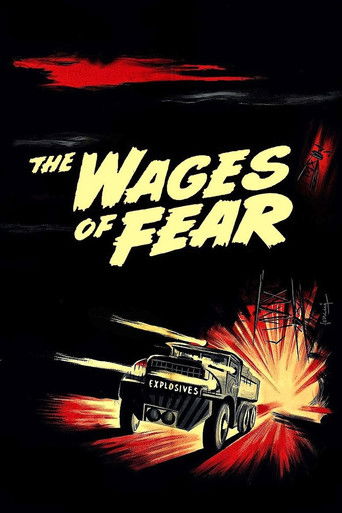
In a run-down South American town, four men are paid to drive trucks loaded with nitroglycerin into the jungle through to the oil field. Friendships are tested and rivalries develop as they embark upon the perilous journey.
Oh! What a Mambo
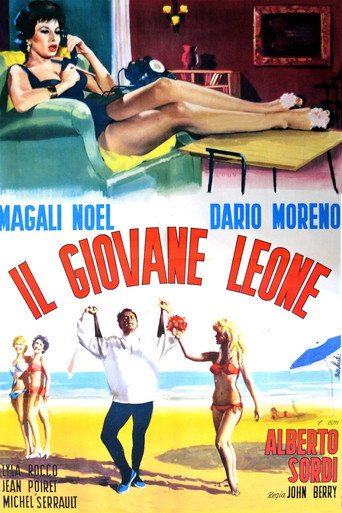
Miguel foils a bank robbery and becomes a successful nightclub singer, but he doesn't know that his wife is being courted by an Italian fitness instructor.
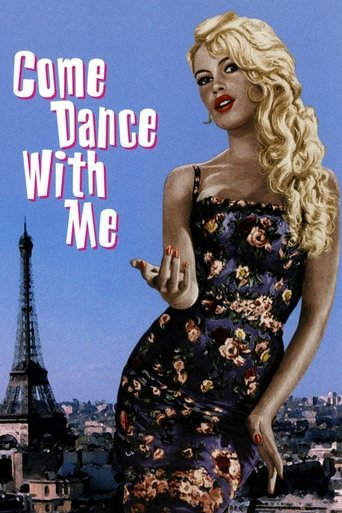
Come Dance with Me!
The wife of an accused murderer embarks on a dangerous masquerade to find the real culprit behind a dancer's death.
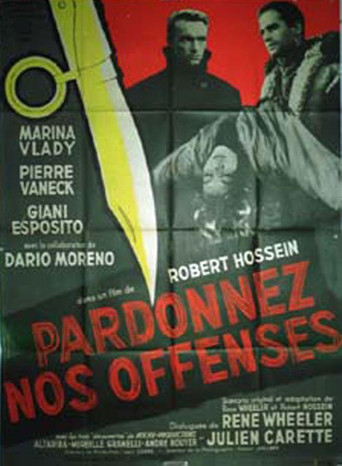
Forgive Our Trespasses
In a port area of France, clashes between a gang of young delinquents and a tribe of gypsies.
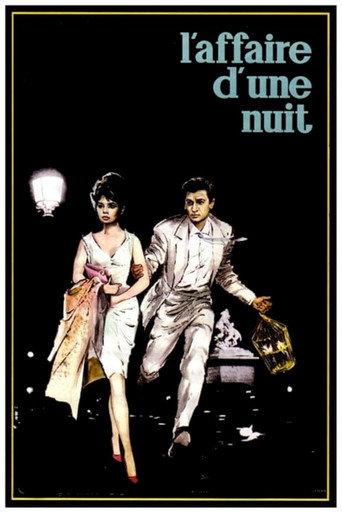
It Happened All Night
Michel Ferréol reluctantly meets up with an old school friend, Antoine Fiesco. Michel didn’t like Antoine much when they were at school and tries to get away by making an excuse. He changes his mind when Antoine introduces him to his wife, a beautiful brunette named Christine.
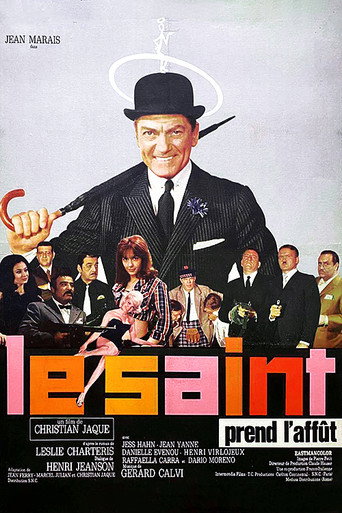
The Saint Lies in Wait
Oscar Chartier plays a dangerous double game by selling secret plans to the German and American secret services, to ensure a comfortable future for his daughter, Sophie. But the plans are fake and Chartier decides to get help from his good friend Simon Templar.
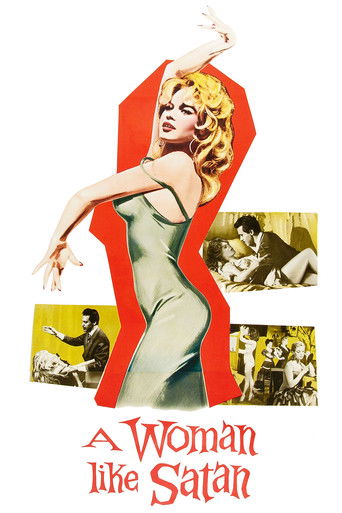
A Woman Like Satan
Handsome and rich Spanish gentleman abandons his wife and riches for his love of a young girl of poor stock who taunts and degrades him.
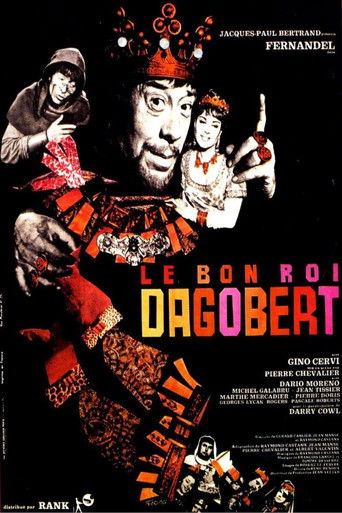
Good King Dagobert
Mr. Pelletan's rascal son Bébert son got another F for playing in class. His punishment is an essay on the Merovingian king Dagobert. All they know is he had eight wives and reunited Francia. The ignorant knave's irreverent imagination turns that into a harem and a ludicrous war without armies, loaded with anachronisms, in a race against rival king Charibert for the crown of Reims. The king's right hand, archbishop Eloi, the later patrons saint of carpentry, is portrayed as an inventor.
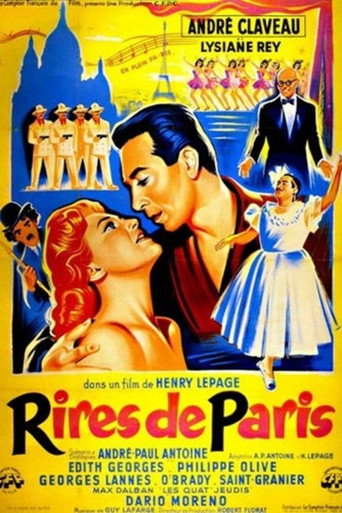
Sins of Paris
Madeleine Lebeau, a woman who charges for her easy virtue, has a plan that has some of her customers paying more than others; she tells them she is pregnant and, to avoid complications, the men pay her money and don't hang around for the birth. Yves Furet, a shiftless gambler, who not only encourages her in her business ventures but is also her fiancée, shares the fruit of her non-labor. She latches onto a wealthy widower, Henri Vilbert, who throws her a curve-ball when, after she tells him she is pregnant, he is overjoyed as he has fallen in love with her and is looking forward to becoming a father. She plays along for a while, but becomes ashamed when she sees how Vilbert is devoting his whole life to a child that she isn't carrying. She fakes a miscarriage and his kindness makes her feel guilty and she confesses, but he doesn't believe her. So she tries another plan.
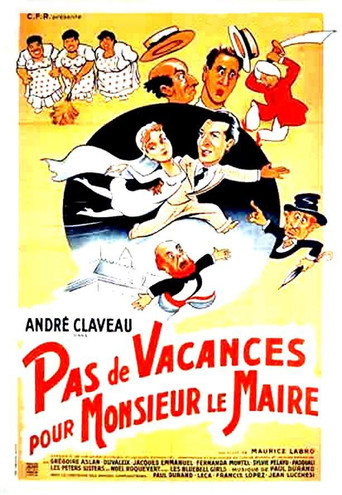
No Vacation for Mr. Mayor
Annie, the ward of Monsieur Joachim, a nightclub manager, has fallen in love with Philippe Lebon, a singer who could easily re-float her guardian's failing business. The trouble is that Joachim has already - and hurriedly - betrothed Annie to his business partner. To make matters worse the young lady suspects Philippe of being unfaithful. In order to thwart the wedding of Annie and his rival, Philippe hires two of his friends, the resourceful Beaudubec and Tracassin.
Gallery