Danny Red Movies, TV Shows, and Filmography
Danny Red
Art
Biography
No biography available.
Filmography Movies
Acting
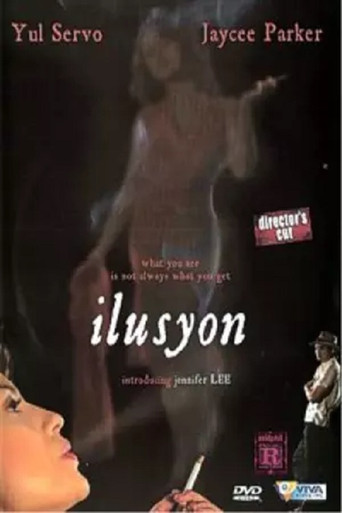
Ilusyon
Set in Philippine post-American colonialist era, where the American influence was still apparent, Ilusyon tells the story of Miguel, a young man from the countryside, who decides to visit his father, Pablo, a Modernist painter in Manila. Upon his arrival, he discovers that his father has decided to leave for the province but he opted to stay in Manila for a vacation. One day, he meets Stella, a nude model originally scheduled to pose for Miguel's father. Struck by her beauty, Miguel does the unthinkable - he pretends to be his father the painter. Developing a relationship based on a lie, things turn for the worse as Stella begets a strange skin disease that turns off Miguel. Surrounded by strange characters - a talking cow, a talkative mailman and a nosy landlady - Miguel is driven into a frenzy realization about beauty, lust, love and being true to oneself. An ambiguous ending underlines the surreal tone of the film.
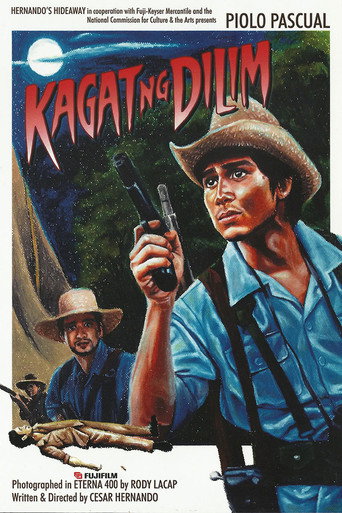
Fangs of Darkness
Hukbalahaps in the forests are suddenly terrorized by an "aswang" who seems to be killing them one by one.
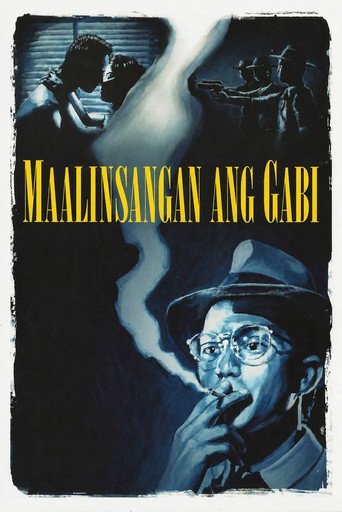
A Foggy Night
In Cesar Hernando's noirish short, the uprising and UFOs are merged in a strange commentary on government control.
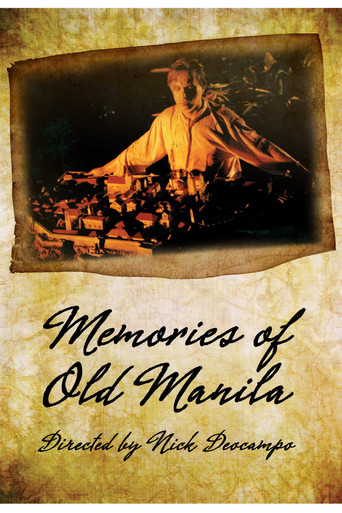
Memories of Old Manila
A historian travels through time from the swampland that one day turned into the squalor that it has become in contemporary time.
Production

Sakay
The film covers the life of Filipino patriot and hero Macario Sakay, who was declared an outlaw and a criminal for continuing hostilities against the United States after the "official" end of the Philippine Insurrection.

The Inmate
Set in two contrasting environments that underline the same premise of imprisonment, Selda tells the story of Rommel, a young man who accidentally kills a boy, resulting in his incarceration. Inside the jail, he befriends another inmate, who becomes his rock and protector. Seven years later, Rommel is living in the province as a farmer together with Sita his wife. Esteban tracks down Rommel in hopes of renewing a brewing love affair. Rommel and Sita welcome Esteban into their lives until their intimacy crosses borderlines and results in the undeniable scourge of self-discovery
Kamera Obskura
The title “Kamera Obskura” is a Filipino spelling of the latin “Camera Obscura” which simply means “dark room”. The film’s concept adheres to formalist cinema, where the filmmaker’s thesis is to make a semblance of a vintage film seemingly produced sometime in the late 1920s to early 1930s in the Philippines. The thesis is to conjure up a film from a period that did not really exist in Philippine cinema’s historical cultural heritage as we know it, such as a pseudo-expressionist / experimental Filipino cinema of the silent film era. It is a film within a film. The narrative plays with the idea of a retro-futurist world where a prisoner locked away in a dark chamber for over two decades only sees the reality of the world outside through the small hole in his cell, which projects an image of the city on his wall, the phenomenon of the “camera obscura”.
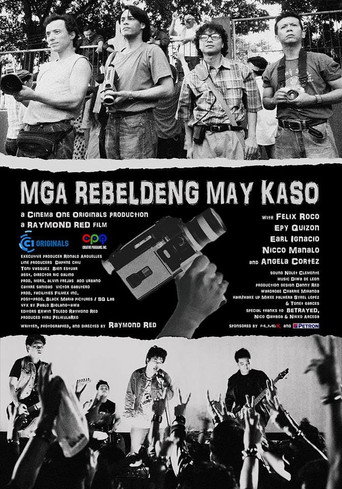
Mga Rebeldeng May Kaso
Mga Rebeldeng May Kaso is about the aftermath of the so-called People Power Revolution of 1986, spawning a group of young dreamers bewildered, wonder, and wandering, discovering the fire of youth, the loss of innocence, the journey into the core of one’s being, immersing themselves in a brewing new alternative culture and a little known and lowly regarded revolution of sorts the emergence of a new underground, independent and alternative cinema.
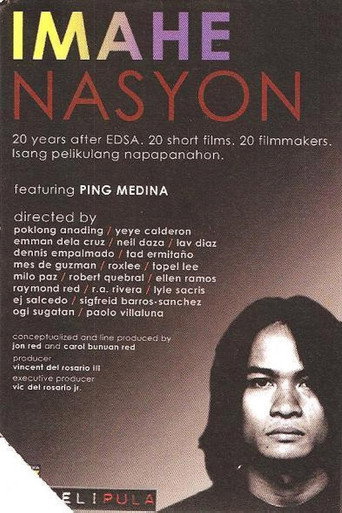
Image Nation
Imahe Nasyon is a groundbreaking, conceptual omnibus film by 20 alternative filmmakers who were tasked to present their personal visions on national issues. Renowned line producers Jon and Carol Red hatched the idea of revisiting the 1986 EDSA revolution, challenging directors to answer the question "What happened after 1986?" with a short film not longer than five minutes each. Despite individual techniques, the same goal is shared: to depict a truthful image of the nation at present.

Shadows
In Manila, a solitary man from a far-away province lives in poverty. The only thing he has is a camera, and he stays at churches hoping people will hire him to take their photographs. During one day, he has three encounters that change his life: the first, with a smooth-talking young man who's standing by the church door who berates him for wasting his life in church, the second with a boy who offers to take his picture, and the third with a Mercedes-driving man who's been stuck in traffic and has no patience left. Is there any deliverance from the soullessness of the city?
A Foggy Night
In Cesar Hernando's noirish short, the uprising and UFOs are merged in a strange commentary on government control.
Fangs of Darkness
Hukbalahaps in the forests are suddenly terrorized by an "aswang" who seems to be killing them one by one.
Ilusyon
Set in Philippine post-American colonialist era, where the American influence was still apparent, Ilusyon tells the story of Miguel, a young man from the countryside, who decides to visit his father, Pablo, a Modernist painter in Manila. Upon his arrival, he discovers that his father has decided to leave for the province but he opted to stay in Manila for a vacation. One day, he meets Stella, a nude model originally scheduled to pose for Miguel's father. Struck by her beauty, Miguel does the unthinkable - he pretends to be his father the painter. Developing a relationship based on a lie, things turn for the worse as Stella begets a strange skin disease that turns off Miguel. Surrounded by strange characters - a talking cow, a talkative mailman and a nosy landlady - Miguel is driven into a frenzy realization about beauty, lust, love and being true to oneself. An ambiguous ending underlines the surreal tone of the film.

Kahit Maputi na ang Buhok Ko
Rey Valera relives the inspirations - people, situations, communities, and times - that spurred him to compose some of his most popular and deeply meaningful Original Pilipino Music hits across the decades of his iconic career.