Daniel Kremer Movies, TV Shows, and Filmography

Daniel Kremer
Directing
Biography
Filmmaker, film historian, biographer, and professional film archivist Daniel Kremer grew up in Pittsburgh, Pennsylvania. He graduated Temple University's film program and now lives in San Francisco. In 2007, while living in Philadelphia, he directed his first feature Sophisticated Acquaintance (2007). His second feature A Trip to Swadades (2008), which was shot on black-and-white super-16mm film, won three Best Feature Film awards. Following that film's international festival tour (which included Rotterdam), he moved to New York City, where he lived for nearly seven years. At one point, he studied to be an Orthodox rabbi, but gave it up to continue pursuing film. In 2011, he completed his acclaimed follow-up feature, The Idiotmaker's Gravity Tour (2011). The film was lensed predominantly in India. Subsequent to that, he directed Raise Your Kids on Seltzer (2015), Ezer Kenegdo (2017), Overwhelm the Sky (2019), and Even Just (2020) in the San Francisco Bay Area, using independent filmmaking icon Rob Nilsson's regular cast and crew. The critically lauded Overwhelm the Sky was given special coverage for having been released in the classic epic "roadshow" format, and was picked up for distribution by Kino Lorber. His partly autobiographical cinema-themed essay documentary It's a Zabriskie, Zabriskie, Zabriskie, Zabriskie Point (2023) garnered raves from the British Film Institute, veteran critic Gerald Peary (For the Love of Movies), and many others. Kremer has screened work at the Toronto International Film Festival (TIFF), the Joseph Conrad Festival in Krakow, Poland, Maryland International Film Festival, San Francisco Independent Film Festival, Brussels International Film Festival, Glasgow Film Festival, the International Film Festival Rotterdam, Fantasporto Film Festival in Porto, Portugal, Rivers Edge International Film Festival, Mill Valley Film Festival, and many other international venues. His second book, currently in editing at Oxford University Press, is the first to cover filmmaker Joan Micklin Silver (Hester Street, Chilly Scenes of Winter, Crossing Delancey). His first book, about the life and career of filmmaker Sidney J. Furie (The Ipcress File, Lady Sings the Blues, The Boys in Company C, The Entity), was published by University Press of Kentucky's Screen Classics Series in November 2015. His third book, now being researched, will be the first to cover the life and career of classic Hollywood director Irving Rapper (Now Voyager, The Corn is Green, The Brave One, Marjorie Morningstar). As a film scholar, he has provided DVD/Blu-Ray commentary tracks for sixteen companies. As a Trailers from Hell guru, he is listed alongside other gurus like Guillermo del Toro, Luca Guadagnino, Eli Roth, Joe Dante, Edgar Wright, John Landis, Roger Corman, John Sayles, and many others.
Filmography Movies
Acting
Danny and the Scatman
The story of how two people have chosen to deal with what many consider a disability. One is a young boy from Pittsburgh well on his way to realizing his dream of becoming a film director. The other is an established musician who decided one day that his "disability" could become a gift.
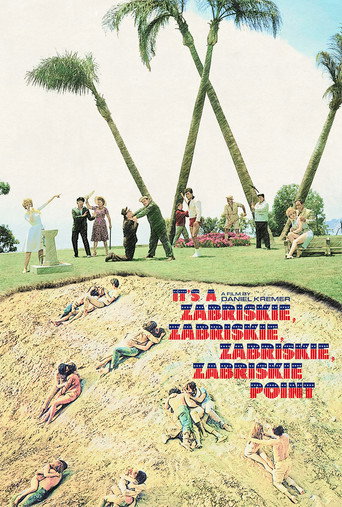
It's a Zabriskie, Zabriskie, Zabriskie, Zabriskie Point
Worlds collide in this unconventional essay film, when filmmaker, film historian, and archivist Daniel Kremer seamlessly edits Michelangelo Antonioni's legendary but controversial counterculture art film Zabriskie Point (1970) into the same narrative universe as Stanley Kramer's madcap epic comedy extravaganza It's a Mad, Mad, Mad, Mad World (1963). In creating these new sequences, Kremer comes to recognize that the exercise effortlessly draws cultural and historical parallels in twentieth-century American life that echo in present-day America. The editorial mashups weave a tangled web of social and cinematic history that root our notions of Americana in the mythology of the desert. As Kremer expounds in his narration on these often astonishing and sometimes shocking associations, his very personal ties to the subject matter become manifest.
Xenolith Atlas
An imagined plague diary

Arid Cut
Sky-high housing costs, rents no one can pay, urban development, and street crime make life difficult for RV dwellers in Berkeley, California. City bureaucrats collaborate with real estate agents to gentrify neighborhoods forcing out already marginalized people living in cars, trucks, and RVs. With no more West to escape to, they contemplate turning back East.
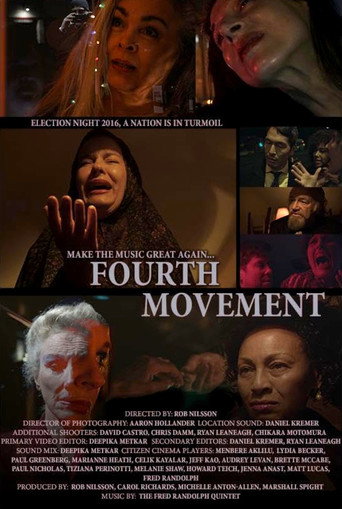
The Fourth Movement
Four interlocking stories with a Jazz theme. Four Women go out to visit the sites of the jazz clubs where Lou, 65 and dying of cancer, claims she once performed as a young singer. It's election night, Nov. 8, 2016 and the women follow the results on their cell phones. It's also opening night for the C Flat jazz club where they end the evening up as their worst fears are realized: Trump has won the election.
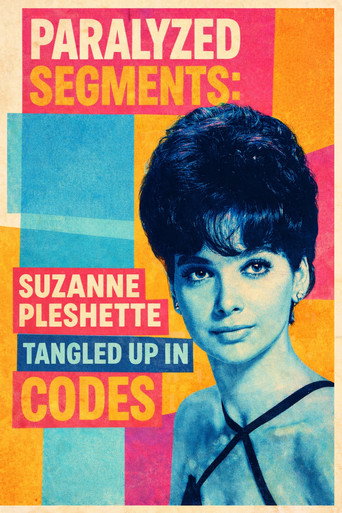
Paralyzed Segments: Suzanne Pleshette Tangled Up in Codes
A video essay about fifties and early sixties social and sexual mores, in life and in cinema, and how these "codes" (in partnership with a production Code, capital C, which was almost antediluvian in terms of sexual politics) molded and then trapped the female performers who came up in the shadow of it all. Suzanne Pleshette is a perfect case in point.
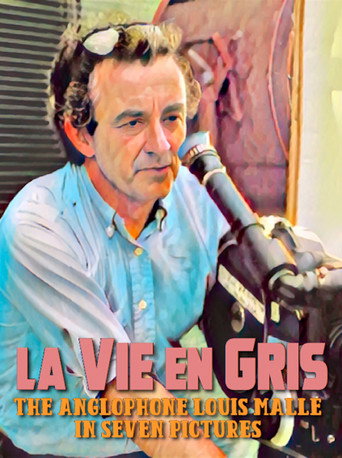
La Vie en Gris: The Anglophone Louis Malle in Seven Pictures
Filmmaker Louis Malle worked adjacent to the French Nouvelle Vague, but was admittedly never fully part of it, cementing his reputation instead with films like Elevator to the Gallows (1958), Zazie dans le Metro (1960), and Murmur of the Heart (1971), among others. In 1978, he made his first English-language picture, the highly controversial Pretty Baby, produced by Paramount Pictures. For the next decade and a half, he continued working in the English language, mostly in the United States, with films as varied as Atlantic City (1980), My Dinner With Andre (1981), Crackers (1983), Alamo Bay (1985), Damage (1992), and Vanya on 42nd Street (1992). What distinguishes these seven Anglophone films from Malle's previous Francophone films? And when Louis Malle arrived to make pictures in America, what did he see? What did America mean to Louis Malle?
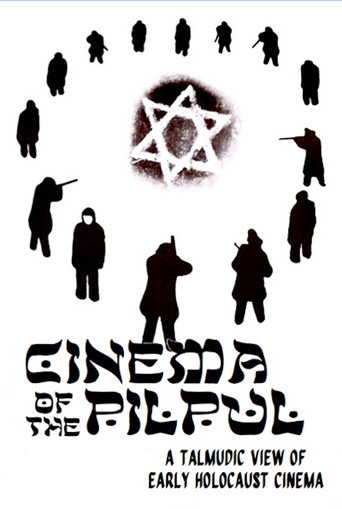
Cinema of the Pilpul: A Talmudic View of Early Holocaust Cinema
The most that mainstream culture knows of the Talmud is from the finale scene of Schindler's List, when Yitzchok Stern hands Oskar Schinder an engraved gold ring that reads, "Whoever saves one life saves the world entire." But how can Talmudic wisdom be additionally applied to the Holocaust, specifically how the tragedies of the Holocaust are depicted in cinema? Daniel Kremer, a film historian (and one-time observant/Chasidic Jew), takes a deep dive into both Jewish scholarship and what the cinema itself is capable of capturing, for once and for all time.
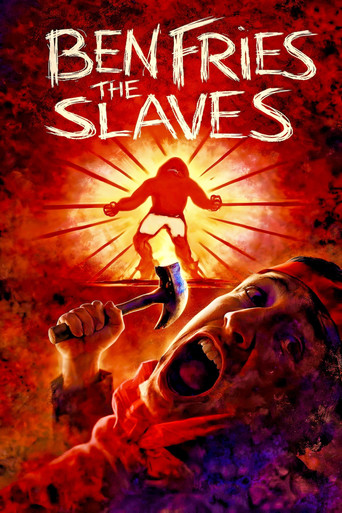
Ben Fries the Slaves
Fourteen year-old Ben Fries has a cult following, a 22-year-old girlfriend, and a mortal enemy named Rick Algarosa.
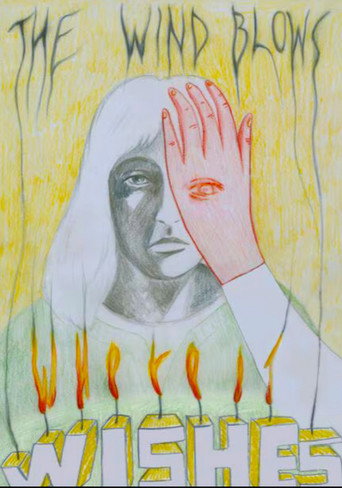
The Wind Blows Where It Wishes
Carla Durkow is a filmmaker from Istanbul who screens her latest work, entitled Farewell Mighty Spirit, at a Philadelphia art gallery. Her film-within-a-film details the aftermath of the death of the Grand Poet of Santa Maria, and the reading of his will.
Production
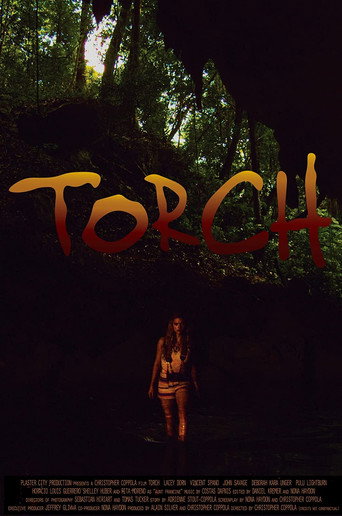
Torch
Clara grew up in the Belize jungles but was sent to live in San Francisco after a childhood trauma. Her older boyfriend, Gabriel encourages a trip back to her jungle home. Once arriving, the familiar faces and tropic environment fills Clara with hope for a brighter future. She's soon reminded that the jungle has a dark side and begins to realize that Gabriel may have an even darker one himself.
It's a Zabriskie, Zabriskie, Zabriskie, Zabriskie Point
Worlds collide in this unconventional essay film, when filmmaker, film historian, and archivist Daniel Kremer seamlessly edits Michelangelo Antonioni's legendary but controversial counterculture art film Zabriskie Point (1970) into the same narrative universe as Stanley Kramer's madcap epic comedy extravaganza It's a Mad, Mad, Mad, Mad World (1963). In creating these new sequences, Kremer comes to recognize that the exercise effortlessly draws cultural and historical parallels in twentieth-century American life that echo in present-day America. The editorial mashups weave a tangled web of social and cinematic history that root our notions of Americana in the mythology of the desert. As Kremer expounds in his narration on these often astonishing and sometimes shocking associations, his very personal ties to the subject matter become manifest.
It's a Zabriskie, Zabriskie, Zabriskie, Zabriskie Point
Worlds collide in this unconventional essay film, when filmmaker, film historian, and archivist Daniel Kremer seamlessly edits Michelangelo Antonioni's legendary but controversial counterculture art film Zabriskie Point (1970) into the same narrative universe as Stanley Kramer's madcap epic comedy extravaganza It's a Mad, Mad, Mad, Mad World (1963). In creating these new sequences, Kremer comes to recognize that the exercise effortlessly draws cultural and historical parallels in twentieth-century American life that echo in present-day America. The editorial mashups weave a tangled web of social and cinematic history that root our notions of Americana in the mythology of the desert. As Kremer expounds in his narration on these often astonishing and sometimes shocking associations, his very personal ties to the subject matter become manifest.
It's a Zabriskie, Zabriskie, Zabriskie, Zabriskie Point
Worlds collide in this unconventional essay film, when filmmaker, film historian, and archivist Daniel Kremer seamlessly edits Michelangelo Antonioni's legendary but controversial counterculture art film Zabriskie Point (1970) into the same narrative universe as Stanley Kramer's madcap epic comedy extravaganza It's a Mad, Mad, Mad, Mad World (1963). In creating these new sequences, Kremer comes to recognize that the exercise effortlessly draws cultural and historical parallels in twentieth-century American life that echo in present-day America. The editorial mashups weave a tangled web of social and cinematic history that root our notions of Americana in the mythology of the desert. As Kremer expounds in his narration on these often astonishing and sometimes shocking associations, his very personal ties to the subject matter become manifest.
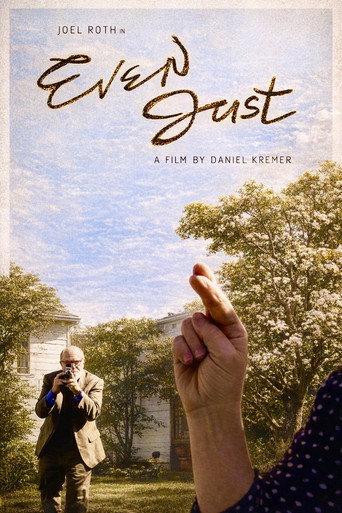
Even Just
For those with an open mind about what cinema can be. Jerry Garanyan, an ambulance-chasing San Francisco lawyer, is a camera buff and a dogged collector of moving images. Though his legal career is a dead end which nevertheless pays his bills, he lives for the ordinary ghosts, extraordinary shadows, and fugitive moments he has preserved forever in his personal library of 8mm celluloid. As his dearest sister reckons with losing her hearing, he is targeted for an elaborate con by smooth film world scam artists who purport to represent the "real movies."
Even Just
For those with an open mind about what cinema can be. Jerry Garanyan, an ambulance-chasing San Francisco lawyer, is a camera buff and a dogged collector of moving images. Though his legal career is a dead end which nevertheless pays his bills, he lives for the ordinary ghosts, extraordinary shadows, and fugitive moments he has preserved forever in his personal library of 8mm celluloid. As his dearest sister reckons with losing her hearing, he is targeted for an elaborate con by smooth film world scam artists who purport to represent the "real movies."
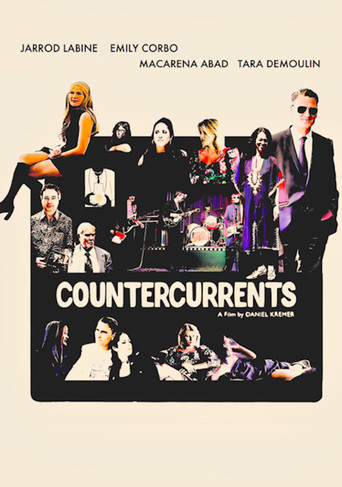
Countercurrents
Traumatized by his recent divorce, lovelorn Stanley takes off cross country to San Francisco, landing at his enterprising sister Nancy's doorstep. Nancy, who makes counterculture cinema-themed t-shirts, lives in "Camille's Castle," a frozen-in-time legacy home for displaced artists and outcasts. Together, they search for the remaining scraps of San Francisco's Summer of Love, and wind up at odds with each other. Countercurrents is an aggressive tribute to the counterculture films of the late 60's, with "easter eggs" in no short supply.
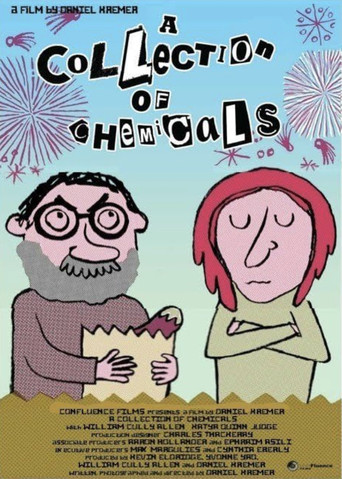
A Collection of Chemicals
Eccentric, bored recent widower Si Foster, a self-proclaimed eggplant connoisseur, is lonely. His daughter Sonya was kidnapped two years prior and, for reasons unknown to her, the ransom somehow wound up never being paid. As the Fourth of July approaches, he finally gets up the nerve to contact the kidnappers and pay the ransom. He is soon reunited with her...only to find that she has accepted her captors as her new family, and has grown to love them as such. Si is clueless and inept in interacting and trying to re-establish his relationship with her. But Sonya has a few tricks up her sleeve to get him to reveal why she was seemingly abandoned two years ago...with the help of some strange cargo she has brought back home with her.
A Collection of Chemicals
Eccentric, bored recent widower Si Foster, a self-proclaimed eggplant connoisseur, is lonely. His daughter Sonya was kidnapped two years prior and, for reasons unknown to her, the ransom somehow wound up never being paid. As the Fourth of July approaches, he finally gets up the nerve to contact the kidnappers and pay the ransom. He is soon reunited with her...only to find that she has accepted her captors as her new family, and has grown to love them as such. Si is clueless and inept in interacting and trying to re-establish his relationship with her. But Sonya has a few tricks up her sleeve to get him to reveal why she was seemingly abandoned two years ago...with the help of some strange cargo she has brought back home with her.
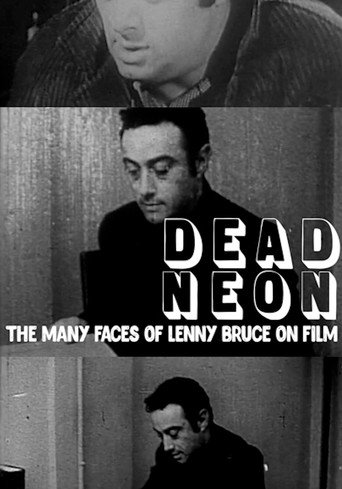
Dead Neon: The Many Faces of Lenny Bruce on Film
Lenny Bruce's depiction on film did not start or end with Bob Fosse's Lenny (1974). Through these other often offbeat cinematic incarnations, this essay piece considers how Lenny Bruce was the perfect Bob Fosse subject, and how Fosse's focus on the lives of performers invigorated his portrait of the controversial, trail-blazing comic.
Gallery