Cristián Sánchez Movies, TV Shows, and Filmography
Cristián Sánchez
Directing
Biography
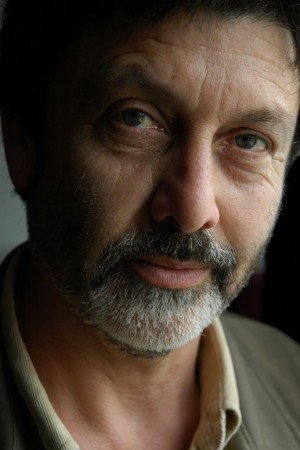
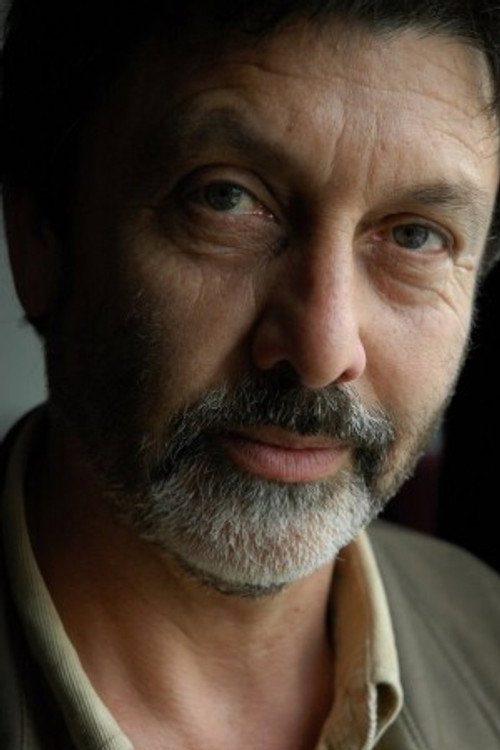
Luis Cristián Sánchez Garfias (Santiago, June 19, 1951) is a Chilean director, screenwriter and film scholar. He studied, like several other filmmakers of his generation, at the School of Communication Arts of the Universidad Católica before the dictatorship. His films, all low-budget, have generally had little public diffusion, both because of their airtight content and because of the scarce support in the official distribution circuits. They have, however, enjoyed a positive reception at international festivals in Havana, Berlin, Biarritz and Nantes. It can be said that their cinema is "underground"; it is, in their own words, "a cinema of affective image, or of image-pulsion, in the manner of Buñuel". In his work he seeks to reveal "mythical relationships", since, in his opinion, "to reach a higher degree of complexity, cinema must deal with myth". He proclaims his affinity with what Raúl Ruiz does, although he differentiates himself from him - he says - because his cinema "is baroque" while his is more inclined towards an "asceticism of the image, and a more classical structure, of linear narration".
Filmography Movies

Production
Voy y vuelvo
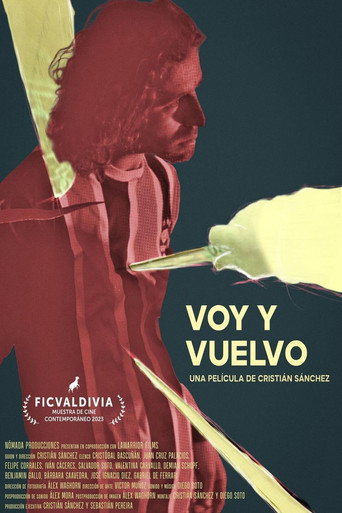
With the Kafkaesque phrase "he who does not seek does not find, but he who does not seek is found", Sánchez begins an episodic story scripted and filmed in only 27 hours where there is virtually a single location that resembles, in a very stylized way, a prison. From there, Alejandro, a young lumpen, interacts with various characters that burst into the space, generating situations that allude to his minimal survival, reselling or exchanging objects. Voy y vuelvo is verbally organized with an anthropological approach, with the same interest of the director for the Mapuche dialect in Cautiverio Feliz and in Date una vuelta en el aire, and from there incorporates elements of popular culture and the notion of purgatory as a recurring figure.
Cosita
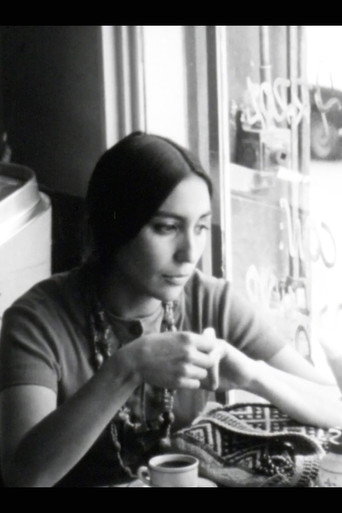
A young university student tells us the experience of become pregnant, without having a family or a stable economic situation. She must abandon her studies and her job to adapt to the new situation while avoiding pressure from her partner who forces her to have an abortion. Short film made by students of the School of Communication Arts of the Catholic University of Chile.
Voy y vuelvo
With the Kafkaesque phrase "he who does not seek does not find, but he who does not seek is found", Sánchez begins an episodic story scripted and filmed in only 27 hours where there is virtually a single location that resembles, in a very stylized way, a prison. From there, Alejandro, a young lumpen, interacts with various characters that burst into the space, generating situations that allude to his minimal survival, reselling or exchanging objects. Voy y vuelvo is verbally organized with an anthropological approach, with the same interest of the director for the Mapuche dialect in Cautiverio Feliz and in Date una vuelta en el aire, and from there incorporates elements of popular culture and the notion of purgatory as a recurring figure.
Voy y vuelvo
With the Kafkaesque phrase "he who does not seek does not find, but he who does not seek is found", Sánchez begins an episodic story scripted and filmed in only 27 hours where there is virtually a single location that resembles, in a very stylized way, a prison. From there, Alejandro, a young lumpen, interacts with various characters that burst into the space, generating situations that allude to his minimal survival, reselling or exchanging objects. Voy y vuelvo is verbally organized with an anthropological approach, with the same interest of the director for the Mapuche dialect in Cautiverio Feliz and in Date una vuelta en el aire, and from there incorporates elements of popular culture and the notion of purgatory as a recurring figure.
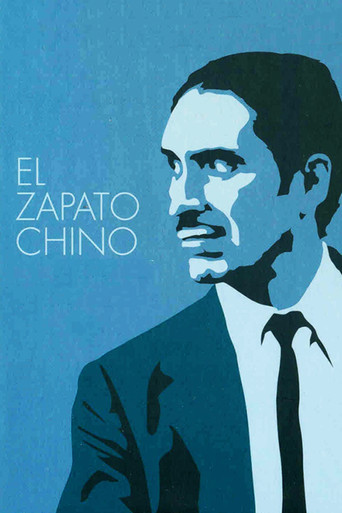
The Chinese Shoe
A taxi driver finds Marlene, a provincial woman, lost in a brothel. Immediately he decides to help her out and take her at his place. Little by little, his paternal protection turns into a bizarre passion
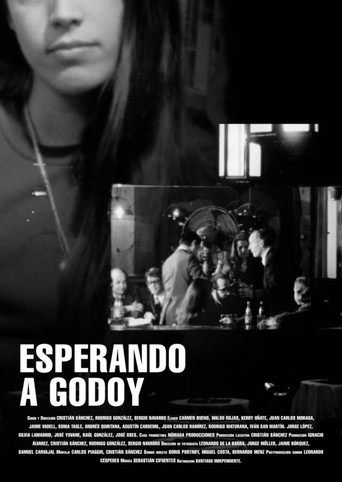
Esperando a Godoy
A group of left-wing intellectuals take over a building with the purpose of forming a Ministry of Culture, however, the workers oppose the takeover. Intellectuals and workers establish a coexistence pact while waiting for Godoy, a union boss. After conflicts over ideological differences about culture, the takeover dissolves, just when Godoy appears with a totally elitist and apolitical discourse.
Esperando a Godoy
A group of left-wing intellectuals take over a building with the purpose of forming a Ministry of Culture, however, the workers oppose the takeover. Intellectuals and workers establish a coexistence pact while waiting for Godoy, a union boss. After conflicts over ideological differences about culture, the takeover dissolves, just when Godoy appears with a totally elitist and apolitical discourse.

El otro round
"Dinamita" Araya is living the crudeness of normality in an uneventful life since he retired from boxing. A chance encounter with a woman brings him back to life. The other round now takes place on life itself.
El otro round
"Dinamita" Araya is living the crudeness of normality in an uneventful life since he retired from boxing. A chance encounter with a woman brings him back to life. The other round now takes place on life itself.
El otro round
"Dinamita" Araya is living the crudeness of normality in an uneventful life since he retired from boxing. A chance encounter with a woman brings him back to life. The other round now takes place on life itself.
Gallery