Claude Miller Movies, TV Shows, and Filmography

Claude Miller
Directing
Biography
Claude Miller (20 February 1942 – 4 April 2012) was a French film director, producer and screenwriter. Claude Miller was born to a Jewish family. A student at Paris' IDHEC film school from 1962 through 1963, Miller had his first practical cinematic experience while he was in uniform, serving with the Service Cinéma de l'Armée. From 1965 until 1974, Miller worked in assistant and supervisory capacities for many of France's major directors, including Robert Bresson and Jean-Luc Godard. His principal mentor was François Truffaut, under whose tutelage Miller directed a trio of shorts and La meilleure façon de marcher (The Best Way to Walk, 1976), his first theatrical feature, a coming-of-age drama which bore traces of Truffaut's Les Mistons (1957) and The 400 Blows (1959). Miller received César nominations for Best Director and César Award for Best Screenplay, Dialogue or Adaptation for this film. His subsequent films can also be perceived as homages to Truffaut, many even using the same production personnel. The following year he made Dites-lui que je l'aime, for which he received a second César nomination for Best Director. He won a César Award for Best Screenplay, Dialogue or Adaptation in 1981 for Garde à vue, and the Louis Delluc Prize in 1985 for L'Effrontée, for which he received another César nomination for Best Director. In 1983 he directed Mortelle randonnée. When Truffaut died in 1984 during the preparation of another feature about a confused, adolescent serial thief entangled with an older lover, La Petite Voleuse (The Little Thief), Miller took over the project, completing the film in 1988. The latter film was a considerable international success, and solidified Miller's status as one of France's major film-makers. On French television, Miller directed dozens of commercials and the six-part miniseries Traits de Mémoire (1976). After a four-year absence, Claude Miller returned to active filmmaking with The Accompanist (1992) and Le Sourire (1994). He had to wait until 1998 for his next major success: La Classe de Neige, the chilling story of a lonely boy on a school skiing holiday, which won the Jury Prize at the 1998 Cannes Film Festival. Later films Miller directed include Betty Fisher et autres histoires (2001) which Peter Bradshaw wrote that Miller "endowed it with the fascination of an exotic, spiky, poisonous flower", La Petite Lili (2003), and A Secret (2007). At the time of his death he was working on an adaptation of François Mauriac's Thérèse Desqueyroux. The film was selected to close the 2012 Cannes Film Festival. Description above from the Wikipedia article Claude Miller, licensed under CC-BY-SA, full list of contributors on Wikipedia.
Filmography Movies
Acting
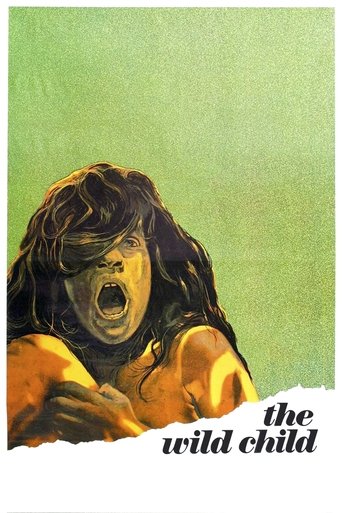
The Wild Child
The true story of Victor of Aveyron. In a French forest circa 1798, an abandoned child — feral, filthy and mentally impaired — is found. Dr Jean Marc Gaspard Itard becomes interested in the case and patiently attempts to civilise the boy.
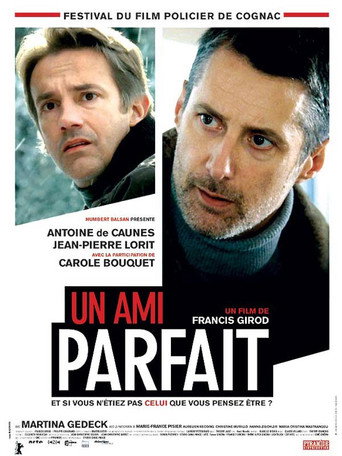
A Perfect Friend
"Julien Rossi wakes up in a hospital bed and finds he has no memory of the events that left him in a coma in the early hours of New Year's Day. Was he attacked? Or was his head injury caused in an accident? This is only the first of many mysteries Julien has to resolve. Who is Marl?ne, the beautiful woman who claims to be his girlfriend? Why doesn't his real girlfriend, Anna, return his calls? What made him walk out on his job as a leading investigative reporter? Julien relies on Lucas, his best friend and
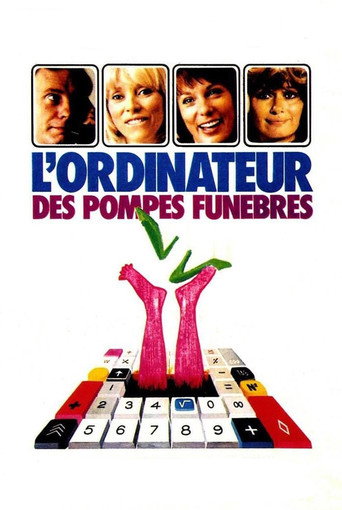
The Probability Factor
Fred works for an insurance company as a computer engineer. He is bored with enduring the trials of his shrewish wife, so, after using actuarial tables to calculate the most common means of death, he cleverly prepares the family bathroom and brings about her demise. For a while he is content with his new freedom, but then he recognizes that a friend is in a similar situation.

La vie de Michel Muller est plus belle que la vôtre
A documentary crew follow a minor TV star with a giant ego in is everyday life.
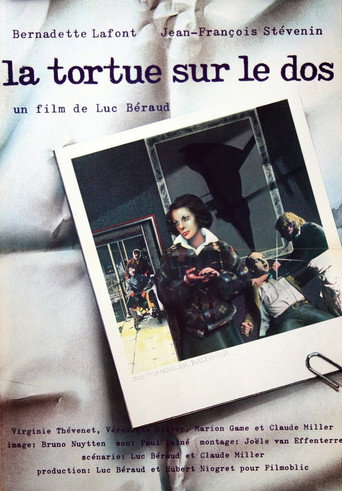
Like a Turtle on Its Back
Unable to put a single word on paper, a youngish man with one novel to his credit finds that his life is crumbling to ruins around him because of his severe case of writer's block. He tries every remedy known to man and makes up a few new ones in this comedy. All his efforts are futile: he loses his girlfriend and his apartment and has a succession of misadventures until finally, homeless and hospitalized, he rediscovers his inspiration.

Heat of Desire
In France in the near future, revolt and chaos erupt. A right-wing politician, Philippe Muphand, is set to take control when his lady friend Caroline walks out, announcing she will take up with the first fool she sees. The fool is Serge Laine, a professor and author of the prize-winning "Le voyage qui ne finit pas," headed to the train station for tickets to Barcelona where he and his wife will enjoy a second honeymoon and he will lecture at the university. Caroline seduces Serge, and he soon abandons wife, family, job, and honesty to embrace Caroline, the romanticism of Jack London, and murder.
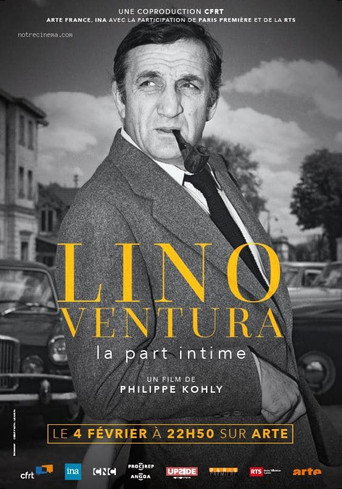
Lino Ventura, la part intime
The fall of 2017 marked the 30th anniversary of Lino Ventura's death. Whether in the role of tough cops or tough guys - in the 1960s, Lino Ventura was one of the most popular French character actors. The new portrait begins with the actor's childhood. He came to Paris from Parma in Italy as a child with his single mother and faced many humiliations in a xenophobic environment. The documentary explores the man behind the rough exterior and the tough characters he embodied, most of whom were courageous but introverted loners.

2 or 3 Things I Know About Her
As the city of Paris and the French people grow in consumer culture, a housewife living in a high-rise apartment with her husband and two children takes to prostitution to help pay the bills.
Day for Night
A committed filmmaker struggles to complete his latest project while coping with a myriad of crises, personal and professional, among the cast and crew.
Success Story
a documentary on the making of The Inquisitor
Production

Bed and Board
Parisian everyman Antoine Doinel has married his sweetheart Christine Darbon, and the newlyweds have set up a cozy domestic life of selling flowers and giving violin lessons while Antoine fitfully works on his long-gestating novel. As Christine becomes pregnant with the couple's first child, Antoine finds himself enraptured with a young Japanese beauty. The complications change the course of their relationship forever.
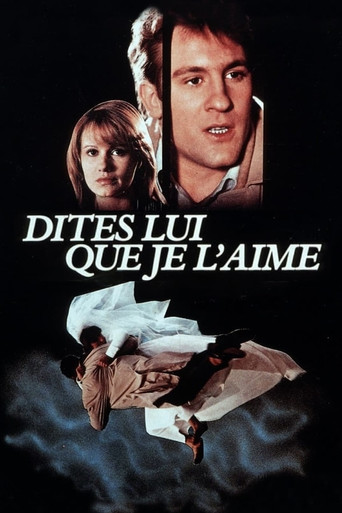
Tell Her That I Love Her
Industrious accountant David Martinaud claims to be visiting his parents every weekend, but it's merely a cover for the labor-intensive refurbishing of his country cottage. The reason for David's secrecy is that his childhood crush, Lise, lives nearby, and, although she's married, he still believes they'll get together. His devotion to the idea borders on mania, and, when Lise's husband is accidentally killed, he quickly spirals out of control.
Tell Her That I Love Her
Industrious accountant David Martinaud claims to be visiting his parents every weekend, but it's merely a cover for the labor-intensive refurbishing of his country cottage. The reason for David's secrecy is that his childhood crush, Lise, lives nearby, and, although she's married, he still believes they'll get together. His devotion to the idea borders on mania, and, when Lise's husband is accidentally killed, he quickly spirals out of control.
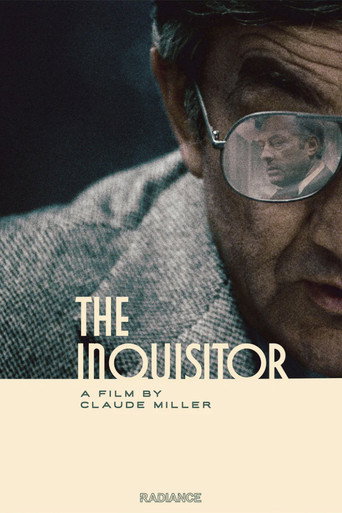
The Inquisitor
Martinaud, an illustrious notary suspected of being the perpetrator of two horrendous crimes, voluntarily agrees to be questioned by Inspector Gallien on New Year's Eve. What initially is a routine procedure, soon becomes a harsh interrogation that seems to confirm the initial suspicions.
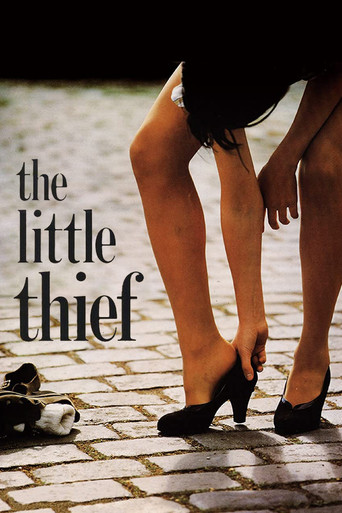
The Little Thief
In a small town in post-WWII France, 16-year-old Janine tries to improve her conditions by any means necessary. Three people—Michel, a married lover; Raoul, a fellow thief; Mauricette, a photographer she meets in prison—will help her learn from her mistakes.
The Little Thief
In a small town in post-WWII France, 16-year-old Janine tries to improve her conditions by any means necessary. Three people—Michel, a married lover; Raoul, a fellow thief; Mauricette, a photographer she meets in prison—will help her learn from her mistakes.
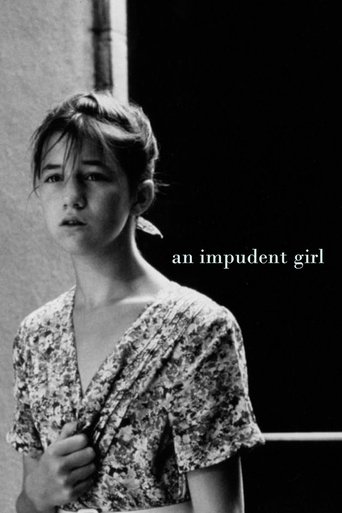
An Impudent Girl
Charlotte Castang is a working-class 13-year-old girl, who lives in a drab, run-down neighbourhood, and is ready to become an adult. Her mother died giving birth to her, and she lives with her crass brother and a father whose attention is elsewhere. Her only friend is Lulu, a sick 10-year-old she regards as a pest. Charlotte is antisocial, bored and dreams of a better life. Her life improves when she meets Clara Bauman, a pianist prodigy.
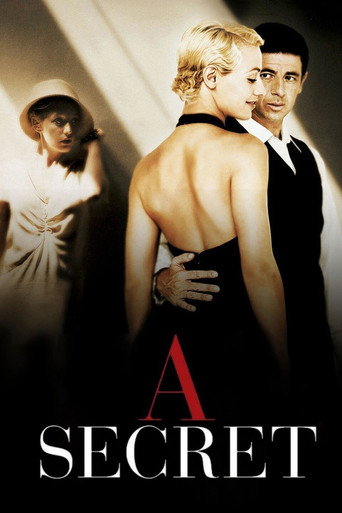
A Secret
In 1953, a sensitive French boy finds out from a neighbor that his family's Jewish. François Grimbert becomes a physician, and gradually peels the layers of his buried family history which resulted in his difficult upbringing, raised as Catholic by his "Aryan" appearing parents. His athletic father labored to stamp out stereotypical Jewish characteristics he perceived in his son, to keep the family's many secrets, as most relatives fought in World War II, and later were hauled off to labor and death camps by the Gestapo.
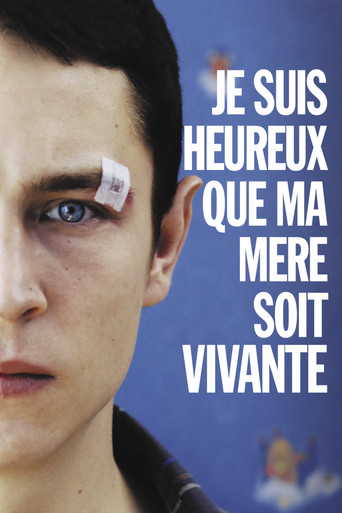
I’m Glad My Mother Is Alive
Now a taciturn adult, an adoptee finds his biological mother and strikes up a relationship fraught with tension and emotion.
I’m Glad My Mother Is Alive
Now a taciturn adult, an adoptee finds his biological mother and strikes up a relationship fraught with tension and emotion.
Gallery