Claude Lelouch Movies, TV Shows, and Filmography

Claude Lelouch
Directing
Biography
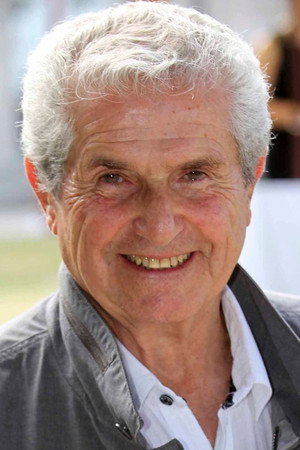
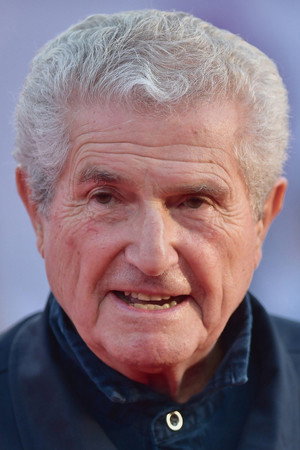
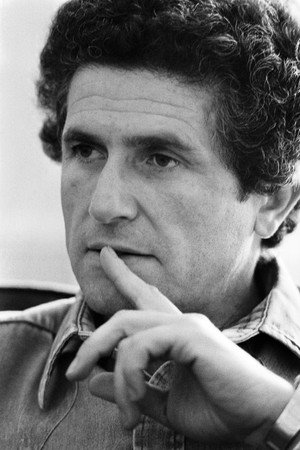
Claude Barruck Joseph Lelouch (born 30 October 1937) is a French film director, writer, cinematographer, actor and producer. Lelouch grew up in an Algerian Jewish family. He emerged as a prominent director in the 1960s. Lelouch gained critical acclaim for his 1966 romantic melodrama film A Man and A Woman. At the 39th Academy Awards in 1967, A Man and a Woman won Best Original Screenplay and Best Foreign Language Film. Lelouch was also nominated for Best Director. While his films have gained him international recognition since the 1960s, Lelouch's methods and style of film are known for attracting criticism. Lelouch was born in the 9th arrondissement of Paris to Charlotte (née Abeilard) and Simon Lelouch. His father was born to an Algerian Jewish family while his mother was a convert to Judaism. Lelouch says that his first contact with cinema was very young: "My mother hid me in movie theaters when I was little. We were wanted by the Gestapo. [...] Cinema, for starters, saved my life." Of his personal faith, he says "Today I believe in God. My faith was sparked when I made a film in Israel. Over there, it is impossible not to believe in God. I loved the places of worship of all the religions. Everything which happens is for the best. I sometimes have the feeling that my inspiration comes from heaven. I think it is wonderful to be Jewish." His father bought him a camera as a fresh start after his failure in the baccalaureat. He started his career with a reportage – one of the first to film daily life in the Soviet Union, with the camera hidden under his coat as he made his personal journey. He also filmed sporting events, like the 24 Hours of Le Mans and the Tour de France. Lelouch served in the French Army working in the film unit where he made over 100 films. He was demobilized in 1960. His first full-length film as director, Le Propre de l'homme, was decried by the critics: "Claude Lelouch, remember this name well, because you will not hear it again" – Cahiers du cinéma said. La femme spectacle (1963), following prostitutes, women shopping, going for nose-jobs, was censored for its misogynist tendency. A Man and a Woman changed his fortunes and was met with favour even by the Cahiers group. The 1981 musical epic Les Uns et les Autres is widely considered as his masterpiece, and his credits now add up to 50 or so films. His 1976 film, C'était un rendez-vous purportedly features a Ferrari 275 GTB being driven at extreme speed through the streets of Paris at dawn. The entire short is shot from the point of view of the car. Legend has it that Lelouch was arrested after it was first shown publicly. In a 2006 interview, Lelouch stated that he drove his own Mercedes-Benz 450SEL 6.9 in the film and created a soundtrack of the radically different sounding Italian sports car for effect. He collaborated more than two dozen times with composer Francis Lai. They scored a great hit with the theme song for the film A Man and a Woman sung by Nicole Croisille and Pierre Barouh, and more than 300 versions of the song exist. In 1993 he was the president of the jury at the 18th Moscow International Film Festival. ... Source: Article "Claude Lelouch" from Wikipedia in English, licensed under CC-BY-SA.
Filmography Movies
Acting
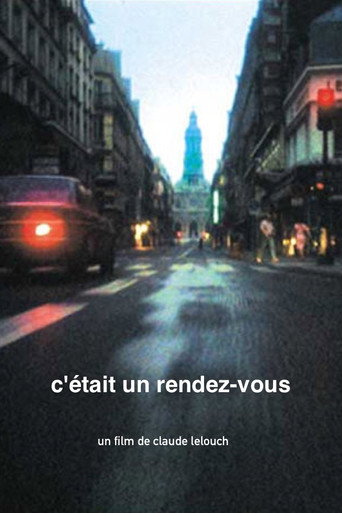
Rendezvous
A high-speed drive through the streets of Paris.
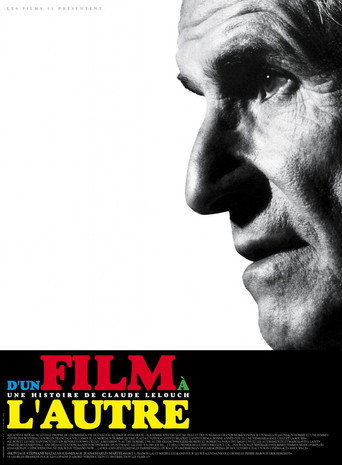
D'un film à l'autre
On April 13, 2011, Les Films 13 production company turned 50. How can one celebrate an anniversary of this sort ? By simply making "another" film that would sum up all the earlier ones. D'un film à l'autre is hence a kind of anthology of the films produced Les Films 13 since the 1960s (short and feature films written and directed for the main part by Claude Lelouch), a best-of of half a century of cinema, going from Le Propre de l'homme to What Love May Bring. A biography in images of a filmmaker as admired as he is criticized. In reality, D'un film à l'autre is more than a series of film excerpts, interviews, and making-of documents (some of which possess an undeniable historical value, like that from A Man and A Woman, or the final performances of Patrick Dewaere).
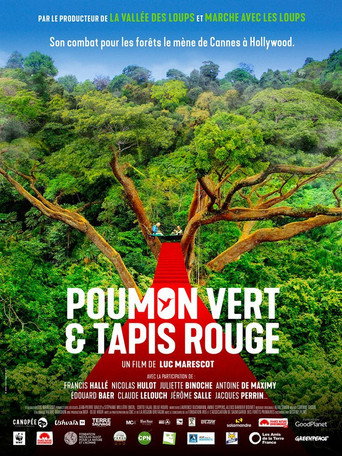
Poumon Vert et Tapis Rouge
To help Francis Hallé in his fight to save the last tropical forests, a documentary filmmaker with a passion for nature decides to make his first film: "The Botanist", an ecological thriller with Leonardo DiCaprio. He traces his path with malice, obstinacy, and discovers, with candor, the arcana of the seventh art. Even if he never gives up, will his film ever exist?

Catherine Deneuve by Chance, or, A Certain Blondeness
A documentary interview with the French actress while on the sets of films in production. Several of the directors for whom she has made films are also interviewed
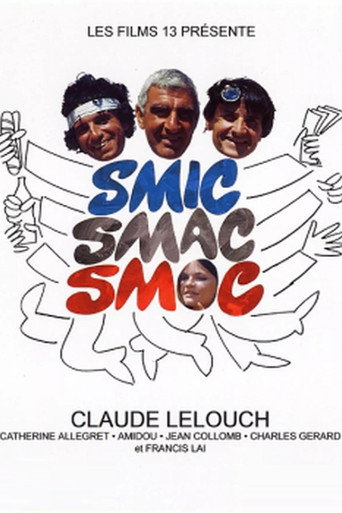
Smic, Smac, Smoc
Charles, Jean and Amidou are workmen at the La Ciotat shipyards and live in the same construction facility. One day, Amidou leaves them to marry Catherine, a salesgirl. The trouble for Charles and Jean is that going to their friend's wedding means buying new clothes, which is problematic given their low income Moreover, they are determined to make this day an unforgettable one, despite their lack of money. Will they be able achieve their aim?
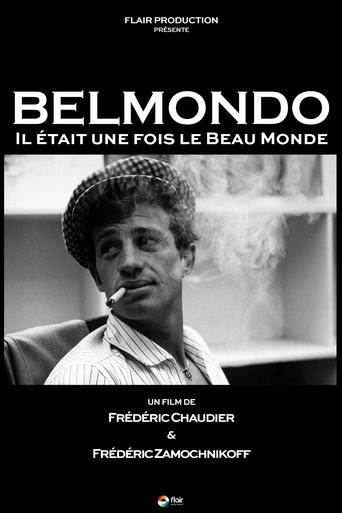
Belmondo, il était une fois le beau monde
A profile of Jean-Paul Belmondo by his peers. Besides appearing in over eighty films, the actor also delighted audiences with his dangerous stunts, his laughter, his jokes, and his refreshing ease and impertinence. Cultivating the art of the counterpunch, he spanned half a century of French cinema.
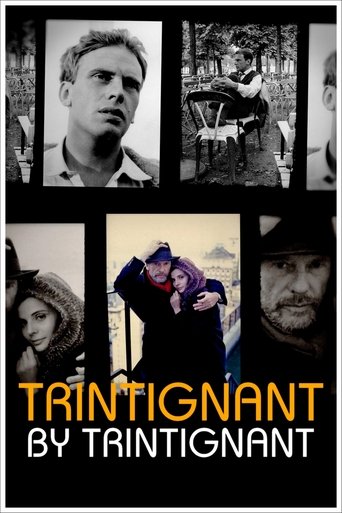
Trintignant by Trintignant
A portrait of a man of rare elegance and enigmatic charm, versatile and successful: Jean-Louis Trintignant, one of the most critically acclaimed French actors of the last sixty years, known for his numerous roles on stage and screen.
Re-belles
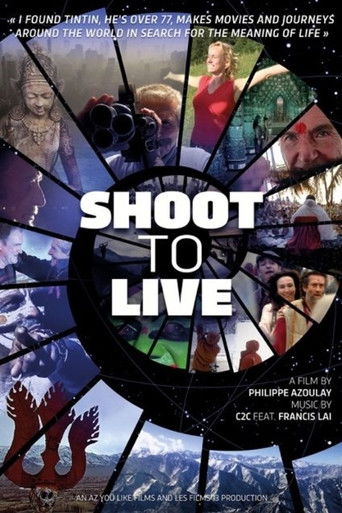
Shoot to Live
A documentary on filmmaker Claude Lelouch, following him over seven years.
Production
Rendezvous
A high-speed drive through the streets of Paris.
Shoot to Live
A documentary on filmmaker Claude Lelouch, following him over seven years.
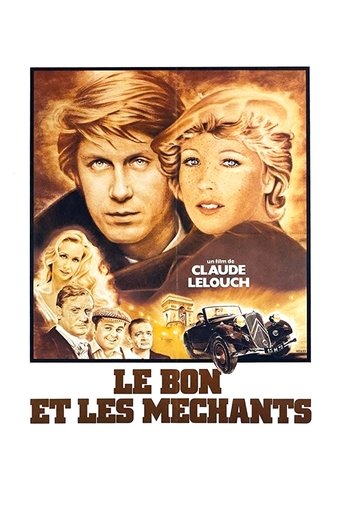
The Good and the Bad
The film follows the exploits of Jacques, a car-mechanic turned pro-thief, and his Jewish co-conspirator Simon as their robberies, beginning well before the Second World War, take on a political coloration under the occupation.
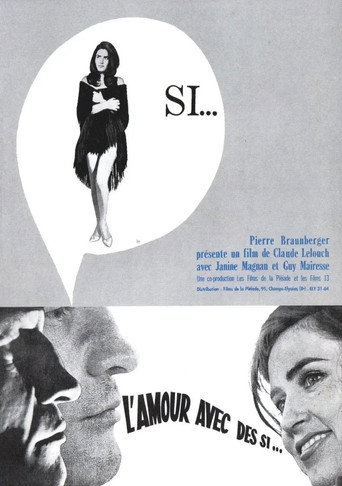
In the Affirmative
The film is a road movie that follows a middle aged man who gives a young woman a lift. On the car radio, news bulletins warn the population against a recently escaped sadist who is known to prey on young women and children. Lelouch often cuts away from the main story, if only briefly, to parallel events that are not necessarily crucial to the story but illustrate what is suggested by the radio.
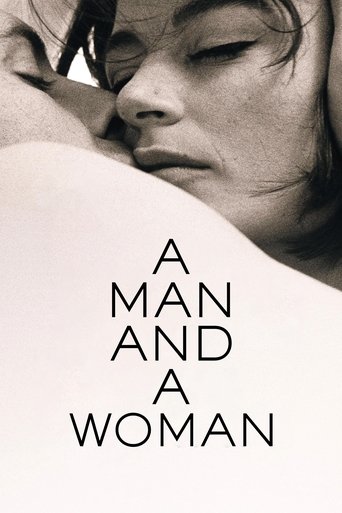
A Man and a Woman
A man and a woman meet by accident on a Sunday evening at their childrens' boarding school. Slowly, they reveal themselves to each other, finding that they have something deeply in common.
In the Affirmative
The film is a road movie that follows a middle aged man who gives a young woman a lift. On the car radio, news bulletins warn the population against a recently escaped sadist who is known to prey on young women and children. Lelouch often cuts away from the main story, if only briefly, to parallel events that are not necessarily crucial to the story but illustrate what is suggested by the radio.
A Man and a Woman
A man and a woman meet by accident on a Sunday evening at their childrens' boarding school. Slowly, they reveal themselves to each other, finding that they have something deeply in common.
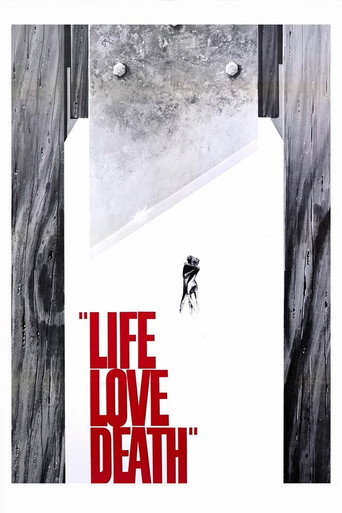
Life Love Death
François Toledo, married businessman and father, falls head-over-heels in love with Janine, a work colleague. However, he is soon found out: after three dates, he strangles some prostitutes, when, the victim of blackmail, he becomes dishonored. He is taken to court, and sentenced to be killed by a guillotine.
Life Love Death
François Toledo, married businessman and father, falls head-over-heels in love with Janine, a work colleague. However, he is soon found out: after three dates, he strangles some prostitutes, when, the victim of blackmail, he becomes dishonored. He is taken to court, and sentenced to be killed by a guillotine.
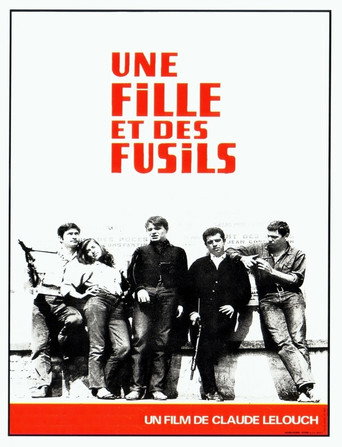
To Be a Crook
Four young people, tired of working life, decide that they can earn money from crime than they can from work. The film follows their training at the first "crime school", as well as their work.
Gallery