Christoph Beyertt Movies, TV Shows, and Filmography

Christoph Beyertt
Acting
Biography
No biography available.
Filmography Movies
Acting

Zement
Early 1921: a man is on his way home. Gleb Chumalov, regimental commander, worker and Hero of the Order of the Red Banner, returns to his home town from the Civil War. The victory over the enemies of the Russian people gives him the conviction that a new, better time will dawn overnight. Gleb looks for his comrades from earlier years, but only finds people who are emaciated by their efforts. The cement works where he used to work has been plundered and abandoned. With great effort, Gleb and his comrades try to get the plant up and running again. The struggle seems to begin anew... It is the time after the victory of the “Great October Socialist Revolution“ and the time of building a new society.
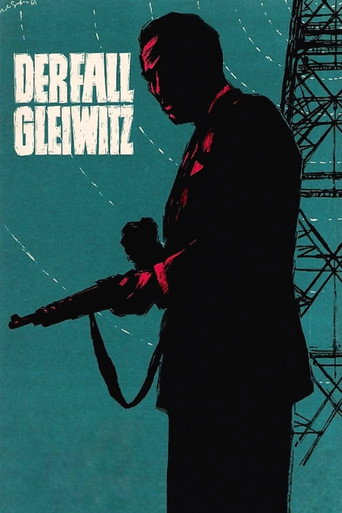
The Gleiwitz Case
To justify their invasion of Poland at the start of WWII, Nazi high command hatches a secret plan: six Polish men from an SS training camp are sent on a special mission to the town of Gleiwitz, to fake a Polish raid on Germany. The ‘provoked’ Germans will thus launch a ‘counterattack’ on Poland.

Die Weber
The emaciated weavers deliver their homework to the factory owner Dreißiger and receive their wages, on which they cannot live and cannot die. Driven by hunger, they ask for more money, but to no avail. Only the young baker and the reservist Jäger put up a fight, and both manage to encourage a large group of weavers to revolt against the factory owner. They break into his house and destroy it, whereupon he flees. The revolt continues, the weavers move through the surrounding villages, where more people join them. A little later, the military arrives to intervene against the angry crowd and restore the old order...

Maria und der Paragraph
Maria is a record saleswoman by profession. She is lucky to have a job, because the year is 1930 and a major economic crisis has hit the world, accompanied by an army of unemployed people, especially in Germany. Maria is aware of her good fortune; in order to secure it, she has to do without many things. What business owner would employ an unmarried woman with a child in times like these? When Maria became pregnant, she, like many other women, had to become "active" and do something about this "misfortune". So she seeks "help" from a female doctor, trusting in her youth and hoping for better times when family happiness could come true for her.
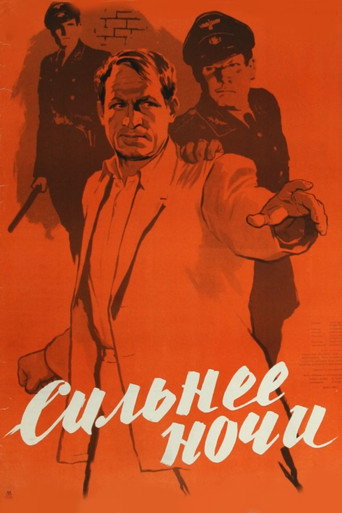
Stronger Than the Night
The story of a resistance fighter in the Nazi era: Communist Hans Löning was arrested in 1933, imprisoned in a concentration camp and tortured. The Gestapo plans to smash the resistance group around Löning. Despite the imminent threat to his life, Löning, together with his wife, organized the passive resistance of the Hamburg workers against the Hitler regime. In 1944, Löning was again taken and killed.
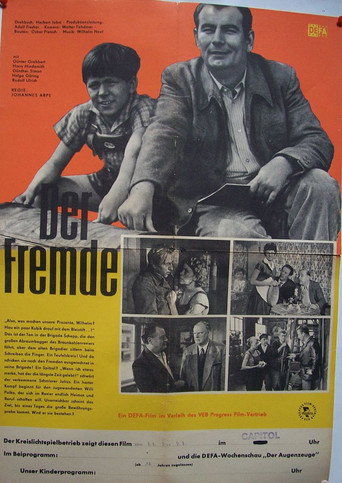
Der Fremde
After years of drifting around, Willi Palko arrives in the lignite mining area. He was not only looking for a new job, but also wanted to finally settle down here. The party leadership sends him to the Schepp brigade, which has made itself "suspicious" (on paper) due to its extremely high production figures. The stranger is accused of being a spy for the factory management. Willi finds it difficult to assert himself, but he is taken with the big excavator, the prospect of one day being allowed to drive it, and the brash flapper Hanna. He stays, and with his help a mine foreman is exposed as a Western agent and coal production is brought up to a really high level.

The Best Years
In 1945, Ernst Machner returns home from the war in his mid-20s. Tuche would like him to weave for a living, but his comrades persuade him to become a young teacher instead.
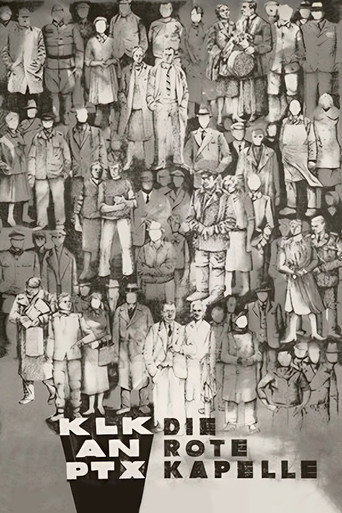
KLK Calling PTZ – The Red Orchestra
East German film about the history of Red Orchestra, a real life German pro-Soviet spy ring created after the rise of Hitler that turned into a resistance movement led by a leftist Nazi officer, Harro Schulze-Boysen, and Arvid Harnack.
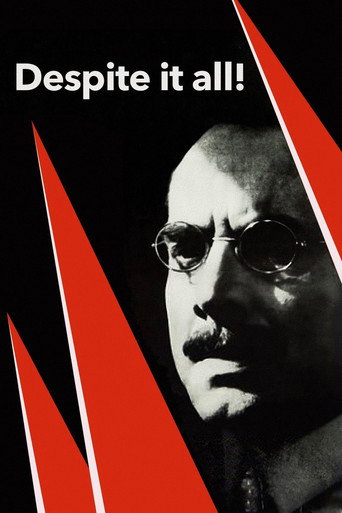
Despite It All!
October 1918: Karl Liebknecht is released from prison and Berlin workers celebrate his release. Although WWI is almost over, the German Kaiserreich in vain sends its last reserves to the slaughter. The working class is in a rebellious mood; the uprising of Kiel’s sailors against war and militarism sets off a call for revolution led by Liebknecht. On November 9, Liebknecht declares the Free Socialist Republic of Germany. But pro-Kaiser military and right wing Social Democrats oppose him.

Les Misérables
In 19th century France, Jean Valjean, a man imprisoned for stealing bread, must flee a relentless policeman named Javert. The pursuit consumes both men's lives, and soon Valjean finds himself in the midst of the student revolutions in France.
Gallery