Christine Hakim Movies, TV Shows, and Filmography

Christine Hakim
Acting
Biography
Herlina Christine Natalia Hakim (born December 25, 1956, in Kuala Tungkal, Jambi) is an Indonesian actress, film producer, and activist. Christine is of mixed ancestry, with family roots from Aceh, Minang, Java, and the Middle East. Christine Hakim was born in Jambi and grew up in Yogyakarta, initially aspiring to become an architect or psychologist. Her career path changed when she was discovered by director Teguh Karya for his 1973 film Cinta Pertama (First Love). Her role in the film earned her the Citra Award for Best Leading Actress and convinced her to pursue a career in acting. Since then, she has starred in numerous films, including Badai Pasti Berlalu (The Storm Will Surely Pass) in 1977 and Tjoet Nja' Dhien in 1988. She also had a minor role in the 2010 Hollywood film Eat Pray Love. As of 2018, she had won eight Citra Awards, received lifetime achievement awards from the Indonesian Film Festival, the Indonesian Movie Actors Awards, and the Cinemanila International Film Festival, and served as a jury member at the 2002 Cannes Film Festival. Christine expanded her career into film production in 1998, producing Daun di Atas Bantal (Leaf on a Pillow) and Pasir Berbisik (Whispering Sands). She later ventured into documentary filmmaking and became an advocate for education and autism awareness. Since 2008, she has served as Indonesia's Ambassador to UNESCO, focusing on education issues. Christine initially had no intention of becoming an actress. She dreamed of becoming an architect or psychologist. However, her fate changed when Teguh Karya offered her a role in Cinta Pertama. He approached her after seeing her modeling photos in a magazine, which she had done merely to help a friend. Unable to refuse Karya's warm and friendly demeanor, Christine described how he "reeled her in slowly, like a fisherman." Despite initially considering leaving acting after completing the shoot, her work in Cinta Pertama earned her a Citra Award for Best Leading Actress, convincing her to continue acting. Teguh Karya later revealed that he had argued with the film's producer over casting Christine. The producer was concerned that she was "too skinny and lacked a figure," to which Karya retorted, "Are we selling a movie or selling breasts?" The following year, Christine starred in another Teguh Karya-directed film, Kawin Lari (Elopement). The experience gave her a deeper understanding of acting, allowing her to "see life from a different perspective through character study." In 1976, she starred in Sesuatu yang Indah (Something Beautiful), directed by Wim Umboh, marking the first film in which Christine used her own voice. In previous films, her voice had been dubbed by Titi Qadarsih as her natural voice was considered "too deep." In 1977, she appeared in Badai Pasti Berlalu, featured on the film's poster and soundtrack album cover. Christine showcased 14 Indonesian films at the Nantes Three Continents Festival in November 1983, appearing in half of them. Two years later, she attended the Cannes Film Festival as an observer, establishing a working relationship with Pierre Risient, who later helped bring her films to Cannes.
Filmography Movies
Acting

Sleeping Man
Ever since an accident in the mountains outside town, Takuji's slept in a coma; his neighbors care for him as new events occur every day.

Princess of Mount Ledang
In the late 15th century, a forbidden romance blossoms between Gusti Putri, a Javanese Hindu princess and Hang Tuah, a Malay Muslim warrior from Melaka, against a backdrop of war and mysticism.

Merantau
In Minangkabau, West Sumatera, Yuda a skilled practitioner of Silat Harimau is in the final preparations to begin his "Merantau" a century's old rites-of-passage to be carried out by the community's young men that will see him leave the comforts of his idyllic farming village and make a name for himself in the bustling city of Jakarta.

Just Mom
When Siti loses the attention of her biological children, who are established and busy with their respective jobs, she takes care of Murni, a psychoneurotic pregnant girl. What Siti did made her children worry and forbade her. Accompanied by her adopted son Jalu, Siti is determined to take care of Murni when her physical condition is getting weaker due to cancer.

Tris
Tristan feels useless to his family. His decision to see a psychologist made him realize something he had never imagined before.

Sekar
Sekar is a blind woman who makes her mother's batik her whole world. Until Sekar met a silversmith who made batik motifs for her. The man brought batik to life in another way.

Tropic of Emerald
Theo Staats arrives at his uncle's rubber plantation in 'Our' Indies, The Emerald Belt. He meets Ems, the beautiful singer of the club, and falls head over heels for her. Ems, who comes from a poor Indonesian-European family, does not want to betray her Dutch husband, to whom she owes her status, but she cannot suppress her feelings. The Emerald Belt follows their passionate affair for ten years: from 1939, when the Dutch are carefree and enjoying their colonial power; through the Japanese invasion in 1942 and the difficult war years that will separate the lovers; to the struggle that led to Indonesian independence in 1949, when they are faced with a new choice.

Sara
Sara, a transgender woman goes back to her remote hometown to attend her father’s funeral. She finds the village has changed greatly, and that the villagers have become extremely religious. Added to that, her mother suffers from dementia and treats her like a complete stranger.

Tjoet Nja' Dhien
Set in 1896, "Tjoet Nja' Dhien" celebrates one of Indonesia's great heroes who fought for independence from the Dutch. The pious Muslim people of Aceh, a city that had flourished since ancient times as a trade port, enter into a fierce war with the Dutch. Tjoet Nja' Dhien, the widow of a rebel leader operating in Aceh in Sumatra, assumes the leadership when her husband Teuku Uma is killed in an ambush. Dhien's charismatic presence and power of survival motivate the locals to join and later continue their opposition to the Dutch. Despite personal obstacles, she remained in the thick of the struggle for ten years.

Grave Torture
When a violent act kills her parents, Sita vows to debunk the idea of supernatural torment after death — a fixation that leads her on a dark quest.
Production
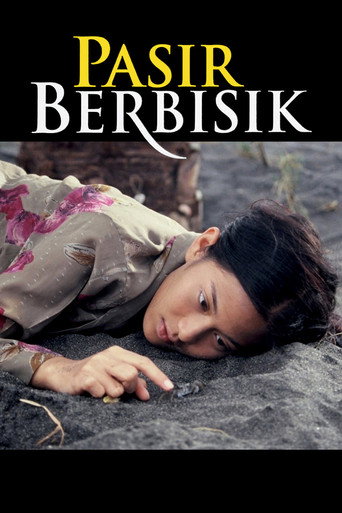
Whispering Sands
Berlian and her teenage daughter Daya are on the run from political violence. Constantly daydreaming that her absent father will return, young Daya chafes under the stern hand of her mother. Forced to move inland from their seaside home to a desert of constantly shifting sands, the pair settle down to their familiar antagonism. Finally, Daya sees a vaguely familiar face shuffle in from across the wasteland.

The Hijra
In 1912, Javanese activist Omar Said Tjokroaminoto co-founds the Sarekat Islam party to fight injustices of the Dutch East Indies' colonial regime.
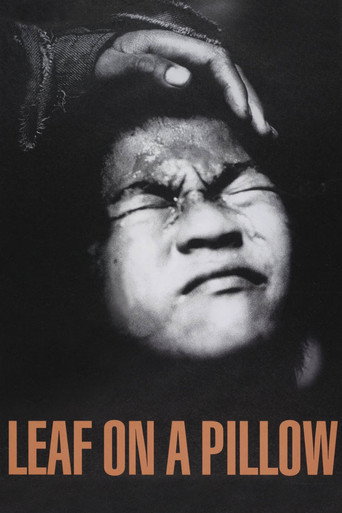
Leaf on a Pillow
The Indonesian society is seen through a middle-aged lady's eyes in her daily encounters with the street children who work and live off the harsh and sleazy world of adults.

Bumi Itu Bulat
Rahabi, Markus, Hitu, Sayid and Tiara formed an acapella group named Rujak Acapella. Rahabi wants Rujak Acapella to succeed to paid his little sister, Rara's tuition college. The way opened when Aldi, a music poducer offered them a contract; with a condition Aisha must join Rujak Acapella. Rahabi finally must make a choice, whether he must chase his dream, with the risk he must lose everyone he cared about.

Serambi
A college student, a young female dancer, an orphaned adolescent, a rickshaw driver, and an eternal optimist all discuss the manner in which the 2004 tsunami set into motion by an Indian Ocean earthquake dramatically altered their lives in filmmaker Garin Nugroho's reflective documentary.
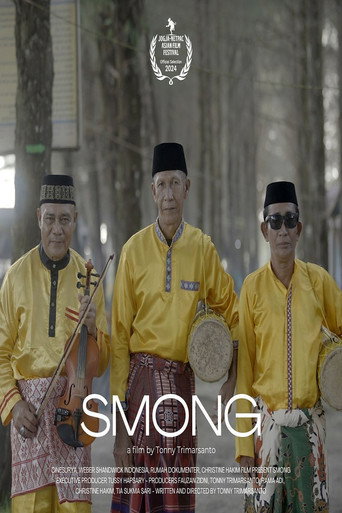
Smong
This documentary film will follow Juman and Zahrina’s journey in the process of healing from the trauma of the Aceh Tsunami, 20 years ago.

Sukma
Arini and her family went to a small town to start a new life, but it turns into a disaster after they find an ancient mirror in a secret warehouse.
The Mortician
Set in the remote highlands of Toraja, the story follows a noblewoman who keeps the preserved body of her adult son.
Gallery