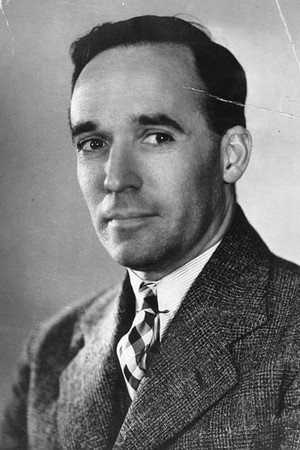
Charles Chauvel Movies, TV Shows, and Filmography
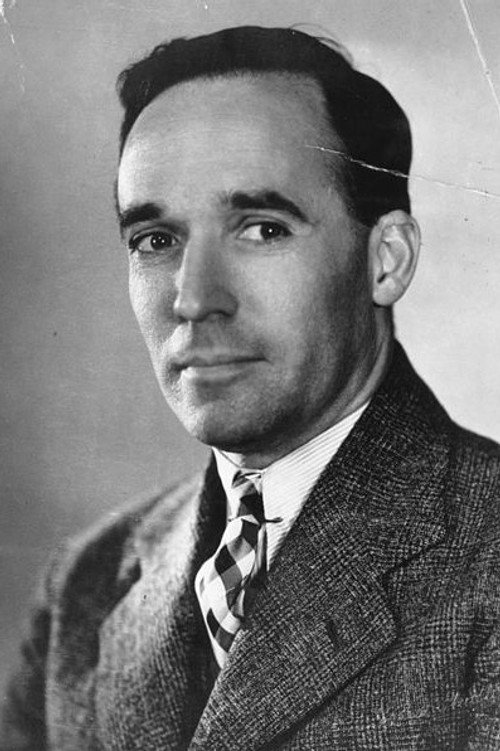
Charles Chauvel
Directing
Biography
Charles Edward Chauvel OBE (7 October 1897 – 11 November 1959) was an Australian filmmaker, producer and screenwriter and nephew of Australian army General Sir Harry Chauvel. He is noted for writing and directing the films Forty Thousand Horsemen in 1940 and Jedda in 1955. His wife, Elsa Chauvel, was a frequent collaborator on his filmmaking projects. Charles Edward Chauvel was born on 7 October 1897 in Warwick, Queensland, the son of James Allan Chauvel and his wife Susan Isabella (née Barnes), pioneer farmers in the Mutdapilly area.[1][2] He was the nephew of General Sir Harry Chauvel, Commander of the Australian Light Horse and later the Desert Mounted Corps in Palestine during World War I. His father, a grazier, at 53 also enlisted to serve in Palestine and Sinai in World War I. The Chauvels were descended from a French Huguenot family who fled France for England in 1685, and soon established a tradition of serving in the British army. The Australian Chauvels descended from a Charles Chauvel who retired from the Indian Army to New South Wales in 1839 and was a pioneer in the New England region. Chauvel was educated at the Normanby State School (now the Mutdapilly State School), The Southport School and Ipswich Grammar School in Queensland.[2][3] After leaving school, he worked on Queensland properties, and on his family property when his father was at war, before studying commercial art and taking drama classes in Sydney. He was fascinated by films and pestered a friend, showman Reginald "Snowy" Baker, to give him work as a production assistant; usually, he was the man in charge of the horses. Chauvel worked on The Shadow of Lightning Ridge (1920) and The Jackeroo of Coolabong (1920) with Baker; he also assisted on Robbery Under Arms (1920) He designed the St Aidan's Church of England in Mutdapilly in 1921 (the church closed in 1974 and is now used as a private residence).[2][4] Chauvel followed Baker to Hollywood in 1922, at his own expense, and spent some time as a jack of all trades including working as an extra, a lighting technician, a publicist, a stunt double and so on. The films he worked on included Strangers of the Night (1923). Chauvel turned to television, making the BBC series Walkabout which travelled to interesting locations in Australia. He died unexpectedly of coronary vascular disease on 11 November 1959, less than a month after Errol Flynn, whom he cast in In the Wake of the Bounty. According to Ken G. Hall, Chauvel had left a message asking to speak to Hall on the day he died, and left an estate worth £32,000.[13] In honour of the contribution made to filmmaking by Elsa and Charles Chauvel, the Chauvel Award was created in 1992 to celebrate those who have made an impact on the Australian film industry.[14] It is awarded annually at the Gold Coast Film Festival.[15] Chauvel Cinema, an art-house cinema in the Sydney suburb of Paddington, is named after him. Chauvel was posthumously inducted into the Queensland Business Leaders Hall of Fame in 2013.[16] In 2009 as part of the Q150 celebrations, Charles Chauvel was announced as one of the Q150 Icons of Queensland for his role as an "Influential Artists".[17]
Filmography Movies
Acting
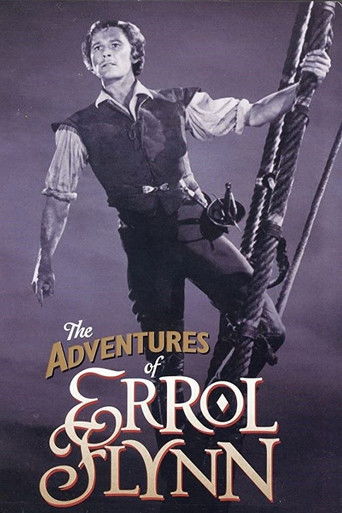
The Adventures of Errol Flynn
A documentary about the life of Errol Flynn, with recollections from friends and family.
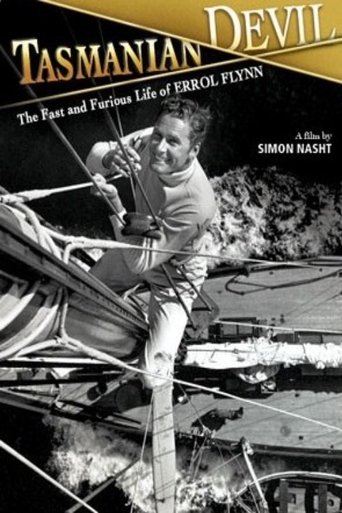
Tasmanian Devil: The Fast and Furious Life of Errol Flynn
The story of Tasmanian-born actor Errol Flynn whose short & flamboyant life, full of scandals, adventures, loves and excess was largely played out in front of the camera - either making movies or filling the newsreels and gossip magazines. Tragically he was dead from the effects of drugs and alcohol by the time he was only 50 & the myths live on. But there is another side of Flynn that is less well known - his ambitions to be a serious writer and newspaper correspondent, his documentary films and his interest in the Spanish Civil War and Castro's Cuba
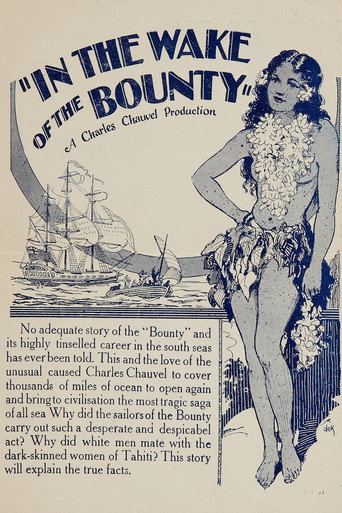
In the Wake of the Bounty
The film explores the story of the Bounty and is based on the 1932 novel Mutiny on the Bounty by Charles Nordhoff and James Norman Hall.
The Moth of Moonbi
Charles Chauvel's first feature tells the story of a country girl, Dell Ferris (the Moth of Moonbi), drawn to the bright lights of the big city where her inheritance is soon frittered away with high society revelling. A wiser Dell returns to Moonbi Station where she is beset by the cattle rustler Jack Bronson, but finally finds peace and happiness with the faithful head stockman, Tom. Only part of the film survives to this day.
The Big Picture - The Films of Charles Chauvel
The Big Picture details the careers Charles and Elsa Chauvel – known as Australia’s most enduring and successful filmmakers, having made nine feature films between 1926 and 1955. The Chauvels were innovators and pioneers, constantly testing the boundaries of what was possible physically and financially. Featuring in depth interviews with Susanne Chauvel Carlsson, Ric Carlsson as well as fascinating archival material, including rare footage of Charles and Elsa Chauvel, Chips Rafferty and Michael Pate. The Big Picture – the films of Charles Chauvel is based on the biography/memoir The Life and Cinema of Charles Chauvel by Susanne Chauvel Carlsson and is an important documentary depicting a vital piece of film making history.
Production
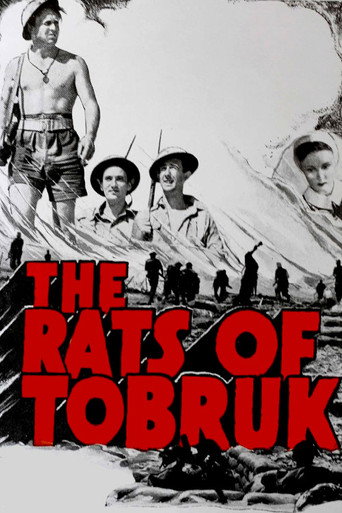
The Rats of Tobruk
Three friends enlist in the Australian Army and serve in North Africa, holding the city of Tobruk against Rommel's forces.
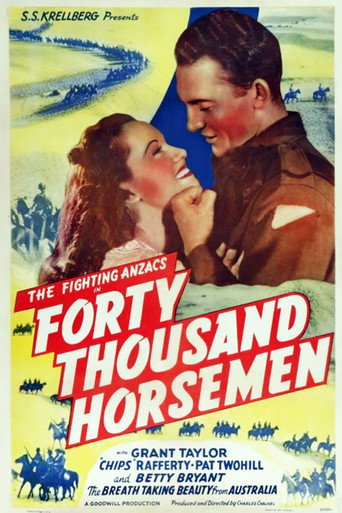
Forty Thousand Horsemen
Charles Chauvel's 1940 cinematic tribute to the mounted troops of the Australian Light Horse regiments is a rousing call to arms, giving life to the heroic tales of mateship during the Great War.
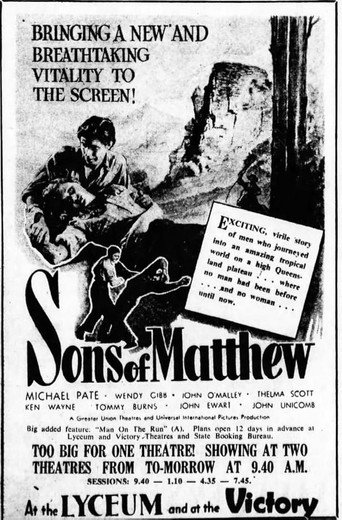
Sons of Matthew
The story of five brothers who homestead, with other settlers, on the virgin plateaus of the Australian bush country.
Sons of Matthew
The story of five brothers who homestead, with other settlers, on the virgin plateaus of the Australian bush country.
In the Wake of the Bounty
The film explores the story of the Bounty and is based on the 1932 novel Mutiny on the Bounty by Charles Nordhoff and James Norman Hall.
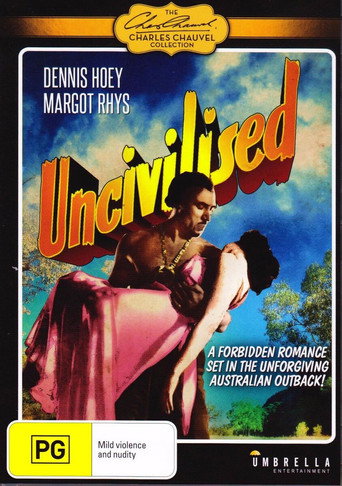
Uncivilised
A white authoress, looking for a story in the outback, is kidnapped by an Afghan slaver, betrothed to a white jungle-man, and menaced by a jealous half-caste rival, a hostile witch-doctor, his crazed-killer son, and opium smugglers!
Forty Thousand Horsemen
Charles Chauvel's 1940 cinematic tribute to the mounted troops of the Australian Light Horse regiments is a rousing call to arms, giving life to the heroic tales of mateship during the Great War.
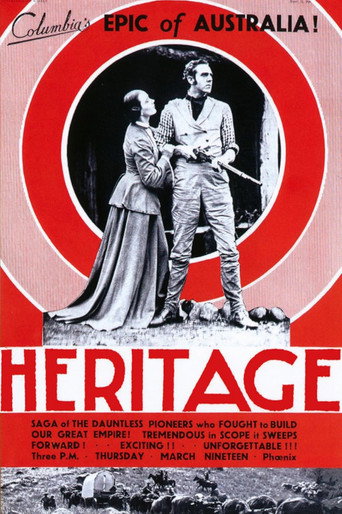
Heritage
In colonial Australia, James Morrison is a young teamster who has two friends, Long and Short. He is betrothed to Jane Judd when he visits Sydney and meets fiery Irish girl Biddy O'Shea, who is just off the "wife ship" – a boatload of women from an Irish orphanage bought out to Australia. James is attracted to Biddy and promises to marry her. James returns to Bathurst to break the news to Jane, but his mother dies and makes James promise to marry her daughter. He feels obliged to honour his old commitment to Jane.
Heritage
In colonial Australia, James Morrison is a young teamster who has two friends, Long and Short. He is betrothed to Jane Judd when he visits Sydney and meets fiery Irish girl Biddy O'Shea, who is just off the "wife ship" – a boatload of women from an Irish orphanage bought out to Australia. James is attracted to Biddy and promises to marry her. James returns to Bathurst to break the news to Jane, but his mother dies and makes James promise to marry her daughter. He feels obliged to honour his old commitment to Jane.
Heritage
In colonial Australia, James Morrison is a young teamster who has two friends, Long and Short. He is betrothed to Jane Judd when he visits Sydney and meets fiery Irish girl Biddy O'Shea, who is just off the "wife ship" – a boatload of women from an Irish orphanage bought out to Australia. James is attracted to Biddy and promises to marry her. James returns to Bathurst to break the news to Jane, but his mother dies and makes James promise to marry her daughter. He feels obliged to honour his old commitment to Jane.
Gallery