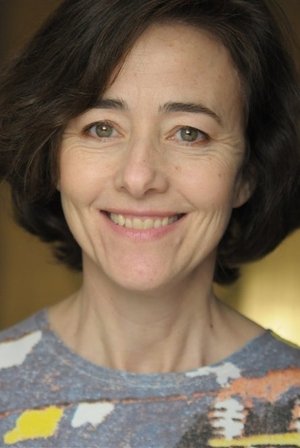
Catherine Mouchet Movies, TV Shows, and Filmography
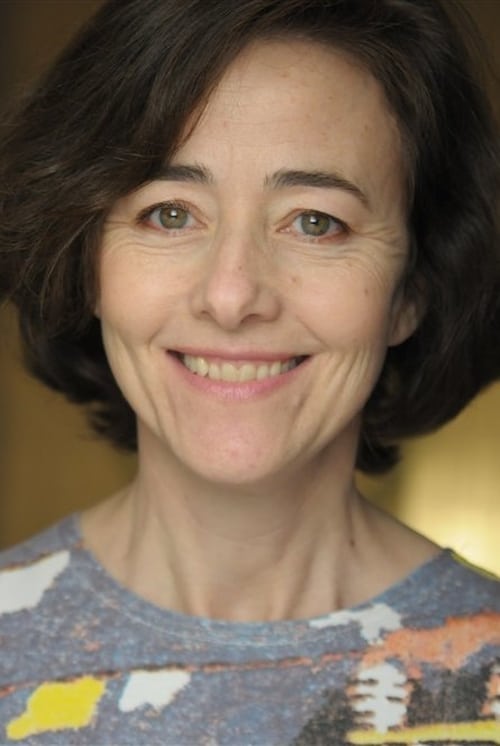
Catherine Mouchet
Acting
Biography
Catherine Mouchet (born 21 August 1959) is a French actress. She studied at the Conservatoire de Paris, following the courses of Jacques Lassalle and Claude Régy. Her performance in the film Thérèse, directed by Alain Cavalier, won her the César Award for Most Promising Actress for 1987. Having been acclaimed for her appearance in Thérèse, she next appeared in Claude Goretta's Si le soleil ne revenait pas in 1987, and then devoted herself to theatre for a time. She appeared in works by Luigi Pirandello, (Vêtir ceux qui sont nus), and Alfred de Musset, (Les Caprices de Marianne), amongst others, and directed La Petite dame with Claude Guyonnet in 1992. She returned to the screen in Jean-Pierre Mocky's Bonsoir 1993, and in Louis and Xavier Bachelot's short film La Plante. On television she appeared in the saga Jalna, directed by Philippe Monnier from the books of Mazo de la Roche, and Le blanc à lunettes, directed by Édouard Nierman, from a Georges Simenon novel. She then studied for a degree in philosophy. She returned to the screen and played supporting roles in two Olivier Assayas films, Fin août, début septembre and Les Destinées sentimentales. She appeared in Pierre Jolivet's My Little Business, for which she received a nomination for the César Award for Best Supporting Actress, and Philippe Harel's 1999 Extension du domaine de la lutte, an adaptation of Michel Houellebecq's controversial breakthrough novel Whatever, in which she played a psychoanalyst. She played a prostitute in Patrice Leconte's Rue des Plaisirs. She continues to appear in a wide variety of roles in both auteur films and popular comedies, and for both first time directors and established talents. In October 2008 Mouchet appeared at the Théâtre National de Strasbourg in Jean Magnan's "et pourtant ce silence ne pouvait être vide", based, like Jean Genet's The Maids, on the Papin sisters murders in 1933. Source: Article "Catherine Mouchet" from Wikipedia in English, licensed under CC-BY-SA 3.0.
Filmography Movies
Acting

Bonsoir
Having first lost his wife then his job as a tweed tailor, Alex Ponttin has devised a novel way to keep himself in touch with society. He admits himself into people's homes, by pretending to be a relative or an official, and persuading his victims to give him a night's free board: He finds at first a lunch at the horrible couple Dumont, where a thief follows him for a robbery. Alex spent an evening in front of TV at Marie, mother of seven children. He runs from Marie to find an evening and a new bed at the home of charming but shy lesbian Caroline and her funny lover Gloria. To save her inheritance, Caroline - accused for her homosexuality by her horrible sister Catherine - tells her aunt Amélie, that Gloria is her secretary and Alex her lover. So Alex has to present himself nude in Caroline's bed. He saves Carolines inheritance. The police officers investigating the case are so terminally stupid that Alex has little chance of being arrested.
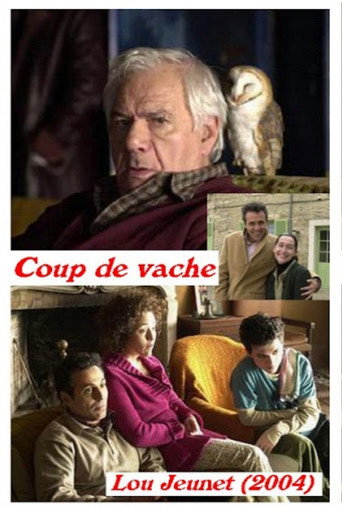
Coup de vache
An old man bequeaths his fortune to a television host, much to the chagrin of his own family.
La danse des asperges sarrasines
Robert doesn't look up to much in his prisoner's suit. But when needs be, Robert also knows how to be a prince. And when it comes down to it, who else would dare to stand up to the horde of Saracen asparagus?
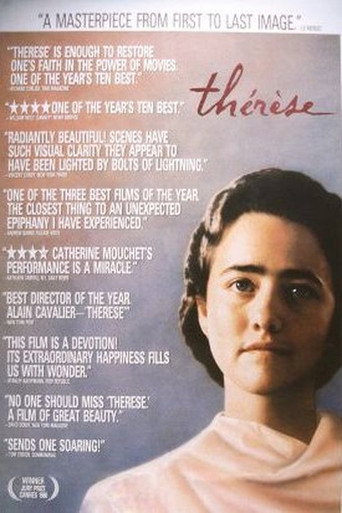
Thérèse
The life of little St. Therese of Lisieux, depicted in minimalist vignettes. Therese and her sisters are all nuns in a Carmelite convent. Her devotion to Jesus and her concept of "the little way" to God are shown clearly, using plain modern language. A sense of angelic simplicity comes across without fancy lights, choirs, or showy miracles.

Two Worlds
A French tradesman travels in time and liberates an oppressed tribe in another world.
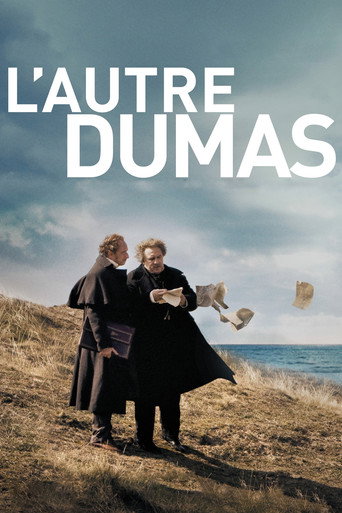
The Other Dumas
Alexandre Dumas, at the height of his career, takes Auguste Maquet, his chief literary collaborator or 'ghost writer' ten years his junior, to meet a young unknown admirer, Charlotte Desrives. The two men are at the summit of their artistic collaboration for they have just published "The Count of Monte Christo", "Queen Margot" and "The Three Musketeers". If it's Maquet who writes the majority of the texts, both the honours and fame go to Dumas.

Madame Irma
Francis, who is in his forties, manages the French subsidiary of an American high-tech company. But the shareholders suddenly decide to close it. Depressed by the idea of being unemployed and the prospect of losing his second wife, Francis decides to consult a fortune-teller. The experience is a real eye-opener for him and the start of a new career: He pretends to be a fortune teller himself and turns into Madame Irma. How to explain that to his wife Clotilde?

Whatever
It is a story of a depressed, isolated man stuck in a tedious but well-paying programming job.
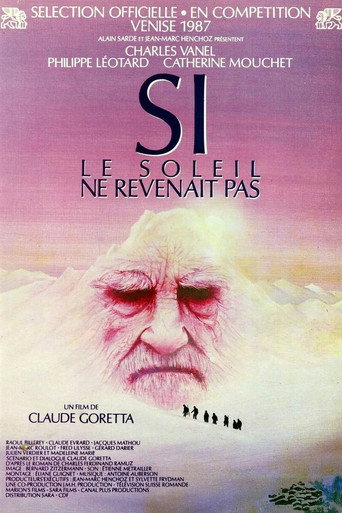
If the Sun Never Returns
In a remote Swiss mountain village, the self-proclaimed prophet and sorcerer Anzevui foretells that the sun will never return, plunging the community into eternal winter. As fear and panic spread among the villagers, most succumb to despair. However, a young woman named Isabelle courageously resists the collective hysteria, ultimately rallying a group to ascend above the fog-covered valley in search of the elusive sun.
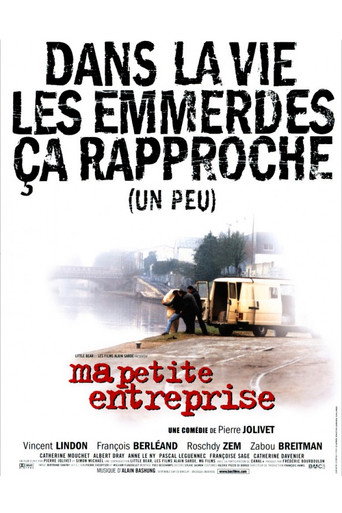
My Little Business
A wood worker is trying hard to make his company survive every day... But a fire in his workshop leaves him in a lot of trouble when he realizes his insurer was swindling him - he does not have any insurance... That's when a crazy idea grows in his mind - he will need all his friends and their different talents to make it work...
Gallery