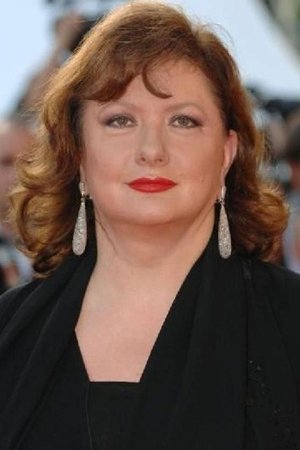
Catherine Jacob Movies, TV Shows, and Filmography
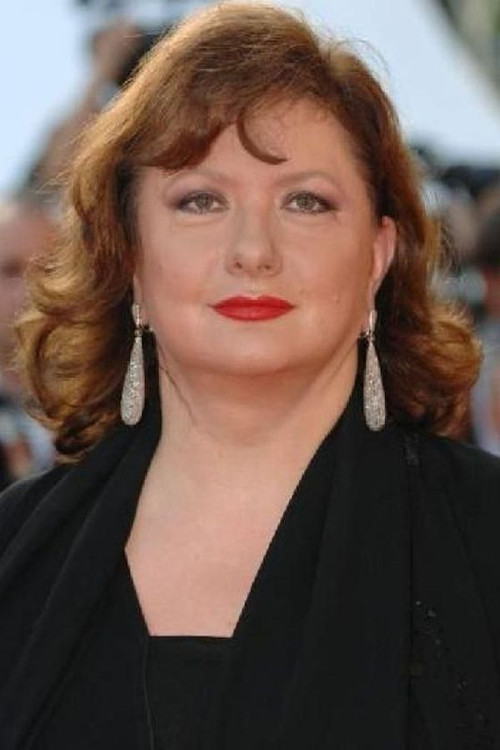
Catherine Jacob
Acting
Biography
Catherine Jacob (born 16 December 1956) is a French film and theatrical actress who has won a César Award for her role in Life Is a Long Quiet River (1988), and was nominated for Best Supporting Actress in Tatie Danielle (1990), Merci la vie (1991) and Neuf mois (1994). She has been two-time president of the Lumières Award. She is known for her voice and her charisma. Born in Paris on 16 December 1956, Catherine Jacob spent part of her childhood and adolescence in Compiègne, where she was educated at primary school and then Pierre d'Ailly High School. Her father was a dental surgeon and her mother an orthodontist. She has a younger brother. After obtaining a diploma in architecture, Catherine Jacob moved to Paris. From 1978 to 1980, she studied acting at the Cours Florent, then located on Saint Louis Island. She started to act in the early 1980s as an extra in movies like Swann in Love by Volker Schlöndorff (1984), Les Nanas by Annick Lanoë (1985), State of Grace by Jacques Rouffio (1986) and Malady of Love by Jacques Deray (1987). She also appeared in TV movies and TV series like Dickie-roi by Guy Lefranc, Toutes griffes dehors by Michel Boisrond, Julien Fontanes, magistrat, Marie Pervenche, Sentiments and Qui c'est ce garçon? by Nadine Trintignant in minor roles. In 1985, she wrote and starred in her first one-woman show called Welcome to the Club, directed by Rémi Chenylle, drawing eleven portraits of characters. She appeared in several festivals with her show and toured with it the following year. In 1988 she played Marie-Thérèse in the cult film Life Is a Long Quiet River by Étienne Chatiliez. The movie was a huge success, and Jacob won the César Award for Most Promising Actress. She also played in the TV miniseries Le vent des moissons alongside Annie Girardot. That same year, she and Jacques Bonnaffé also had a huge success with the play Paris-Nord - Attractions pour noces et banquets. It was planned to be shown only for 10 nights, but due to the success, the play continued for three years. In 1989, she continued her tour with the play Paris-Nord - Attractions pour noces et banquets. She got a supporting role in Les Maris, les Femmes, les Amants by Pascal Thomas, with Jean-François Stévenin and Michel Robin. She starred in two TV movies: L'été de la révolution with Bruno Cremer and Brigitte Fossey and Le vagabond de la Bastille by Michel Andrieu. She also appeared in an episode of the TV series Imogène with Dominique Lavanant. In 1990, she ended her tour with the play Paris-Nord - Attractions pour noces et banquets after three years. She appeared in the second movie of the director Étienne Chatiliez, Tatie Danielle with Tsilla Chelton, Isabelle Nanty and Karin Viard. It was shown at the Toronto International Film Festival. The movie was again a big success at the box office, well received by the critics and became a cult movie. Jacob was nominated for the César Award for Best Supporting Actress. ... Source: Article "Catherine Jacob (actress)" from Wikipedia in English, licensed under CC-BY-SA 3.0.
Filmography Movies
Acting

Who Killed Bambi?
Isabelle, a beautiful nursing student, is starting her internship at a prestigious hospital. She meets Dr. Philip there, feels atracted to him from the beggining and starts suffering from strange fainting; so he calls her Bambi: her legs don't support her. Patients mysteriously start to dissappear from their rooms; so Bambi and Dr. Philip start a cat vs. mouse paranoid game, in order to catch the probable killer.

Rumba Therapy
Tony is a macho middle-aged school bus driver in the provinces with no friends or relations. A sudden heart attack throws him into a tailspin. Tony's convinced he's going to die. When his cardiologist warns him : We all need others. Alone, we're nothing. Tony decides to reconnect with the daughter he abandoned twenty years earlier, when she was just a baby. Still a coward, he's unable to screw up the courage to actually confront her directly. So he decides to sign up for a dance class she's teaching in Paris. Incognito, of course. To get to know her gradually… in a desperate attempt to give some meaning to his empty life. In the process, he has more than a few dance steps to learn!
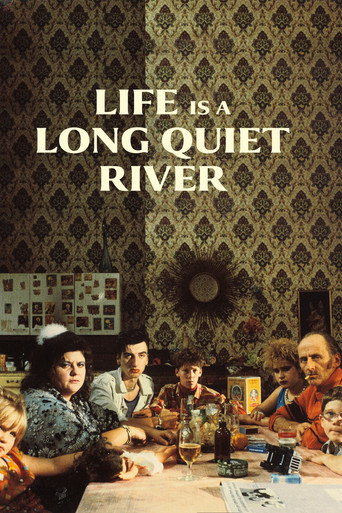
Life Is a Long Quiet River
Two babies are switched at birth. When the mistake is discovered 12 years later, it leads to complications in the lives of both families. One family is affluent, with dutiful and (apparently) contented children. The other family is poor, with rambunctious (even delinquent) children, often hungry, but with lots of laughter in the house.
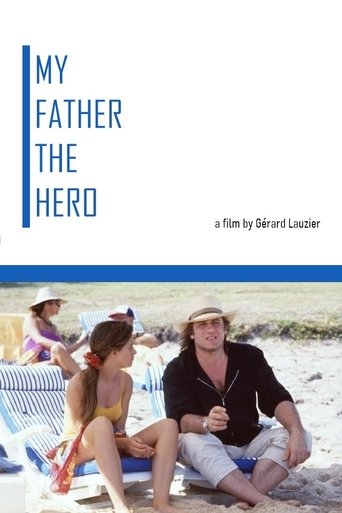
My Father the Hero
Veronique, living with her divorced mother, is going on holiday to Mauritius with her father. To impress a local boy, Benjamin, she manages to complicate the situation by making up stories about her father. She presents him as her lover, a mercenary and even a secret agent which gets her into trouble and then her father has to start playing along...
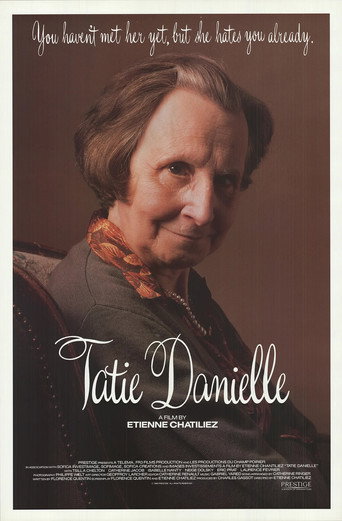
Auntie Danielle
Tatie Danielle is a black comedy about a widow who is intent on ruining the lives of her great-nephew and his wife. Tsilla Chelton plays the title character, who mourns the death of her husband by tormenting everyone she meets. Eventually, she moves in with her nephew and his vain wife. Soon, her family is at war with Tatie, and takes off for Greece, leaving her in the care of Sandrine (Isabelle Nanty), an au pair who is as equally bitter as Tatie herself. At first the two don't get along, yet the two eventually become friends. However, Sandrine is invited to accompany an American student for an overnight stay at the beach, which would leave Tatie alone for a night. Angered, Tatie fires Sandrine, and while she is alone, she goes into deep depression, eventually setting the family's apartment on fire. The fire becomes a national story, with Tatie cast as a poor old lady and the family labeled as cruel and heartless villains.

Dikkenek
Jean-Claude is a loud-mouthed, know-it-all and full time boor who is best friends with Stef, a self-styled lady killer who would do better with the fairer sex if he could work up the ambition to wake up in the morning. Stef has decided that he may need some help in finding the woman of his dreams, and embracing loyalty rather than logic he turns to Jean-Claude for advice.
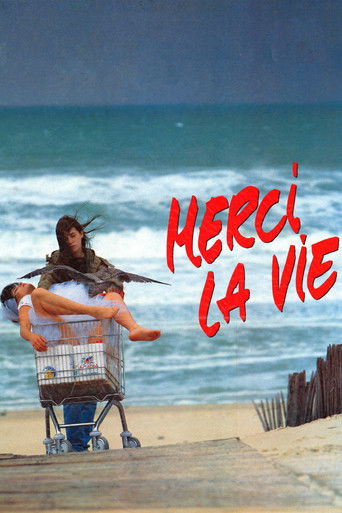
Thank You, Life
Camille, a naïve schoolgirl, meets an intriguing influence in Joelle, a slightly older and much more experienced spirit. Camille follows her new friend through the discovery of sex and the darker side of life. As the film progresses, Camille discovers AIDS and the fear that she may have picked up the disease in her early encounters.
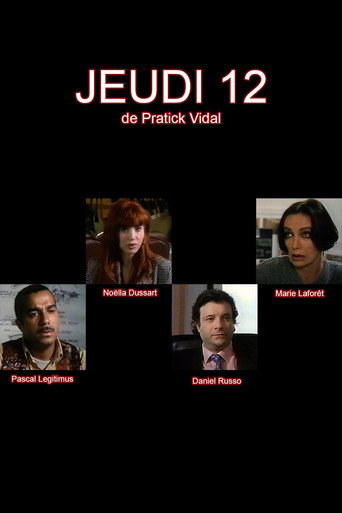
Jeudi 12
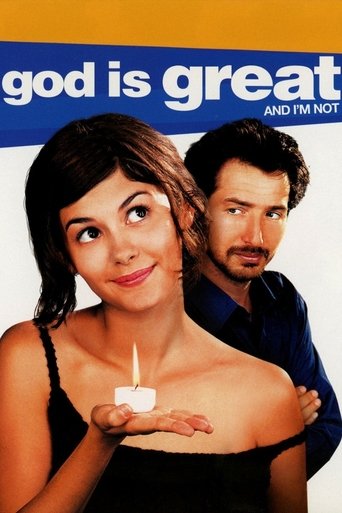
God Is Great and I'm Not
Michèle, 20 years old, feels terrible after having broken up with her boy-friend. She meets Francois, who's a veterinarian and jewish. Michèle decides to convert into Judaism because she has to believe in something, if not in someone.
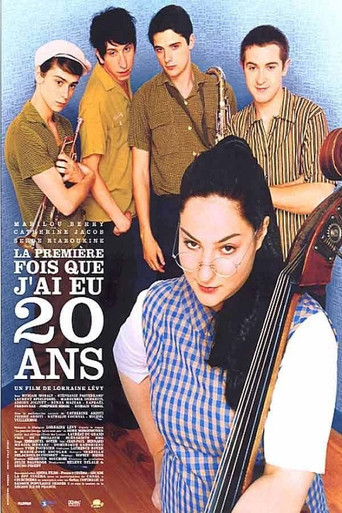
The First Time I Turned Twenty
In 1960s France, 16-year-old Hannah Goldman is experiencing a painful adolescence. Her Jewish background and plain appearance make her an object of ridicule, but she has a talent for music and is determined to fulfil her ambition to play in the school jazz band.
Gallery