Carsten Nicolai Movies, TV Shows, and Filmography
Carsten Nicolai
Writing
Biography
No biography available.
Filmography Movies
Production
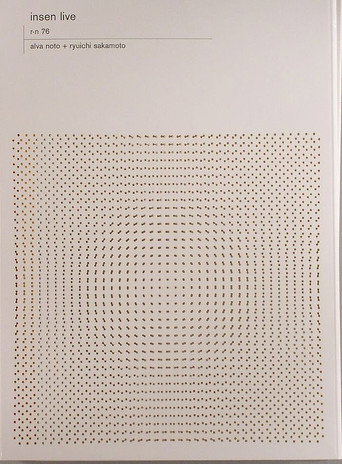
Alva Noto + Ryuichi Sakamoto: Insen Live
Alva Noto and Ryuichi Sakamoto, accompanied by a live visual score, perform their second collaborative work “Insen”. Recorded at Casa da Música, Porto, Portugal, on June 11th, 2006.
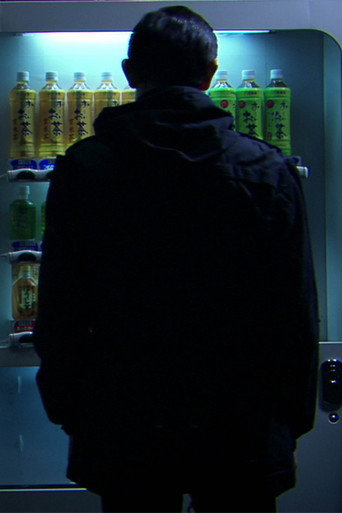
Future Past Perfect Pt. 03 (U_08-1)
Conceived as the third part of the series under the name future past perfect, the short film introduces a narrative story that was inspired by a fascination for automation processes as well as his work on codes and grids that materialized in his record alva noto . unitxt in 2008. the series itself started in 2006 and is designed as a row of conceptually independent movies that document nicolai's focus of interest of the respective year of origin and also builds up on the results of the movie(s) before. a quiet autumn night in tokyo. a man stops his car at a shop front with a number of vending machines to get a last drink of tea on his way home. he inserts a coin, but instead of the usual procedure, the machine starts performing its own peculiar performance...
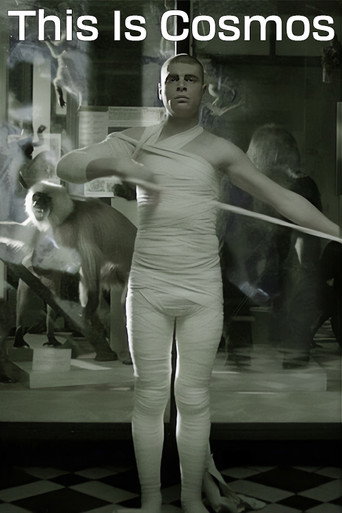
This Is Cosmos
Based on the ideas of Russian philosopher, Nikolai Fedorov, Anton Vidokle’s film was shot in Siberia, Crimea, and Kazakhstan. Fedorov, like others, believed that death was a mistake, “because the energy of cosmos is indestructible, because true religion is a cult of ancestors, because true social equality is immortality for all.” Fedorov was one of the Cosmo-Immortalists, a surge of thinkers that emerged in Russia in the late 19th and early 20th centuries. They linked Western Enlightenment with Russian Orthodoxy and Eastern philosophical traditions, as well as Marxism, to create an idiosyncratically concrete metaphysics. For the Russian cosmists, cosmos did not mean outer space: rather, they wanted to create “cosmos” on earth. “To construct a new reality, free of hunger, disease, violence, death, need, inequality – like communism.”
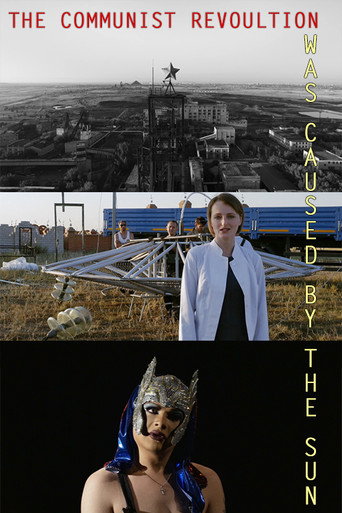
The Communist Revolution Was Caused By The Sun
The second installment of Anton Vidokle’s trilogy on Russian cosmism, The Communist Revolution Was Caused By The Sun, looks at the poetic dimension of the solar cosmology of Soviet biophysicist Alexander Chizhevsky. Shot in Kazakhstan, where Chizhevsky was imprisoned and later exiled, the film introduces Сhizhevsky’s research into the impact of solar emissions on human sociology, psychology, politics, and economics in the form of wars, revolutions, epidemics, and other upheavals. It aligns the life of post-Soviet rural residents and the futurological projects of Russian cosmism to emphasize that the goal of the early Soviet breakthroughs aimed at the conquest of outer space was not so much technical acceleration, but the common cause of humankind in their struggle against the limitations of earthly life.
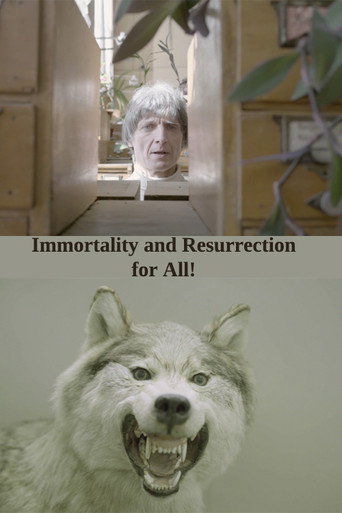
Immortality and Resurrection For All!
The last film in Vidokle's trilogy on Cosmism is a meditation on the museum as the site of resurrection-a central idea for many Cosmist thinkers, scientists and avant-garde artists. Filmed at the State Tretyakov Gallery, the Moscow Zoological Museum, The Lenin Library, and the Museum of Revolution, the film looks at museological and archival techniques of collection, restoration and conservation as a means of the material restoration of life, following an essay penned by Nikolai Federov on this subject in the 1880s. The film follows a cast comprised of present-day followers of Federov, several actors, artists and a Pharaoh Hound that playfully enact a resurrection of a mummy, a close examination of Malevich's Black Square, Rodchenko's spatial constructions, taxidermied animals, artifacts of the Russian Revolution, skeletons, and mannequins in tableau vivant-like scenes, in order to create a contemporary visualization of the poetry implicit in Federov's writings.
Uni Acronym
208 recognisable three letter words cascade across the screen. The foundations of our capitalist, technocratic society. From time to time, the voiceover throws a spanner in the works.

Future Past Perfect Pt. 01 (Sononda)
sononda is the first part of the short film series future past perfect and was originally recorded in 2006. the series whose single fragments are supposed to be parts of a larger scale film project is designed as a row of conceptually independent movies that document nicolai's focus of interest of the respective year of origin and also builds up on the results of the movie(s) before. despite sononda's visual quality seems artificial at times, it was shot in a natural environment. the focus is directed on the sculptural quality of light. the correspondence of both music - with its low frequency modulations and merging soundscapes - and light play on the curved surfaces of the sculptural stone formations create an ever-changing atmosphere of concrete and abstract appearances.
Future Past Perfect Pt. 01 (Sononda)
sononda is the first part of the short film series future past perfect and was originally recorded in 2006. the series whose single fragments are supposed to be parts of a larger scale film project is designed as a row of conceptually independent movies that document nicolai's focus of interest of the respective year of origin and also builds up on the results of the movie(s) before. despite sononda's visual quality seems artificial at times, it was shot in a natural environment. the focus is directed on the sculptural quality of light. the correspondence of both music - with its low frequency modulations and merging soundscapes - and light play on the curved surfaces of the sculptural stone formations create an ever-changing atmosphere of concrete and abstract appearances.
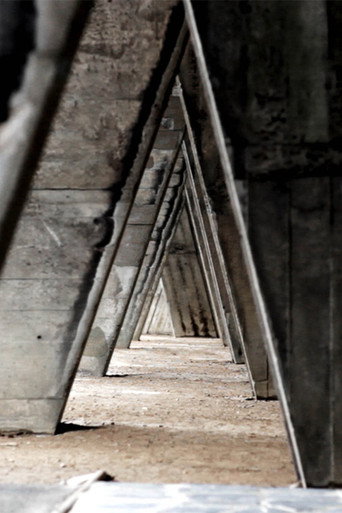
Future Past Perfect Pt. 02 (Cité Radieuse)
In a short cinematic essay, the second part of the series of short movies called future past perfect illustrates the issue of the individual that is brought into line with a vertically organised social structure. shot at le corbusier's unité d'habitation in nantes (also called cité radieuse), the film concentrates on the modular system applied for the residential building which finds its expression down into the smallest details of design: doors, windows, taps, door handles, light switches, etc. constitute the inhabitants living space through their standardised forms. the cinematic result is a combination of consecutive sequences of single images and tracking shots of various details inside the apartments and on the hallways of the apartment block. thereby, both the different benchmarks of standardised production are correlated and the reciprocity of the built-up environment with the inhabitants individual appropriation are examined.