Carolina Astudillo Muñoz Movies, TV Shows, and Filmography

Carolina Astudillo Muñoz
Directing
Biography
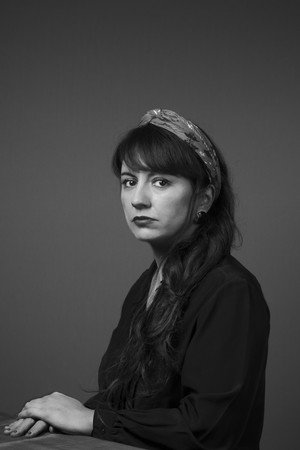
Carolina Astudillo Muñoz (Santiago de Chile) is a documentary filmmaker, researcher and teacher. Degree in Social Communication from the Universidad de Santiago de Chile. Postgraduate Diploma in Film Studies from the Universidad Católica de Chile and MA in Creative Documentary from the Universitat Autònoma de Barcelona. She has developed and focused her work on historical research, documentary creation and writing, and women and historical memory have been her pivotal theme. Her documentaries De monstruos y faldas (Of Monsters and Skirts – 2008), Lo indecible (The Unspeakable – 2012), El deseo de la Civilización: Notas para El gran vuelo (The desire of Civilization: Notes for The Great Flight – 2014) and Un paseo por New York Harbor (A cruise through New York Harbor – 2019) have been awarded and exhibited in festivals such as Mar del Plata, Jihlava International Documentary Film Festival, Festival de Málaga Cine Español and Biarritz Amérique Latine. Her first feature film, The Great Flight (2014) has been screened in various festivals, exhibitions and universities. She was awarded the Biznaga de Plata for Best Documentary at the Festival de Málaga (2015); Feroz Puerta Oscura Award for Best Documentary from the Asociación de Informadores Cinematográficos de España (AICE); award for Best Half-length Documentary in Alcances; Best documentary in Som Cinema. For this work the director won the Best Filmmaker Award granted by Asociación de Mujeres Cineastas y de Medios (CIMA) and the award to Best Editing in Sole Luna Doc Film Festival. Her second feature film, Ainhoa, that’s not me (2018) won for the second time the Biznaga de Plata for Best Documentary at Festival de Málaga, the Grand Jury Prize at Escales Documentaires (2018); Best Sound Award and Special Jury Award at DocumentaMadrid (2018) She has been invited to show her work at Université Paris-Sorbonne, Université de Franche-Comté, Université de Bourgogne, Aix-Marseille Université, Universitat Rovira i Virgili, Universidad de Salamanca (CEISAL), Universidad del País Vasco (TyF), and Universidad Diego Portales in Chile. She has participated in academic activities and has taught courses, master classes and seminars (on Documentary Film Theory and Found Footage) in different universities and Cinema Schools such as the Universidad de Santiago (Chile), Universidad Pontificia Bolivariana (Colombia), Universidad Chileno-Británica de Cultura (Chile), Schools of Cinema ECIB, La Casa del Cine and LENS (España) among others. She combines her filmmaking work with the creation of videos for the European Observatory on Memories (EUROM) and for the Associació per la Cultura i la Memòria de Catalunya (ACME). Since 2016 she has been a member of the Spanish Academy of Arts and Film Sciences (AACCE).
Filmography Movies
Acting
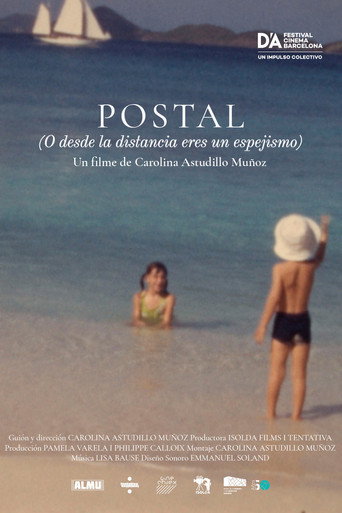
Postcard (Or, from afar, you are a mirage)
"The palm trees on the reverse are a delusion; so is the pink sand". This line, taken from a poem by Margaret Atwood, lights the path traced in "Postcard". As the years go by, landscapes transform, take on new meanings, and hold onto joys that will never be regained. The sea and the beach, once stages of happy summers, romances, and encounters, will turn into concentration camps or centers of detention and torture. This occurs across different times and places. In this piece, I embark on a journey through some of my works that explore the relationship between testimony, spaces, and time, engaging in dialogue with the beautiful film directed by Alejandro Segovia in 1972.
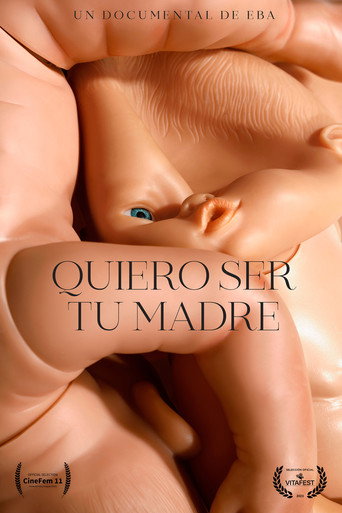
I Wanna Be Your Mum
An acid humor essay that questions everyday aspects of life that make us need to achieve motherhood, with a critical view on contemporary maternity. Are we obsessed with what is biological? Is the cycle of mothers to daughters perpetuated?
Production
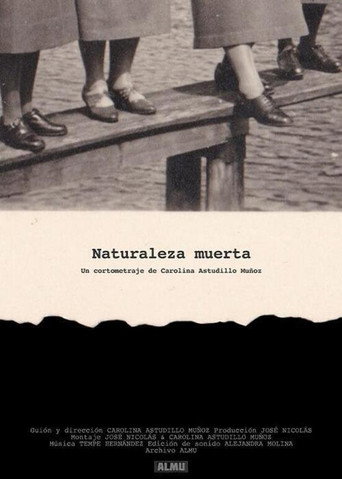
Naturaleza muerta
Freud described the sinister (unheimlich) as a contradictory experience where the strange is presented to us as known and the known becomes strange. A granddaughter discovers that her grandmother's past was very different from what she had been told. Could it be that in times of war, morality is subordinated to survival?
Naturaleza muerta
Freud described the sinister (unheimlich) as a contradictory experience where the strange is presented to us as known and the known becomes strange. A granddaughter discovers that her grandmother's past was very different from what she had been told. Could it be that in times of war, morality is subordinated to survival?
Naturaleza muerta
Freud described the sinister (unheimlich) as a contradictory experience where the strange is presented to us as known and the known becomes strange. A granddaughter discovers that her grandmother's past was very different from what she had been told. Could it be that in times of war, morality is subordinated to survival?
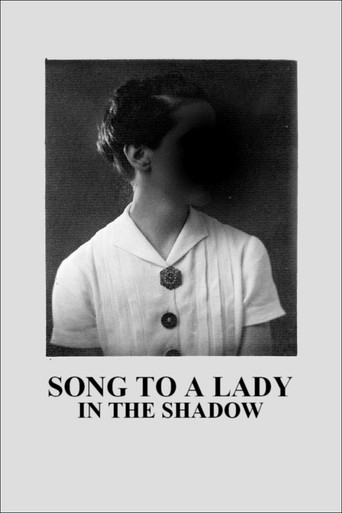
Song to a Lady in the Shadow
After fighting on the Republican side during the Spanish Civil War, a man goes into exile in France while his family waits for his return in a Catalan village.
Song to a Lady in the Shadow
After fighting on the Republican side during the Spanish Civil War, a man goes into exile in France while his family waits for his return in a Catalan village.
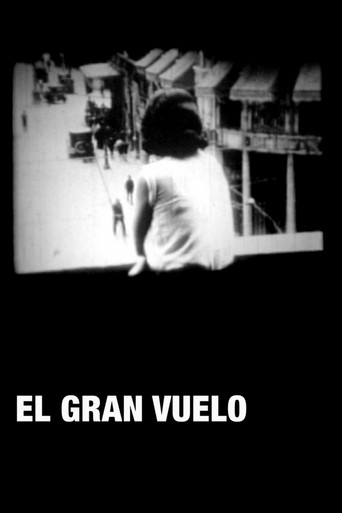
The Great Flight
In the early years of the Franco dictatorship, Clara Pueyo Jornet, an active militant in the Communist Party, escapes from Les Corts prison in Barcelona by the front door. From that moment, she vanishes without a trace. She had been living on the run and she sought to escape from the rigidity of her own party. Her story is also the story of the women of her time and their struggle for freedom in a society that tried to repress them.
The Great Flight
In the early years of the Franco dictatorship, Clara Pueyo Jornet, an active militant in the Communist Party, escapes from Les Corts prison in Barcelona by the front door. From that moment, she vanishes without a trace. She had been living on the run and she sought to escape from the rigidity of her own party. Her story is also the story of the women of her time and their struggle for freedom in a society that tried to repress them.
The Great Flight
In the early years of the Franco dictatorship, Clara Pueyo Jornet, an active militant in the Communist Party, escapes from Les Corts prison in Barcelona by the front door. From that moment, she vanishes without a trace. She had been living on the run and she sought to escape from the rigidity of her own party. Her story is also the story of the women of her time and their struggle for freedom in a society that tried to repress them.
Of Monsters and Skirts
Libertad, Enriqueta, Maricarmen and Albert evoke the years when their mothers and his aunt stayed in Les Corts jail, times of innocence, hopelessness and distress. Their childhood stories inmmerse us in a world whose main characters are memories, oblivion and the passing of time.
Gallery