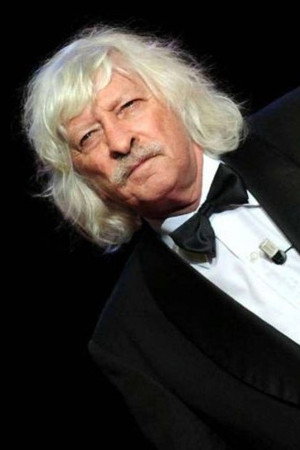
Carlos López Puccio Movies, TV Shows, and Filmography
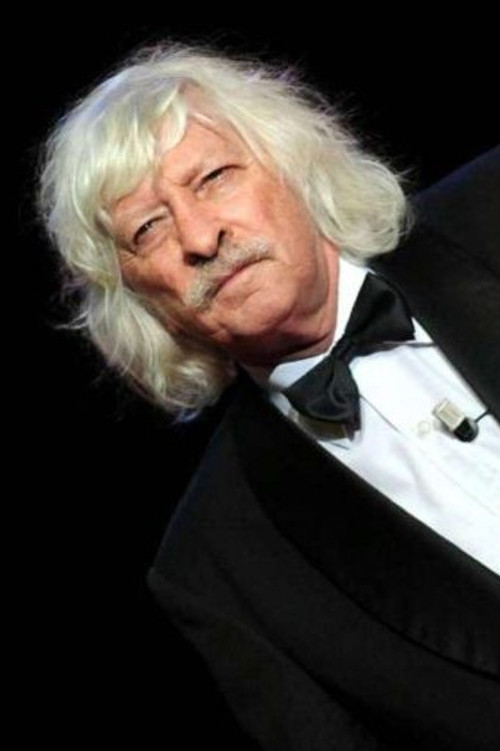
Carlos López Puccio
Acting
Biography
Carlos Alberto Daniel López Puccio (born October 9, 1946, in Rosario, Santa Fe, Argentina) is a multi-instrumentalist musician, orchestral and choral conductor, composer, arranger and one of the current members of Les Luthiers. After graduating from orchestral conducting in La Plata, he was hired by Les Luthiers to play the fiddlecan (a violin made of tuna can), and famously learnt the repertoire in two days (around 1970). For the next season, he started a songwriting partnership with Jorge Maronna, and they penned 'Pieza en Forma de Tango'; he also composed 'Voglio Entrare Per la Finestra' (with libretto by Marcos Mundstock) and around June 1971 he was invited to be a group member rather than a paid collaborator. During the first years in Les Luthiers, López-Puccio played other instruments such as cello, viola and percussion, and he often provided backing vocals. He also composed all the music for many pieces for the group, including 'Concierto de Mpkstroff' (which features group-mate Carlos Núñez Cortés as soloist) and 'Brotan und Gretchen'. He slowly gained notoriety scripting jokes for his groupmates as well as occasional song lyrics. From 1979 onwards he also played piano, synthesiser and harmonica for several musical pieces, especially since Ernesto Acher left the group, and they started including electronic keyboards more often. He also became more and more involved as an actor, having several starring parts from the 80's onwards. Description above from the Wikipedia article Carlos López Puccio, licensed under CC-BY-SA, full list of contributors on Wikipedia.
Filmography Movies
Acting
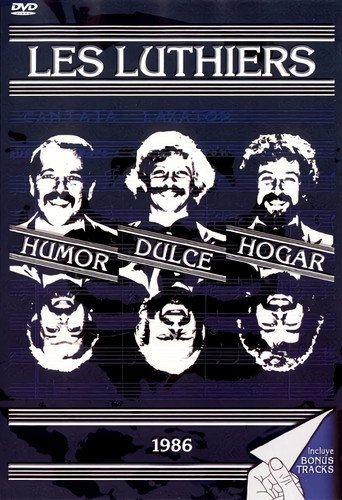
Humor dulce hogar
Formed in 1967 by Gerardo Masana, during the height of a period of very intense Choral Music activity in Argentina's state universities, Les Luthiers premiered this show on May the 30th, 1985 at the El Círculo Theater in Rosario, Argentina. PROGRAM: 1. Vea esta Noche; 2. Serenata Tímida; 3 . El Zar y un Puñado de Aristócratas Rusos...; 4. Una Canción Regia; 5. Truthful Lulu Pulls thru Zulus; 6. El Valor de la Unidad; 7. Les Nuits de París; 8. Pasión Bucólica; 9. Las Majas del Bergantín; 10. Bolero de los Celos; 11. Marcha de la Conquista and; 12. Cuarteto Opus 44. The 'Mandocleta' instrument was presented for the first time during this show. Recorded live at the Colón Theater in Bogotá, Colombia, on April 12, 1986. Numbers 11 and 12 were recorded earlier at that same theater on November 8, 1981. This is the last recorded appearance by Ernesto Acher with Les Luthiers.
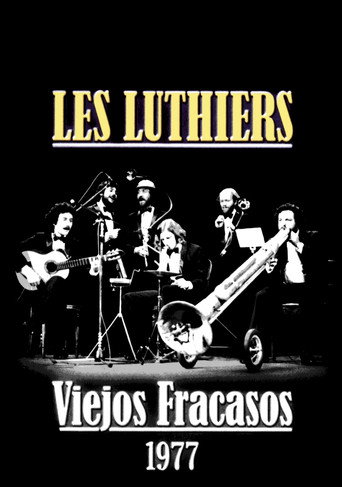
Viejos fracasos
Les Luthiers is a comedy-musical group from Argentina, very popular also in several other Spanish-speaking countries such as Paraguay, Peru, Chile, Ecuador, Spain, Colombia, Mexico, Uruguay and Venezuela. They were formed in 1967 by Gerardo Masana, during the height of a period of very intense Choral Music activity in Argentina's state universities.
Grandes hitos
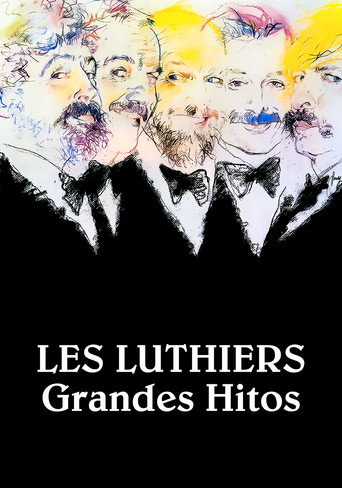
Les Luthiers is a comedy-musical group from Argentina, very popular also in several other Spanish-speaking countries such as Paraguay, Peru, Chile, Ecuador, Spain, Colombia, Mexico, Uruguay and Venezuela. They were formed in 1967 by Gerardo Masana, during the height of a period of very intense Choral Music activity in Argentina's state universities.
Lutherapia
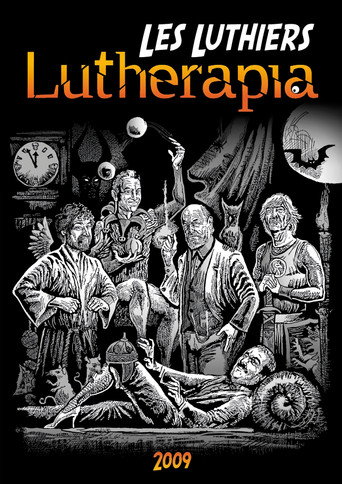
A musical comedy show by the Argentine informal instrument ensemble Les Luthiers which revolves around a psychoanalytic therapy session, and the conversation between the two gives rise to the numbers that make up the show.
El grosso concerto
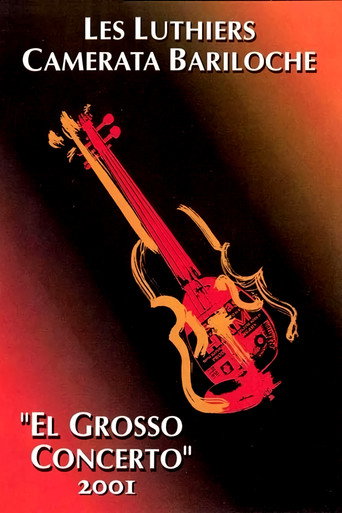
Live performance by the Argentine musician and comedian group "Les Luthiers" and the Camerata Bariloche, filmed at the Teatro Argentino, La Plata, Buenos Aires, on December 8 and 9, 2001.
Las obras de ayer
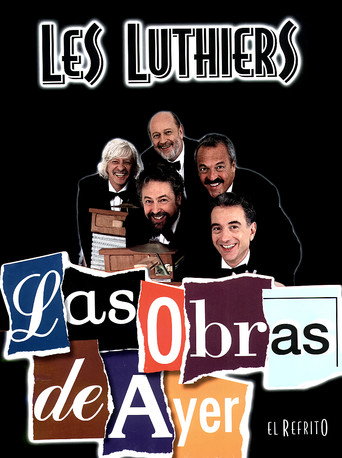
Les Luthiers is a comedy-musical group from Argentina, very popular also in several other Spanish-speaking countries such as Paraguay, Peru, Chile, Ecuador, Spain, Colombia, Mexico, Uruguay and Venezuela. They were formed in 1967 by Gerardo Masana, during the height of a period of very intense Choral Music activity in Argentina's state universities.
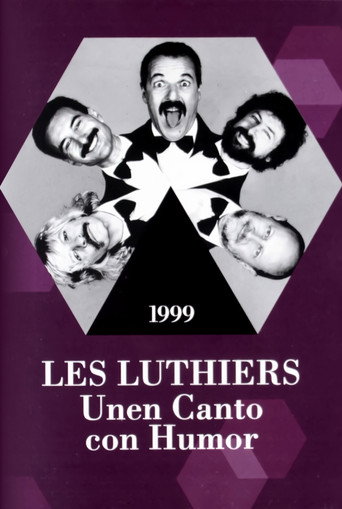
Unen canto con humor
Premiered on June 9, 1994 at the Astengo Theater, in Rosario, Argentina. Last performance on January 31, 1999, at the Auditorium Theater, in Mar del Plata, Argentina. PROGRAM: 1 - El regreso del indio 2 - Manuel Darío 3 - Así hablaba Sali Baba 4 - El negro quiere bailar 5 - San Ictícola de los peces 6 - A la playa con Mariana 7 - Perdónala 8 - Fronteras de la ciencia 9 - Vote a Ortega Instruments premiered on this show: Bajo Barríltono Ferrocalíope. Recorded at the Auditorium Theater, Mar del Plata, Argentina, January 30, 1999.
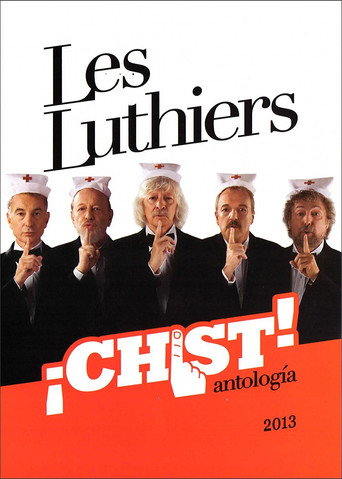
¡Chist!
Formed in 1967 by Gerardo Masana, during the height of a period of very intense Choral Music activity in Argentina's state universities, Les Luthiers premiered this show on Friday, May 13, 2011 at the Astengo Theater, Rosario, Argentina. PROGRAM: 1- Manuel Darío; 2- La Comisión; 3- La Bella y Graciosa Moza Marchose a Lavar la Ropa; 4- Solo Necesitamos; 5- La Hija de Escipión; 6- Bolero de los Celos; 7- Educación Sexual Moderna; 8- La Redención del Vampiro; 9- Encuentro en el Restaurante; 10- Los Jóvenes de Hoy en Día; 11- Rhapsody in Balls. The 'Campanófono autoflajelador' instrument made its first appearance during this show. Recorded live between June the 15th and the 16th, 2013 at the Gran Rex Theater, Buenos Aires, Argentina.
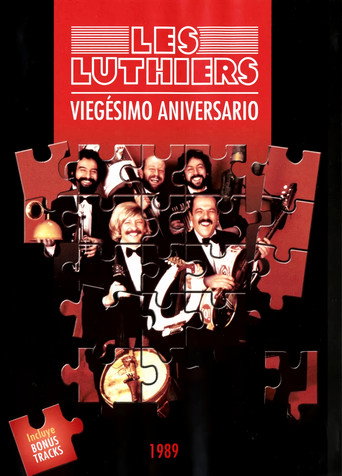
Viegésimo aniversario
Les Luthiers is an Argentine comedy-musical group, very popular also in several other Spanish-speaking countries such as Paraguay, Guatemala, Peru, Chile, Ecuador, Spain, Colombia, Mexico, Uruguay, Bolivia, Cuba and Venezuela. They were formed in 1967 by Gerardo Masana, during the height of a period of very intense Choral Music activity in Argentina's state universities. Their outstanding characteristic is the home-made musical instruments (hence the name luthiers, French for "musical instrument maker"), some of them extremely sophisticated, which they skillfully employ in their recitals to produce music and texts full of high class and refined humor. From 1977 until his death in 2007, they worked together with Roberto Fontanarrosa, a renowned Argentine cartoonist and writer.
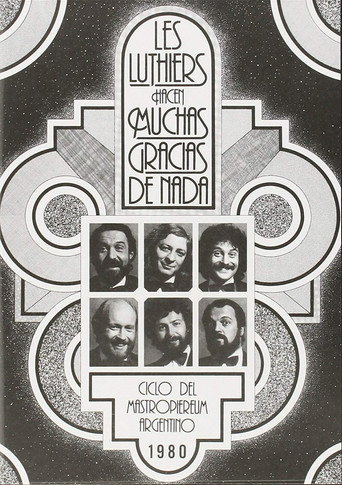
Hacen muchas gracias de nada
'Muchas Gracias de Nada', is a show premiered on June 15, 1979 at the Coliseo Theater in the City of Buenos Aires by the Argentinean ensemble of informal instruments, Les Luthiers. Recorded live between October 24th and 25th, 1980 at the same theater. PROGRAM: 1. La Campana Suonerá; 2. El Rey Enamorado; 3. Sinfonía Interrumpida; 4. La Tanda; 5. Canción para Moverse; 6. La Gallina Dijo Eureka; 7. Trío Op. 115; 8. Cartas de Color; 9. Tango Op. 11. In this show 'Antenor' made its first appearance, an advanced robot (for the time it was built - 1979) that weighed 80 kilos and was equipped with several motors that allowed it to move around the stage, turn its head, etc. The robot caught fire during the last performance of this play (Palacio de Bellas Artes, Mexico - 1980) in the middle of the stage and before the astonished gaze of all those who were there.
Production
El grosso concerto
Live performance by the Argentine musician and comedian group "Les Luthiers" and the Camerata Bariloche, filmed at the Teatro Argentino, La Plata, Buenos Aires, on December 8 and 9, 2001.
Bromato de armonio
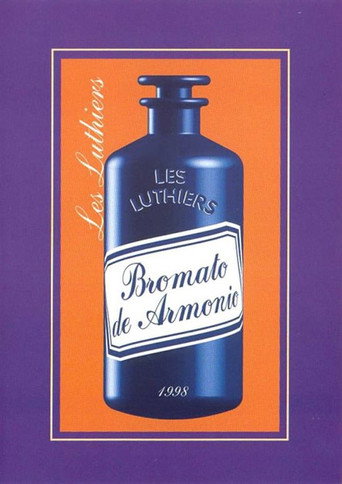
Premiered on June 13, 1996 at the Astengo Theater, in Rosario, Argentina and last performance on December 3, 2002, at the Sports Pavilion, in León, Spain, 'Bromato De Armonio' was a show made by the Argentinian comedy-musical group Les Luthiers. The show itself was showcased all around Latin America between 1996 and 2001. PROGRAM: 1. Para Elizabeth (sonata a la carta); 2. La Princesa Caprichosa (pequeña serenata para grandes instrumentos); 3. La Vida es Hermosa (disuacidio); 4. La Hija de Escipión (fragmento de ópera); 5. La Redención del Vampiro (hematopeya); 6. Educación Sexual Moderna (cántico enclausturado); 7. ¿Quién Mató a Tom McCoffee? (música en serie); 8. La Comisión (himnovaciones); 9. Perdónala (bolérolo) The 'Campanófono a martillo' and the 'Cornetas de Asiento' were premiered on this show. Recorded live at the Teatro Coliseo in Buenos Aires, Argentina, on June the 27th, 1998.
Bromato de armonio
Premiered on June 13, 1996 at the Astengo Theater, in Rosario, Argentina and last performance on December 3, 2002, at the Sports Pavilion, in León, Spain, 'Bromato De Armonio' was a show made by the Argentinian comedy-musical group Les Luthiers. The show itself was showcased all around Latin America between 1996 and 2001. PROGRAM: 1. Para Elizabeth (sonata a la carta); 2. La Princesa Caprichosa (pequeña serenata para grandes instrumentos); 3. La Vida es Hermosa (disuacidio); 4. La Hija de Escipión (fragmento de ópera); 5. La Redención del Vampiro (hematopeya); 6. Educación Sexual Moderna (cántico enclausturado); 7. ¿Quién Mató a Tom McCoffee? (música en serie); 8. La Comisión (himnovaciones); 9. Perdónala (bolérolo) The 'Campanófono a martillo' and the 'Cornetas de Asiento' were premiered on this show. Recorded live at the Teatro Coliseo in Buenos Aires, Argentina, on June the 27th, 1998.
Grandes hitos
Les Luthiers is a comedy-musical group from Argentina, very popular also in several other Spanish-speaking countries such as Paraguay, Peru, Chile, Ecuador, Spain, Colombia, Mexico, Uruguay and Venezuela. They were formed in 1967 by Gerardo Masana, during the height of a period of very intense Choral Music activity in Argentina's state universities.
Grandes hitos
Les Luthiers is a comedy-musical group from Argentina, very popular also in several other Spanish-speaking countries such as Paraguay, Peru, Chile, Ecuador, Spain, Colombia, Mexico, Uruguay and Venezuela. They were formed in 1967 by Gerardo Masana, during the height of a period of very intense Choral Music activity in Argentina's state universities.
Grandes hitos
Les Luthiers is a comedy-musical group from Argentina, very popular also in several other Spanish-speaking countries such as Paraguay, Peru, Chile, Ecuador, Spain, Colombia, Mexico, Uruguay and Venezuela. They were formed in 1967 by Gerardo Masana, during the height of a period of very intense Choral Music activity in Argentina's state universities.
Unen canto con humor
Premiered on June 9, 1994 at the Astengo Theater, in Rosario, Argentina. Last performance on January 31, 1999, at the Auditorium Theater, in Mar del Plata, Argentina. PROGRAM: 1 - El regreso del indio 2 - Manuel Darío 3 - Así hablaba Sali Baba 4 - El negro quiere bailar 5 - San Ictícola de los peces 6 - A la playa con Mariana 7 - Perdónala 8 - Fronteras de la ciencia 9 - Vote a Ortega Instruments premiered on this show: Bajo Barríltono Ferrocalíope. Recorded at the Auditorium Theater, Mar del Plata, Argentina, January 30, 1999.
Gallery