Directing
Bruce Nauman is an American artist. His practice spans a broad range of media including sculpture, photography, neon, video, drawing, printmaking, and performance. Nauman lives near Galisteo, New Mexico.
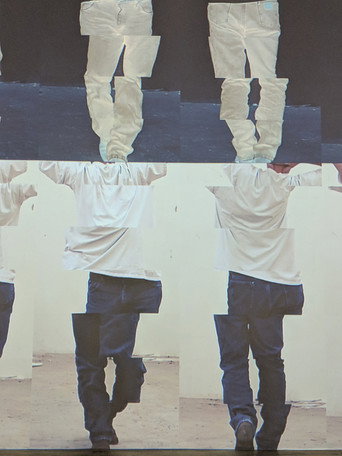
This exhibition presents a new work by Bruce Nauman, Contrapposto Studies, I through VII, which continues the artist's exploration of video, sound, and performance. Characteristic of his work over the last five decades, Nauman transforms a simple and subtle gesture into a complex network of images and sound.
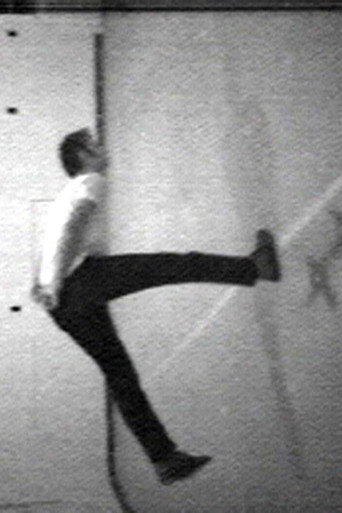
A fixed camera turned on its side records Nauman repeating for nearly an hour a laborious sequence of body movements inspired by passages in works by Samuel Beckett that describe similarly repetitive and meaningless activities. Hands clasped behind his back, he kicks one leg up at a right angle to his body, pivots forty-five degrees, falls forward hard with a thumping noise, extends the rear leg again at a right angle behind, and begins the sequence again. As in many of his fixed-camera film and video works, parts of Nauman's body disappear from the frame as he moves close to the camera; occasionally, he walks off-screen completely while the sound of his footsteps continues on the sound tracks.
HD video installation (color, stereo sound), continuous play, two HD video sources, two HD video projectors, four speakers
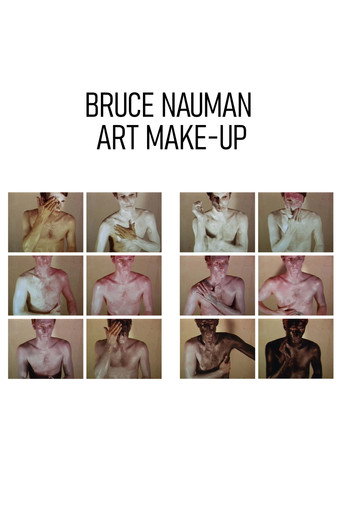
Art Make-Up is composed of four individual segments, each 10 minutes long. In them, Nauman appears tightly framed by the camera against a blank background, shirtless, and visible from the torso up. The action begins. Dipping his fingers into a small dish of makeup, he smears his face and body with the thick pigment until he is entirely covered. As the work’s title indicates, he begins with white makeup. He then moves on to pink, green, and, finally, black, layering each color on top of the previous ones.
"In this videotape Nauman attempted to maintain the contrapposto pose associated with classical and Renaissance sculpture while walking down a long, narrow corridor of his own design. In this position, one knee is bent, and weight is shifted to the opposing hip. Trying to walk while holding the pose of Donatello's David is absurd and comical, but there is also a menacing discomfort to Walk with Contrapposto. With both hands behind his head, Nauman resembles a prisoner; the video camera positioned high above him might be a surveillance device. He elected to show the corridor without the video at the Whitney Museum in New York in 1969, inviting viewers to traverse it. Nauman removed himself from the piece yet maintained a claustrophobic sense of control: "It's another way of limiting the situation so that someone else can be a performer, but he can do only what I want him to do," he said."
The artist Bruce Nauman set the corner post of a fence on his ranch in Galisteo, New Mexico, one day and videotaped the process. As the title of Setting a Good Corner (Allegory & Metaphor) suggests, Nauman sees this simple, even mundane, activity as an allegory and metaphor for other areas of life. Maybe we are to see the work as a metaphor for making a work of art, since Nauman has chosen to film it for display in a museum. One of the key elements of the video is Nauman’s decision to show us the entire process. He does not leave out the long digging scenes or edit the piece down to its most essential components.
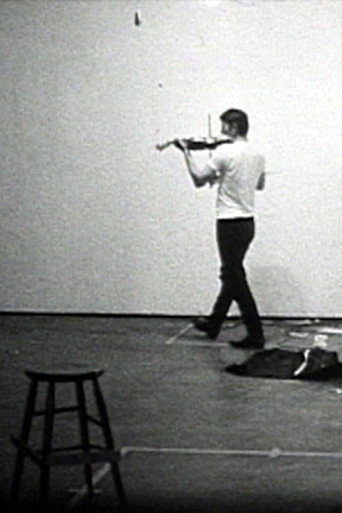
In this film record of a studio activity, Nauman set himself the task of walking while playing "two notes [on a violin] very close together so that you could hear the beats in the harmonics." The camera is set centrally in the studio in a stationary position so that when he walks outside of the camera's view at times, only the sounds of the notes and footsteps are heard. Sound and image are out of sync, a situation noticeable only at the end of the film when the sound stops but Nauman continues to pace and play. [Overview Courtesy of Electronic Arts Intermix]
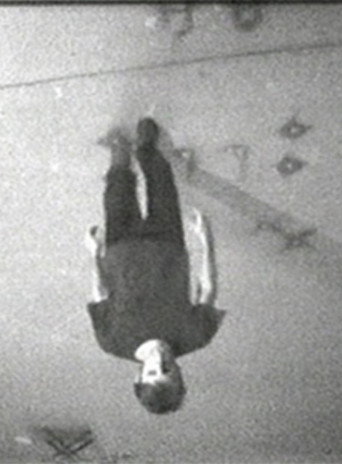
From an inverted position, high above the floor, the camera records Nauman’s trek back and forth and across the studio; his stamping creates a generative rhythm reminiscent of native drum beats or primitive dance rituals. However, Nauman is not participating in a social rite or communal ritual—he is completely individualized. Isolated in his studio, his actions have no apparent reason or cause beyond his aesthetic practice.
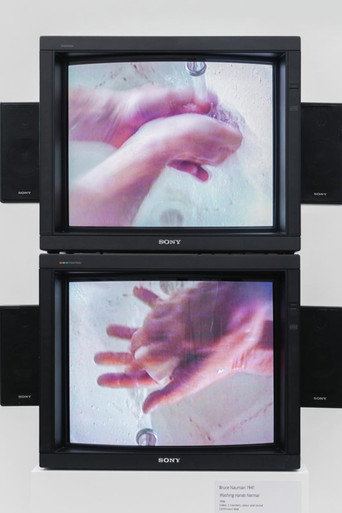
This stacked two-screen video installation shows the artist washing his hands with a vigour that goes beyond a daily cleaning ritual. The energy of the gesture and the distortive effect of the double screen evoke a sinister prior event and a sense panic or fear. Here Nauman continues his ongoing investigation into human psychology and feelings of discomfort. The sense of anxiety is heightened by the echoing sound of the water draining away for the fifty-five-minute duration of the double footage.
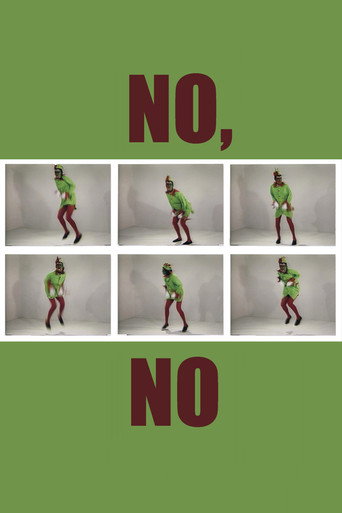
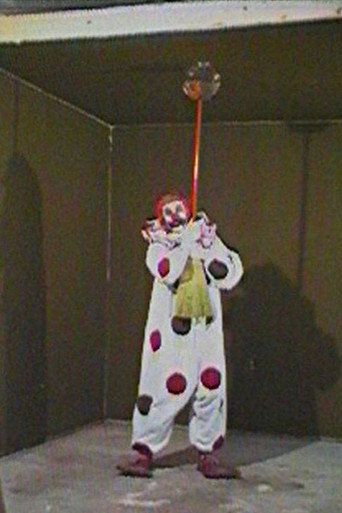
“Two color monitors placed in the window played one of Nauman’s most recent videos, that of a clown jumping up and down shouting ‘No, No, No, No!’ endlessly. Nauman’s videos confront the viewer with behavior normally thought unacceptable. The clown’s simple declarative statement takes on new meaning and creates tension and anxiety for the viewer.” The New Museum Annual Report, 1988
This is one of four videos in a collection called Clown Torture, 1987 by Bruce Nauman- this one being "Clown with Goldfish" featured at the Chicago Art Institute.
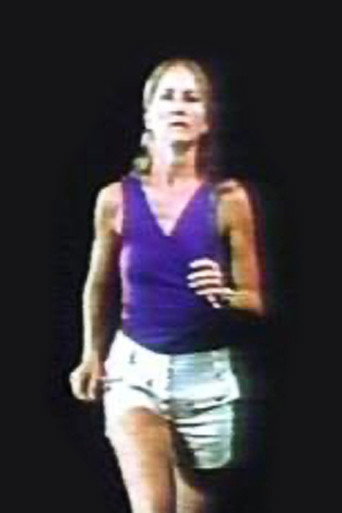
Images of sixteen men and women are shown, one by one, as they run on a conveyor belt against a black background. They appear to be in a complete void. The camera films the runners from all kinds of angles: sometimes from the front, from the knees up, then in profile or a focus on one of the limbs in close up. The heavy breathing of their exertions is audible. The tight close-ups of the limbs lend the moving body parts an almost abstract, mechanical character.
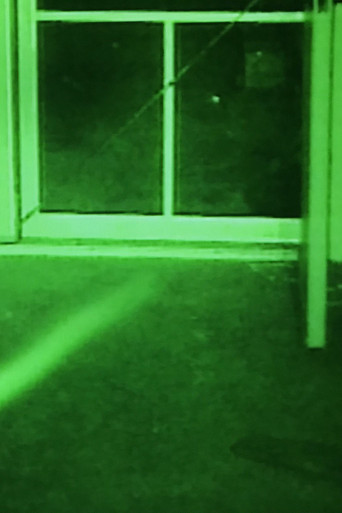
Seven screens show videos of as many places in Bruce Nauman's studio during the summer of 2000. He filmed these slices of night life with an infrared camera and processed them during editing. But one person is conspicuous by his absence: the artist. From time to time, only a cat wanders between the workbenches. Test Tape Chance John Cage is an incursion into a place dedicated to creation. It highlights the silence, sleep and inactivity at the heart of the creative process.
In this film, Nauman, bit by bit, pulls five or six yards of gauze from his mouth. Along with Black Balls and Pulling Mouth, it is one of the "Slo-Mo" films that he shot with an industrial high speed camera.