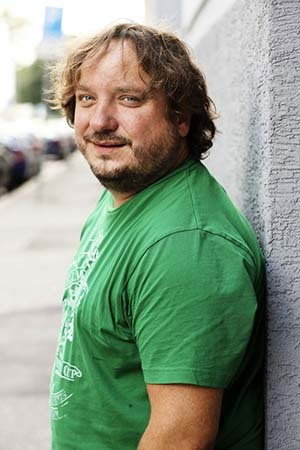
Branislav Bystriansky Movies, TV Shows, and Filmography

Branislav Bystriansky
Acting
Biography
No biography available.
Filmography Movies
Acting
Maťo Palica
A fairy-tale comedy about lazy Mato and the knowledge that the bossboys lead him to. Mata's mother's cottage leaks when it rains and its door hangs crookedly on one nail, even though a healthy young man lives there. Mato would rather not eat than move his mouth or even his hands. To every request, to every question he answers: "I didn't invent the work, let those who invented it do it!". But Mato changes his mind and Jesus changes his mind...
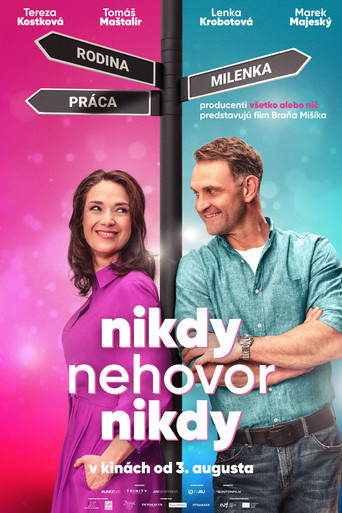
Never Say Never
Nadia and Peter meet during a time when their respective marriages are falling apart. Peter’s marriage has cooled due to his wife Lenka’s work commitments in Africa, while Nadia’s husband Viktor has found new love. A chance car collision brings them into each other’s lives, triggering unexpected encounters.
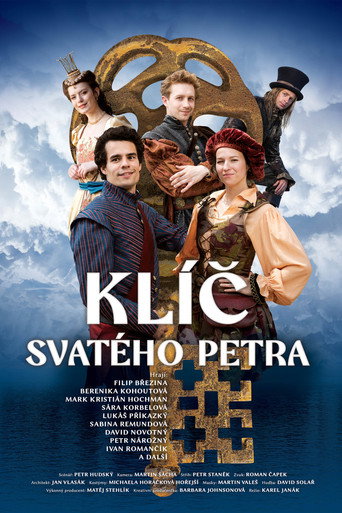
Klíč svatého Petra
Thief Viliam, swindler Emília, and the unwitting Tobiáš are implicated in stealing St. Peter’s key. After dying and facing judgment at heaven’s gate, Saint Peter sends them back to earth with a strict deadline to recover the key or be damned. Their quest leads them to a castle where a kindly king and a beautiful princess await, but they must also outwit treacherous chancellors and foil their malicious schemes.
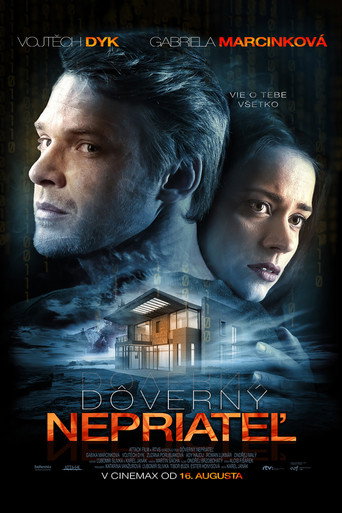
Intimate Enemy
Andrej, a programmer, is developing his smart house project. To perfect his program, he moved with his wife Zuzana to a test house. He strives to introduce a bonus into the program - care for his wife. Suddenly someone else, someone mysterious takes control of the program. The idyll of a perfect life is replaced by a nightmare and a struggle for survival.
Čierna pani
Kežmarok is another of the towns we will visit in the free cycle of stories Behind the City Walls, so that we can get to know the beauty and part of the history of this town through a heartfelt love story. The story is set during the time of the Rakoczi Uprising. While the city struggles for its existence, Jacob, the son of a senator, fights for his love and his friend, the student Gregor, is haunted by the apparition of the Black Lady. And since Gregor is indifferent to neither the fate of the town nor the fate of his friend, it is Gregor to whom the Black Lady entrusts her treasure.
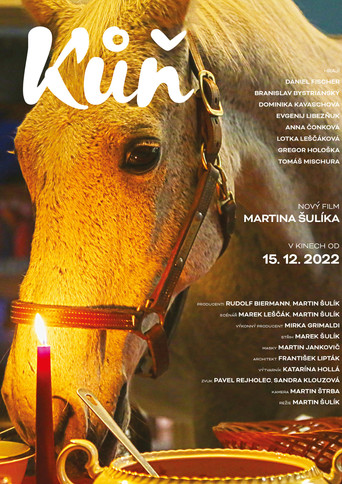
Horse
The shouted teacher Dušička is not having the best time of his life. He is going through a crisis with his girlfriend who wants to own him. He has problems at school, forcing him to change the way he teaches. He worries about his neighbors, who impose middle-class principles on him. And to top it all off, he finds a live horse at his home for Christmas. The situation is all the more absurd because he lives in an apartment on the second floor of an apartment building. Dušička has no idea how the white man got to him, who he might be, and he has no idea how to get rid of him. But the presence of the circus clown becomes not only a source of bizarrely comical situations, but also a catalyst for his relationships. Dušička recognizes the true face of the people who surround him. Because in a heated situation, everyone loses their masks. He begins to understand that his environment forces him to make compromises that are against him.
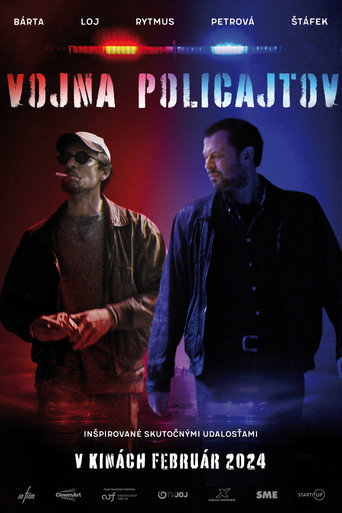
Once Upon a Time In East
A solitary police operative skilfully moves on the edge of the law in the wild atmosphere of the East Slovak underworld in the early 1990s.
Mikuláš Mráz
The story of Mr. Nicholas, a lonely old pensioner, begins the moment he decides to make children's dreams come true. As a temporary worker, he works at the post office, where letters addressed to St Nicholas have been piling up since the end of November. The post office workers put them in an old banana box and nobody notices them anymore. After all, who has time for such stupidity. It is only Nicholas Frost, in whose name the persons to whom the letters are addressed are associated, who thinks that this year he will make at least a few children in the house and on the street where he lives happy. And so he buys sweets and, with the help of a young student he has taken in at his place, starts delivering sweet parcels...
O hlúpej žene
In the books of collectors of Slovak folk tales we can find a considerable number of stories about human stupidity, greed, punished pride or avarice. Today's humorous story about a foolish woman will show us what can befall a man who marries not for the love of his wife, but for money. You probably won't feel sorry for him when he loses what he has earned by his own work, in addition to his easily gained dowry. But as it happens in a fairy tale, everything turns out for the best...
Tančiareň
Dancing through Slovak history of the twentieth century. Based on the Theatre du Campagnol performance "Le Bal" by Jean-Claude Penchenat, written by M. Huba and M. Porubjak. A dance locale - a place where people who are looking for partners come together. Lonely individuals become couples, people who were strangers not so long ago become partners and lovers. Outside, conditions change and regimes change, the country is overwhelmed by great history, the whirlwind of the World War, the communist coup, the hopeful spring of 1968, the fraternal occupation, the Hussite normalisation, November 1989 and the collapse of Czechoslovakia. Only those lonely dancers on the dance floor remain the same - with their human longings, their ridiculousness and their unfulfilled dreams.
Gallery