Beverly Grant Movies, TV Shows, and Filmography
Beverly Grant
Acting
Biography
Beverly Grant was an actress and filmmaker who appeared in films by Andy Warhol, Jack Smith, Gregory Markopoulos, Ira Cohen, Ron Rice, and Stephen Dwoskin, on the off-off Broadway stage in works by Ronald Tavel and LeRoi Jones, as well as collaborated with her one-time husband, experimental filmmaker and musician, Tony Conrad.
Filmography Movies
Acting
Home Movies 1971-81
Home movies shot on Super 8mm by W+B Hein over 10 years.
Naissant
Filmed in New York in 1964, completed in London 1967.
Library
Initially titled "Books for all". A moving institutional commission in which the filmmakers lovingly portray New Jersey's public library system.
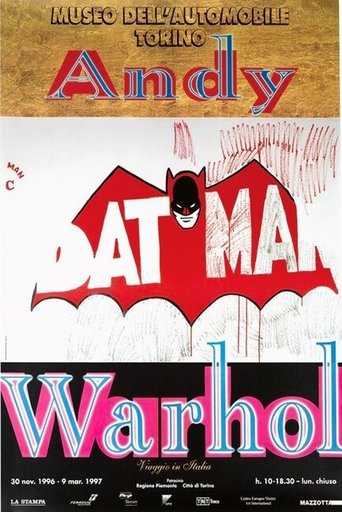
Batman Dracula
Batman Dracula is a 1964 black and white American film produced and directed by Andy Warhol, without the permission of DC Comics. The film was screened only at Warhol's art exhibits. A fan of the Batman series, Warhol made the movie as a homage. Batman Dracula is considered to be the first film featuring a blatantly campy Batman. The film was thought to have been lost until scenes from it were shown at some length in the documentary Jack Smith and the Destruction of Atlantis.
Normal Love
A follow-up to now legendary film Flaming Creatures. This vivid, full-color homage to B-movies is a dizzying display of camp that clearly affirms Smith’s role as the driving force behind underground cinema and performance art of the post-war era. The director was known to constantly re-edit the film, often during screenings as it was still unspooling from the projector.
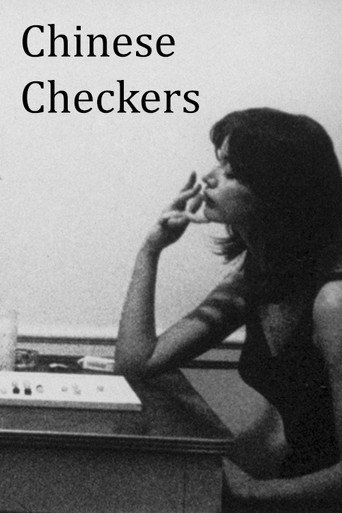
Chinese Checkers
His Oriental predator is at first clothed in black, her 'victim' in white; slowly the costumes change, the victim acquiring a veil of mourning, until finally - as if to underline the ambiguity and interchangeability of their respective roles - the colours are reversed altogether. Still more interesting is the way in which, as the game becomes more ambiguous, Dwoskin adds fresh layers of make-up to his characters' faces, until they become almost caricature masks of their original selves.
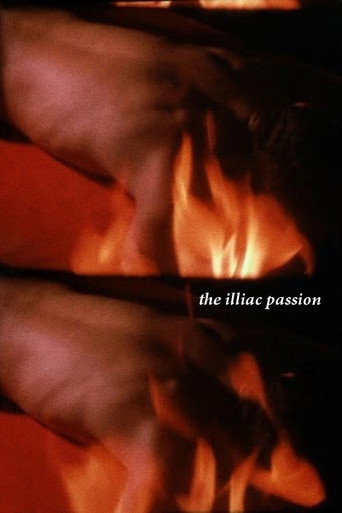
The Illiac Passion
Prometheus, on an Odyssean journey, crosses the Brooklyn Bridge in search of the characters of his imagination. After meeting the Muse, he proceeds to the "forest." There, under an apple tree, he communes with his selves, represented by celebrated personages from the New York "underground scene" who appear as modern correlatives to the figures of Greek mythology. The filmmaker, who narrates the situations with a translation of Aeschylus' Prometheus Bound, finds the personalities of his characters to have a timeless universality.
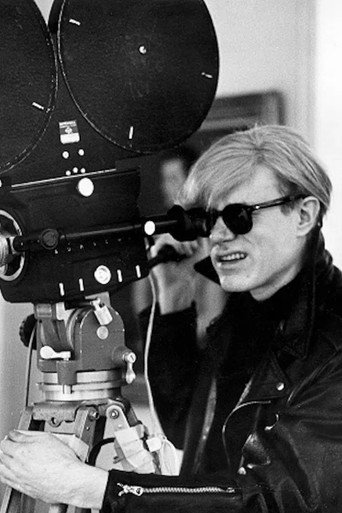
Screen Test #3
One of Andy Warhol's screen tests, focusing on an actor's face for 4-5 mins.
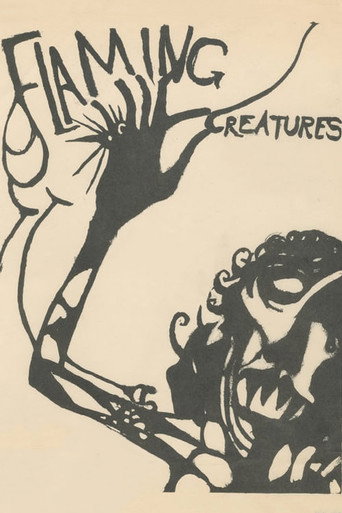
Flaming Creatures
Filmmaker and artist Jack Smith described his own film as a “comedy set in a haunted movie studio.” Flaming Creatures begins humorously enough with several men and women, mostly of indeterminate gender, vamping it up in front of the camera and participating in a mock advertisement for an indelible, heart-shaped brand of lipstick. However, things take a dark, nightmarish turn when a transvestite chases, catches and begins molesting a woman. Soon, all of the titular “creatures” participate in a (mostly clothed) orgy that causes a massive earthquake. After the creatures are killed in the resulting chaos, a vampire dressed like an old Hollywood starlet rises from her coffin to resurrect the dead. All ends happily enough when the now undead creatures dance with each other, even though another orgy and earthquake loom over the end title card.
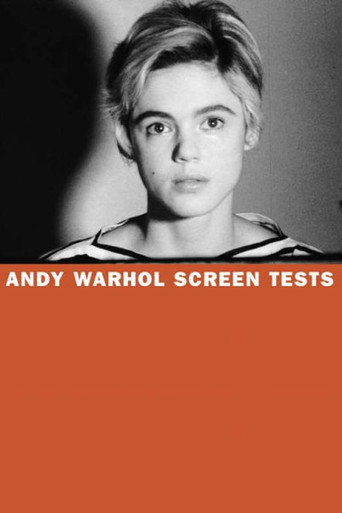
Andy Warhol Screen Tests
The films were made between 1964 and 1966 at Warhol's Factory studio in New York City. Subjects were captured in stark relief by a strong key light, and filmed by Warhol with his stationary 16mm Bolex camera on silent, black and white, 100-foot rolls of film at 24 frames per second. The resulting two-and-a-half-minute film reels were then screened in 'slow motion' at 16 frames per second.
Production
Straight and Narrow
Straight and Narrow is a study of subjective colour and visual rhythm, although it is printed on black and white film, the hypnotic pacing of the images will cause most viewers to experience a programmed gamut of hallucinatory colour effects. Through the intermediary of rhythm, the maximal impact is drawn from the simplest of universal human images: straight horizontal and vertical lines. Set to a strong percussive musical background, rapidly alternating images of black and white straight lines are juxtaposed in precise rhythmic patterns to create specific colours... if you can watch without becoming hypnotised...
Coming Attractions
“Coming Attractions” looks backward into the memories and forward into the future of Francis Francine, an elegantly dowdy transvestite of, and indeed beyond, a certain age. The memories, haunted by a Spirit of Seductions Past (played by a quite glorious naked young lady who fortunately bears absolutely no resemblance to Francis Fran cine) suggest a generally lurid life of sumptuous sex and questionable liaisons. The future, presented by an ancient fortune teller with a wonderful crystal ball that holds a lively go‐go dancer and that seems to mediate between interchanging black and white halves of the screen, follows Francis Francine through the reactivation of an ancient affair, to her death (a jealous ex‐lover) and her triumphant entrance into a pastoral paradise that looks like a cross between several scenes from “81/2” and “The Embarkation for Cythera” in drag.