Bernard Sasia Movies, TV Shows, and Filmography
Bernard Sasia
Editing
Biography
No biography available.
Filmography Movies
Acting
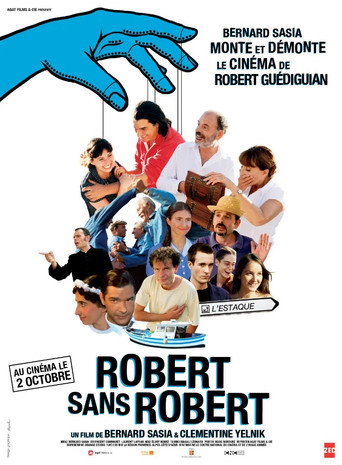
In the Musical Intimacy of a Film Score
It is the story of a love affair between a musical score and a screenplay! Chief editor Bernard Sasia observes and interviews the key figures of this journey. Centered on the collaboration between composer Michel Petrossian and director Robert Guédiguian, Sasia uses his editing tools to capture the sudden emergence of a musical creation for the cinema.
Production
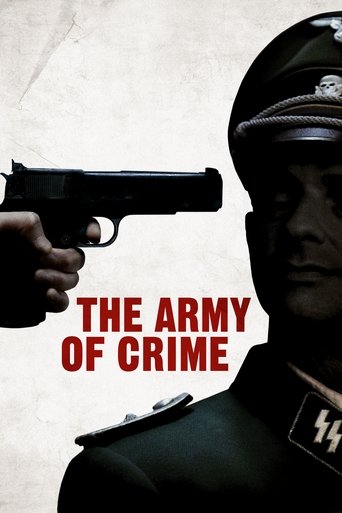
Army of Crime
This gripping historical drama recounts the story of Armenian-born Missak Manouchian, a woodworker and political activist who led an immigrant laborer division of the Parisian Resistance on 30 operations against the Nazis in 1943. The Nazis branded the group an Army of Crime, an anti-immigrant propaganda stunt that backfired as the team's members became martyrs for the Resistance.

Attention danger travail
With the energy of the dying, those in power apply themselves to reasserting the value of work – with force, if need be. But more and more workers have understood that, to truly value their work, they have to do without it. They also have to get rid of the society of consumption that goes along with it. It may not be easy, but it is certainly amusing. We present a panorama of a mass desertion destined to spread.

Marie-Jo and Her 2 Loves
Marie-Jo is a middleaged woman living an ordinary life in Marseilles with her husband, Daniel and her daughter, Julie. Daniel runs a small construction business in which Marie-Jo helps. She also works at the local hospital. Outwardly their marriage is loving. But Marie-Jo has been in love with another man for more than twelve months.Marco works as a harbour pilot and is deeply in love with Marie-Jo. Learning that loving two men is impossible, Marie-Jo is forced to make a choice.

Sociology Is a Martial Art
"I often say sociology is a martial art, a means of self-defence. Basically, you use it to defend yourself, without having the right to use it for unfair attacks." (Pierre Bourdieu) The world has witnesses who speak out loud what others keep to themselves. They are neither gurus, nor masters, but those who consider that the city and the world can be thought out. The sociologist, Pierre Bourdieu is one such witness." Over a three- year period, Pierre Carles' camera followed him through different situations: a short conversation with Günter Grass, a lively conference with the inhabitants of a working-class suburb, his relations with his students and colleagues and his plea that sociology be part of the life of the city. His thinking has a sort of familiarity, which means it is always within our reach. It is the thinking of a French intellectual who has chosen to think his times.
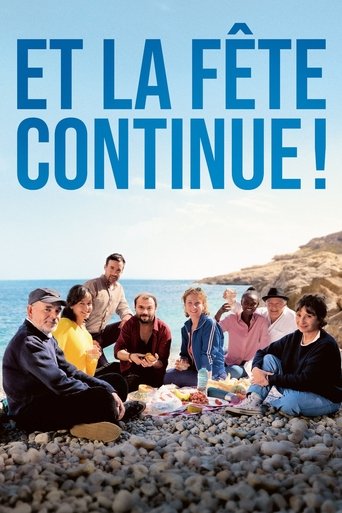
And the Party Goes On
In Marseille, Rosa, 60, dedicated her life to family and politics with the same sense of duty. Everyone considers her unwavering, until the day she falls in love with Henri. For the first time, Rosa is afraid to commit. Between the pressure of his family, politics and a desire to indulge in her feelings, the conflict is difficult to sustain.
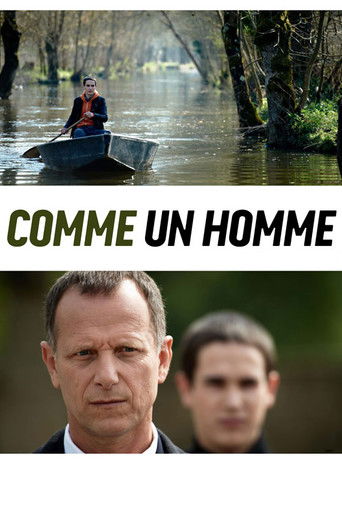
Bad Seeds
Quiet 16-year-old Louis, the high school headmaster’s son, has never been in trouble. His best friend, 18-year-old Greg, however, is his polar opposite: provocative, angry, violent, he has been kicked out of school for physically threatening young English teacher Camille. When Greg asks Louis to help him take revenge on Camille, Louis accepts, fascinated...
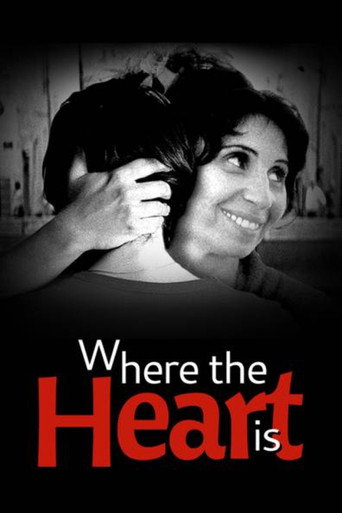
Where the Heart Is
From the director of Marius et Jeannette, this story of two working-class families is a fable with an optimist streak. A young black man, Francois, is wrongly accused of rape by a racist policeman. The story is told in voiceover by his childhood friend, neighbor, and the mother of his future child, Clementine, who is white. The city is Marseilles as in the previous film, symbolic with its churches, prisons and ruins. Except in this film, director Robert Guediguian also ventures outside, taking the story to Sarajevo; two different cities, one devastated by war, the other by a bad economy and unemployment. A la Place du coeur won a Special Jury Prize at the 1998 San Sebastian Film Festival and was also shown at the 1998 Toronto Film Festival and the 1998 Montreal Film Festival.
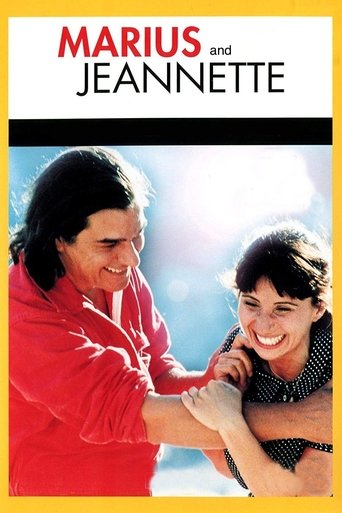
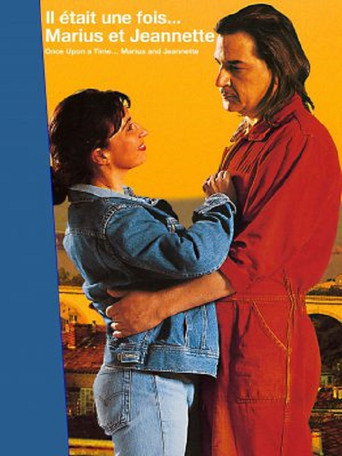
Marius and Jeannette
Jeannette is a single mother living in a working-class community in Marseilles; she tries to support herself and her two kids on her salary as a check-out girl at a supermarket and lives in an apartment complex where everyone is thrown into close proximity with everyone else. Marius is working as a security guard at a cement factory that has gone out of business; he's also squatting in the building, since the plant is soon to be demolished and he'll be needing his money later on. One day, Jeannette happens by the factory, and spotting several cans of paint, tries to take two of them home with her. Marius spots her and tries to chase her away, while she rails at him with curses against the capitalist system. The next day, an apologetic Marius appears at her doorstep, cans of paint in hand; the two soon become friendly, and a romance begins to bloom, though it quickly becomes obvious that Jeannette's romance novel fantasies are a bit off the mark from what Marius has in mind.
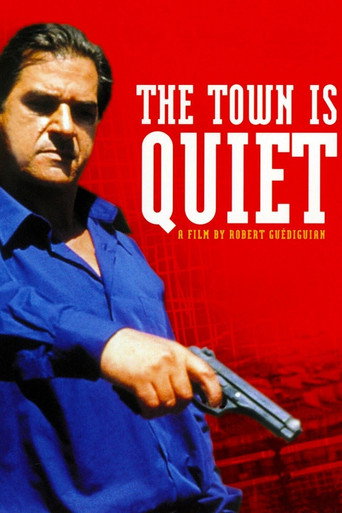
The Town Is Quiet
A dark tale of working-class life in Marseilles, a city in crisis. Interesting characters include a hard-bitten but compassionate fish market worker with a drug addicted daughter and a moody bartender with a shocking secret life.