Bernard-Pierre Donnadieu Movies, TV Shows, and Filmography

Bernard-Pierre Donnadieu
Acting
Biography
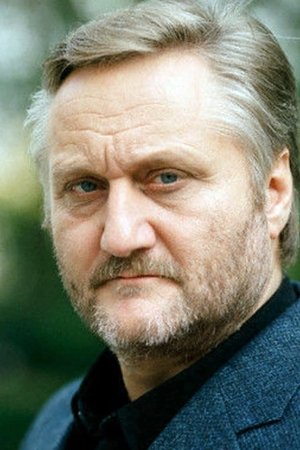
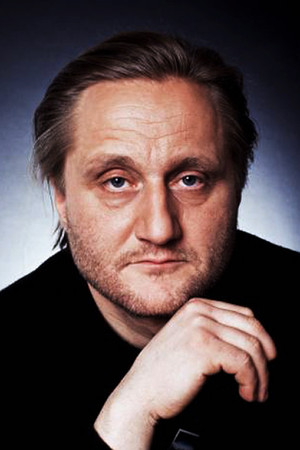
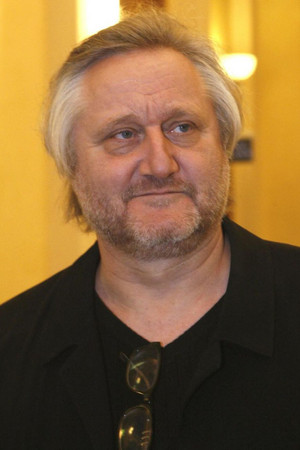
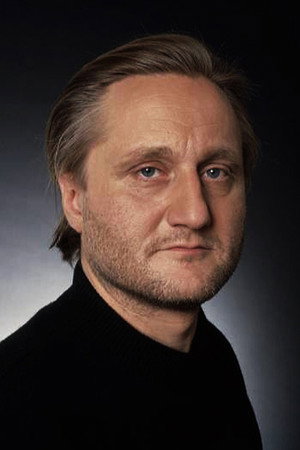
Bernard-Pierre Donnadieu (2 July 1949 – 27 December 2010) was a French actor. He made more than 100 appearances in movies and television over his career, as well as in theatrical roles. He was often cast as a villain, criminal or psychopath. Donnadieu was the French voice of many lead roles in English-language movies dubbed into French. He studied theatre and literature at the Sorbonne Paris III. Donnadieu's earliest notable film roles came in 1976 with The Tenant by Roman Polanski, and Second Chance (French: Si c'était à refaire, lit. 'If I Had to Do It All Over Again') by Claude Lelouch. The film which earned him wider recognition was Georges Lautner's 1981 action thriller, The Professional in which he had a major role, appearing with Jean-Paul Belmondo. Other notable film roles were the title part in The Return of Martin Guerre by Daniel Vigne, and in George Sluizer's The Vanishing, for which Donnadieu won best acting awards at the 1989 Madrid Film Festival and the 1990 Porto Film Festival. He was nominated for a best supporting actor César Award for his 1984 role as the dangerous criminal gang leader in Rue Barbare ('Barbarian Street'). His final film appearance was in 2008 in Christophe Barratier's Paris 36 (released in France as Faubourg 36). Donnadieu appeared in many television and theatre productions. He played historical figures such as Hubert-Joseph Henry in the L'Affaire Dreyfus and Roger Salengro, in L'Affaire Salengro, a television film directed by Yves Boisset, with whom he regularly worked. While his appearance and physique seemed to influence directors to cast him as malevolent characters, he also had more sympathetic roles, such as the lead in the drama Faut pas rire du bonheur, in which his character has a romantic involvement with a woman, played by Laura Morante. His work dubbing French dialogue has included voicing characters portrayed by actors such as Kurt Russell, Dennis Hopper and Ron Perlman. In the theatre, he was a frequent collaborator with Georges Wilson who directed him in several productions. Donnadieu died from cancer on 27 December 2010 at age 61. Source: Article "Bernard-Pierre Donnadieu" from Wikipedia in English, licensed under CC-BY-SA.
Filmography Movies
Acting
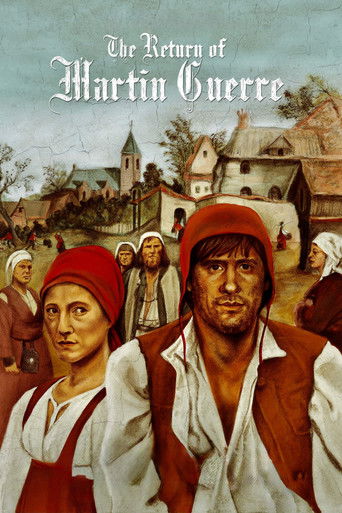
The Return of Martin Guerre
Village of Artigat, southern France, summer 1542, during the reign of Francis I. Martin Guerre and Bertrande de Rols marry. A few years later, accused of having committed a robbery, Martin suddenly disappears. When, almost a decade later, a man arrives in Artigat claiming to be Martin, the Guerre family recognizes him as such; but doubts soon arise about his true identity.

The Vanishing
Rex and Saskia, a young couple in love, are on vacation when they stop at a busy service station. Saskia is abducted in broad daylight and three years pass with no answers or closure surrounding her disappearance. Rex has nearly given up all hope when he suddenly begins receiving letters from her abductor.

Druids
In the year 60 B.C. a group of Druids, including the arch-druid Guttuart (Max von Sydow), witness the passing of a comet and interpret it as the sign of the coming of a king for their country Gaul, which has not had a king for a long time. Guttuart goes to Gergovia, the capital of the Arvenes tribe, to attend a meeting of Gallic tribal chieftains. The young boy Vercingetorix, along with his friend the young girl Eponia, sneak into a large cavern where Celtill, Vercingetorix's father and chieftain of the Arvenes, hosts the meeting of chieftains with the intention of proclaiming himself king of all Gauls. When Celtill shows off the crown once worn by the old kings of Gaul, an arrow from two Roman spies (dressed as Gauls) hits Celtill in the back.
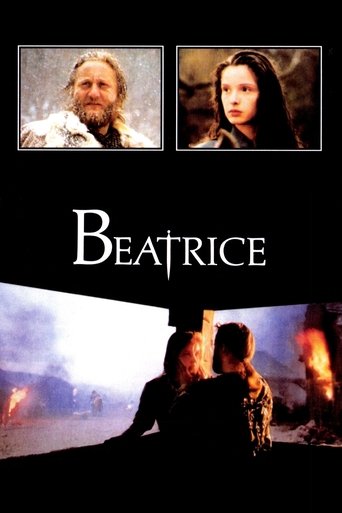
Beatrice
Somewhere in France during the Middle Ages. Béatrice is impatient to see her father return from English captivity. She doesn't expect however that the father whom she loves from distance will be the most hateful person who will submit her and her family to abuse and humiliation.
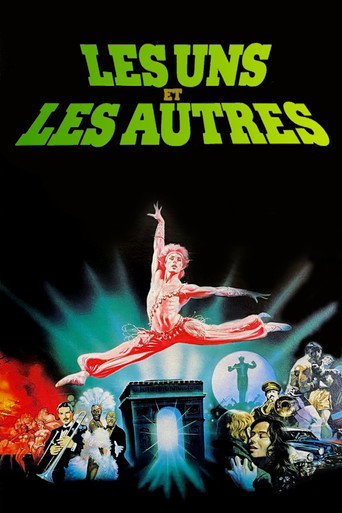
Bolero
The film follows four families, with different nationalities (French, German, Russian and American) but with the same passion for music, from the 1930s to the 1960s. The various story lines cross each other time and again in different places and times, with their own theme scores that evolve as time passes. The main event in the film is the Second World War, which throws the stories of the four musical families together and mixes their fates. Although all characters are fictional, many of them are loosely based on historical musical icons (Édith Piaf, Josephine Baker, Herbert von Karajan, Glenn Miller, Rudolf Nureyev, etc.) The Boléro dance sequence at the end brings all the threads together.

Paris 36
A star is born in a time of both celebration and instability in this historical drama with music from director Christophe Barratier. In the spring of 1936, Paris is in a state of uncertainty; while the rise of the Third Reich in Germany worries many, a leftist union-oriented candidate, Léon Blum, has been voted into power, and organized labor is feeling its new power by standing up to management.
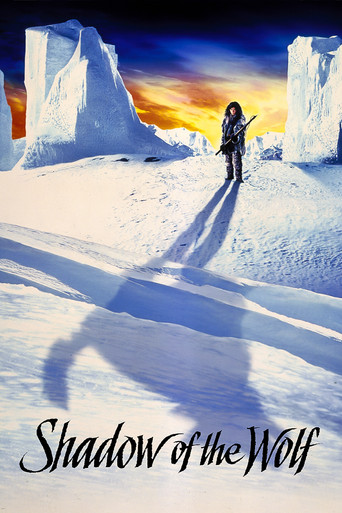
Shadow of the Wolf
In the 1930s, Agaguk lives his traditional Inuit life. But one day, there is a murder in the tribe and Agaguk becomes a suspect. Soon he becomes persecuted by Henderson, a mean mountie, and he must flee through the cold winter of Northern Quebec.
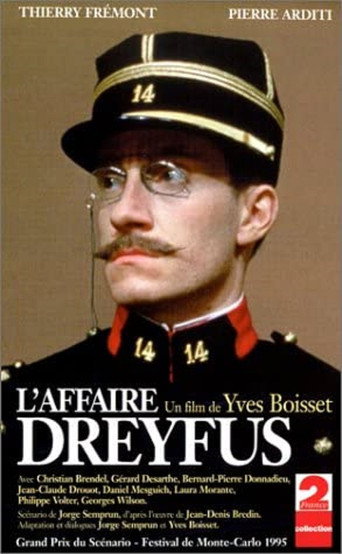
L'Affaire Dreyfus
In 1894, the French Army discovered the existence of a traitor Alsatian and Jewish, the French officer Alfred Dreyfus makes an ideal culprit. For lack of evidence, the War Ministry creates a damning document Dreyfus overwhelming. Judged and sentenced, Dreyfus is deported to Devil's Island. In 1896, the Army flushed out the real culprit. The truth broke out in 1898 thanks to the mobilization of intellectuals shaken by Zola's "J'accuse!"
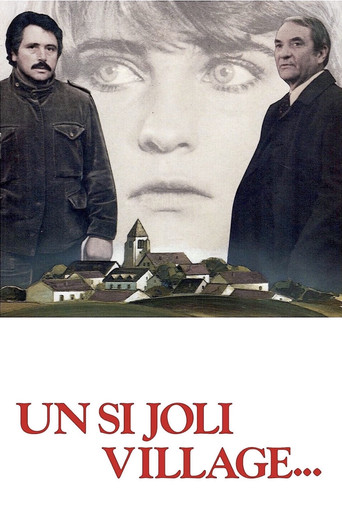
Such a Lovely Town...
Stephane (Victor Lanoux) is the mayor of a small village. He is also the manager of the tannery which provides the inhabitants with work. In a fit of anger, he kills his wife (Edith Scob). A judge (Jean Carmet) tries to prove his culpability, but it's not an easy task, because there is a political and social pressure.
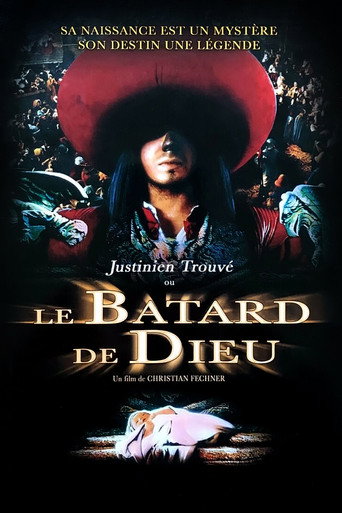
Justinien Trouve, or God's Bastard
Set in the French countryside in the 1600s, a lone rider deposits a newborn baby boy on the steps of a monastery, having bitten his nose off. The child is bought up by an ex-pirate and his wife and is taught to read, write, count, joust and fence, and is also given a wooden nose. However, he is ordered by a local baron to attend a tough seminary, but he soon rebels and makes an action-packed escape...
Gallery