Benjamin Quabeck Movies, TV Shows, and Filmography
Benjamin Quabeck
Directing
Biography
No biography available.
Filmography Movies

Production
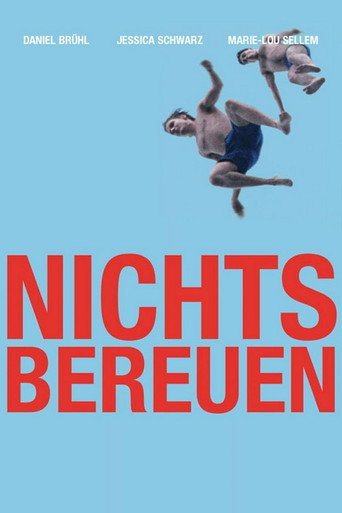
No Regrets
This teenage drama deals with the emotional chaos of a high school graduate at the beginning of a new period of his life. 19-year-old Daniel is frustrated: he wants his great love Luca to be the "first" woman in his life, but she seems to be unreachable, so he is still a virgin. During his community service as a male nurse, his boss Anna falls in love with him and they finally have sex. Suddenly Luca is interested in Daniel...
No Regrets
This teenage drama deals with the emotional chaos of a high school graduate at the beginning of a new period of his life. 19-year-old Daniel is frustrated: he wants his great love Luca to be the "first" woman in his life, but she seems to be unreachable, so he is still a virgin. During his community service as a male nurse, his boss Anna falls in love with him and they finally have sex. Suddenly Luca is interested in Daniel...
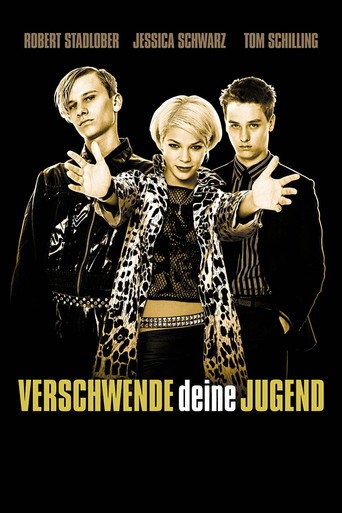
Wasted Youth
The year is 1981, the German New Wave is at the peak. Harry, otherwise Sparkasse trainee, wants to make it big as a manager of the band of his friends, Apollo Schwabing. He has booked the band as the opening act for a concert where the group DAF are the headliners.
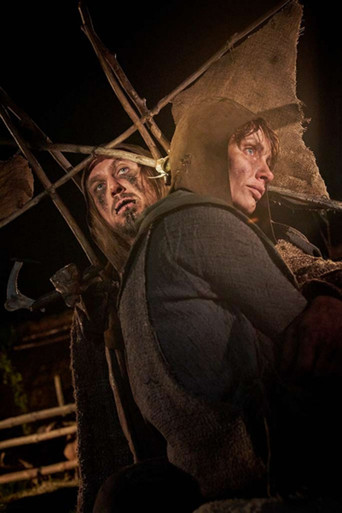
Mischief
Set in a Medieval town, the film has a theatrical quality, as the behaviours and actions of the characters are exaggerated almost to the point of satire. Nevertheless, its relatively dark and heavy plot yields over-the-top expressions from the actors. There is little dialogue as the story opens: a mother is seen tending to her sick daughter, whom she is then told must be sacrificed to the forest. The viewers patiently but curiously watch the mother perform healing rituals with objects like egg shells, dried plants and twigs–also recurring in the installation–until the daughter mysteriously disappears.
Mischief
Set in a Medieval town, the film has a theatrical quality, as the behaviours and actions of the characters are exaggerated almost to the point of satire. Nevertheless, its relatively dark and heavy plot yields over-the-top expressions from the actors. There is little dialogue as the story opens: a mother is seen tending to her sick daughter, whom she is then told must be sacrificed to the forest. The viewers patiently but curiously watch the mother perform healing rituals with objects like egg shells, dried plants and twigs–also recurring in the installation–until the daughter mysteriously disappears.
Mischief
Set in a Medieval town, the film has a theatrical quality, as the behaviours and actions of the characters are exaggerated almost to the point of satire. Nevertheless, its relatively dark and heavy plot yields over-the-top expressions from the actors. There is little dialogue as the story opens: a mother is seen tending to her sick daughter, whom she is then told must be sacrificed to the forest. The viewers patiently but curiously watch the mother perform healing rituals with objects like egg shells, dried plants and twigs–also recurring in the installation–until the daughter mysteriously disappears.
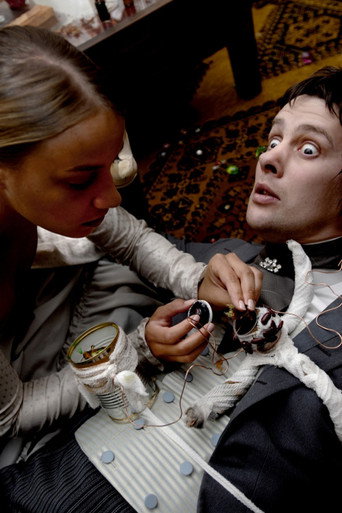
Dandy
Follows experiments of fictional 19th century aristocrat Monsieur Lautréamont, a hypochondriac dandy committed to the pursuit of true aesthetic perfection which he calls “urge-ingeniousness”. The film focuses on the interplay between Lautréamont and Louise, his seductive servant, and switches back and forth between Bock as the master and his reliance on Louise who is all at once nurse, servant, inspiration and lover. The film crosses the boundaries of surreal fantasy and period drama, with Bock playing the tormented genius, an inventor attempting to achieve perfection in every creative aspect: poetry, perfume, and even nature. Filmed at Chateau du Bosc, the family home of the aristocratic dwarf Henri de Toulouse Lautrec. Toulouse Lautrec is clearly the inspiration for Bock’s character
Dragon Girls
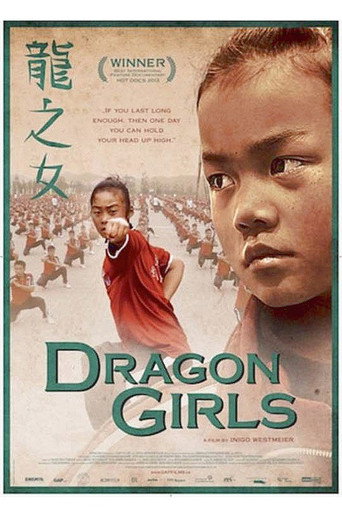
The documentary film Dragon Girls tells the story of three young Chinese girls training to become Kung Fu fighters, far away from their families, at the largest Kung Fu school in China. These girls, in a crowd of 26,000 children, are under constant pressure to conform to the norms and structures. They are turned into fighting robots and yet, if you look behind the curtain, you see children with dreams and aspirations. It show the controversial world of selection of the fittest in a totalitarian system.
Dragon Girls
The documentary film Dragon Girls tells the story of three young Chinese girls training to become Kung Fu fighters, far away from their families, at the largest Kung Fu school in China. These girls, in a crowd of 26,000 children, are under constant pressure to conform to the norms and structures. They are turned into fighting robots and yet, if you look behind the curtain, you see children with dreams and aspirations. It show the controversial world of selection of the fittest in a totalitarian system.
Dragon Girls
The documentary film Dragon Girls tells the story of three young Chinese girls training to become Kung Fu fighters, far away from their families, at the largest Kung Fu school in China. These girls, in a crowd of 26,000 children, are under constant pressure to conform to the norms and structures. They are turned into fighting robots and yet, if you look behind the curtain, you see children with dreams and aspirations. It show the controversial world of selection of the fittest in a totalitarian system.