Acting
No biography available.
The film is based on a true story, concerning a series of robberies on the highways of Germany. At the time of the actual events, there was a controversy over whether or not highway patrolmen should be given permission to use firearms against perpetrators.
Heidi, a young orphan girl living with her aunt in Frankfurt, is forced to move to the Swiss Alps to live with her ornery grandfather. At first, he resents her presence, but, after a short while, Heidi manages to pierce his gruff exterior, and the two become close. She also befriends a young shepherd named Peter. After three years, Heidi's aunt arrives and demands Heidi's return to Frankfurt.
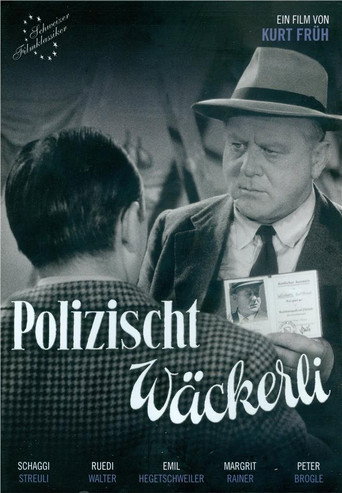
Wäckerli, policeman in the small Swiss village of Allenwil, is in trouble. His son Ruedi is unhappy in his apprenticeship and spends way too much money. And now 10'000 francs have been stolen from the bourough's community fund...
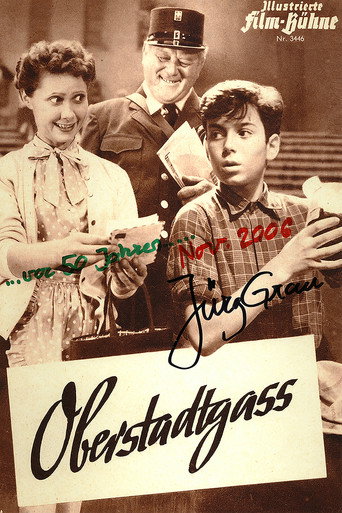
Realist melodrama set in Zurich. In the old town district, people are concerned about Mäni, the child of a toilet attendant, who is growing up without a father. Postman Jucker appeals to the boy's conscience and protects him from unjustified accusations. After Mäni's mother dies, Jucker, who has become the child's guardian, takes Mäni into his home. Mrs. Jucker does not accept the boy and accuses Jucker of forgetting their own deceased child. Mrs. Jucker flees to her sister's house. Mäni also runs away.
The titular Marie-Louise is a young French lass who is evacuated to Switzerland when her country is overrun by the Nazis. Suffering a nervous breakdown, she is given comfort and shelter by a wealthy family. Unfortunately, living in the lap of luxury makes Marie-Louise hesitant to return home to her mother and war torn home. Eventually the girl comes to her senses, but it isn't easy.
The story revolves around the confusion that arises when a supposed gold discovery in Valais divides the village community. The plot combines elements of a cultural film about old customs in the Lötschental valley with a naive storyline that achieves a strangely powerful effect through its simple realism.
A woman discovers after she has just married him, that her husband is abusive, and she tries to get away.
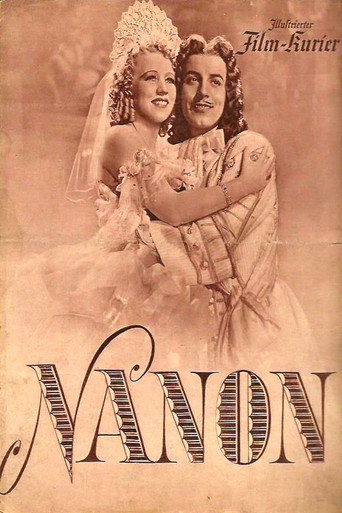
An operetta directed by Herbert Maisch.
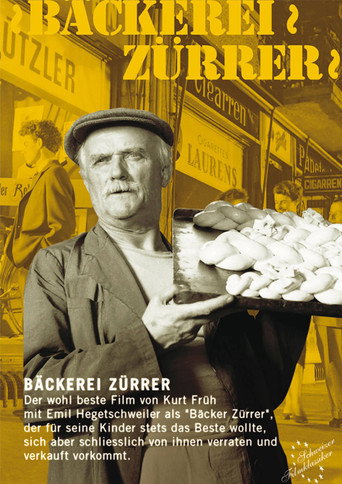
Widowed baker Zürrer has to raise his three children, who all turn out to be disappointments to him in various ways.
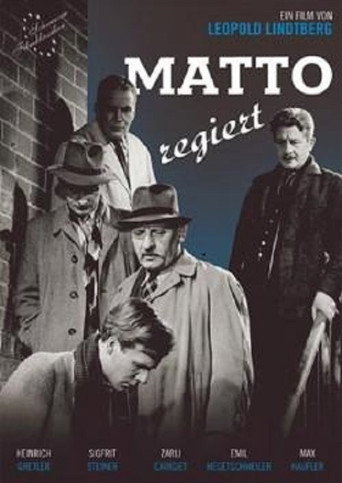
If any one man is responsible for the rejuvenation of the postwar Swiss film industry, that man was director Leopold Lindtberg. Matto Regiert (Madness Rules) was co-adapted for the screen by Lindtberg from a novel by Friedrich Glauser. Heinrich Gretler stars as Police Constable Studer, the hero of several of Glauser's most popular works. This time, Studer must solve the murder of the director of an insane asylum -- and it's not (surprise, surprise) the most likely suspect, manic-depressive patient Herbert Caplaun. For box-office purposes, Matto Regiert stresses a romantic subplot involving Caplaun and nurse Irma Wasem.