Acting
No biography available.
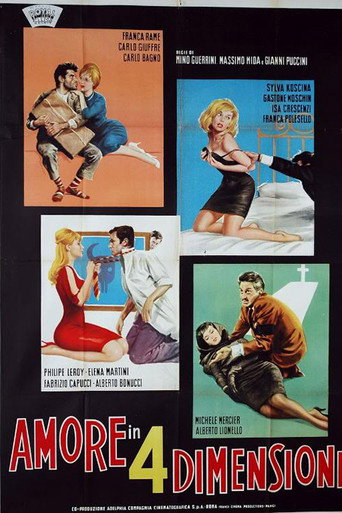
Young Italian writers and directors express themselves in four episodes about sex and love. "Love and Language," the first tale, centers on the difficulties of a Sicilian immigrant who is unable to master proper Italian. the second tale "Love and Life" centers on a jealous and unhappy wife who becomes so desperate to be free of her constantly philandering husband she takes on a lover of her own. "Love and Art" a nearly exhausted screenwriter hires a secretary to help manage his typing. She's a pretty lass and this makes his insecure wife crazy until he fires the female and hires a male secretary. "Love and Death," the final episode centers on the love affair between a middle-aged widower and the grieving young widow he meets at the cemetery. Unfortuantely for his bank statement, the young, impoverished beauty isn't as bereaved as she seems.
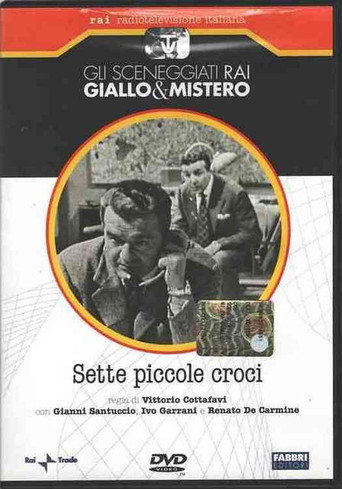
Based on the short story "Sept petites croix dans un carnet" by Georges Simenon. "Sette piccole croci" was the first drama, non-series (what is today called a TV movie), as well as the first police thriller to be broadcast on Italian television. The story follows a tense cat-and-mouse chase across Paris on Christmas Eve.
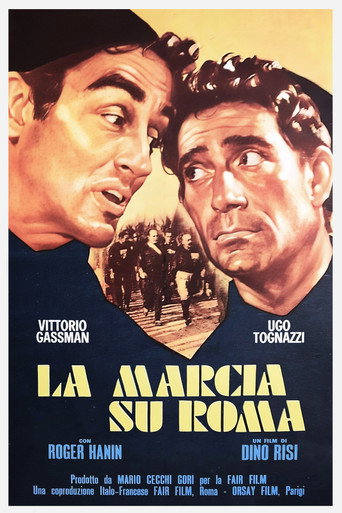
March on Rome (Italian: La marcia su Roma) is a 1962 comedy film by Dino Risi with Vittorio Gassman and Ugo Tognazzi, aimed at describing the March on Rome of Benito Mussolini's black shirts from the point of view of two newly recruited, naïve black shirts
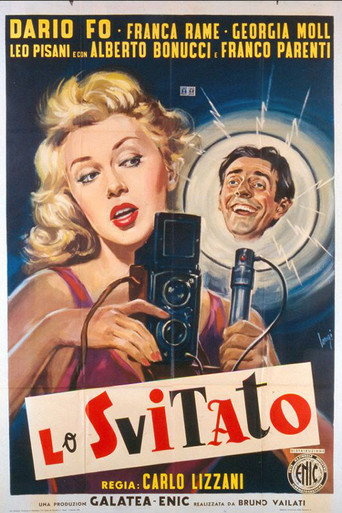
Achilles, a Hulot-like factotum for an evening newspaper, travels around looking for a scoop in the Milan of the "economic miracle."
A satirical and surreal mockery of top-down, positivist urban planning exemplified in the character of "Professor C", the film was made by the architect Giancarlo De Carlo with Carlo Doglio, Michele Gandin, Billa Pedroni, Ludovico Quaroni and Elio Vittorini for the 10th Milan Triennale in 1954. Shot on 35mm film.