Directing
No biography available.
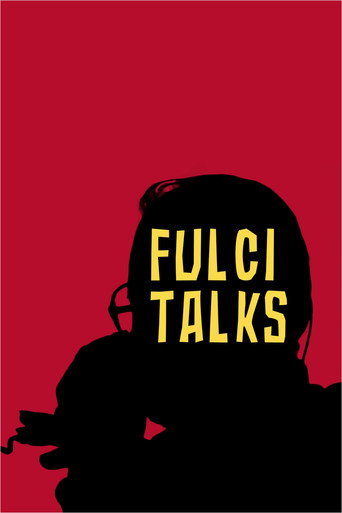
Rome, Italy, June 1993. Antonietta De Lillo and Marcello Garofalo interview legendary Italian film director Lucio Fulci (1927-96).
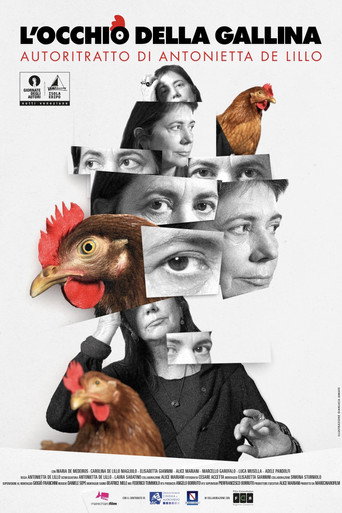
The Eye of the Hen is a story of violence and isolation without precedent in the Italian film industry. After twenty years as a filmmaker, with her best film released to critical acclaim and by some deemed a masterpiece that would cement her reputation with mainstream audiences as well, Antonietta De Lillo suffered an injustice that stopped her career in its tracks and relegated her to the backwaters of the industry, where she would be barred from making another feature film. Taking the form of a self-portrait, the film freely revisits the life and career of its subject, nearly forty years after her first film.
A passionate, disillusioned and possibly (self)ironic portrait of a generation of filmmakers who decided to tread the rugged paths of real cinema.
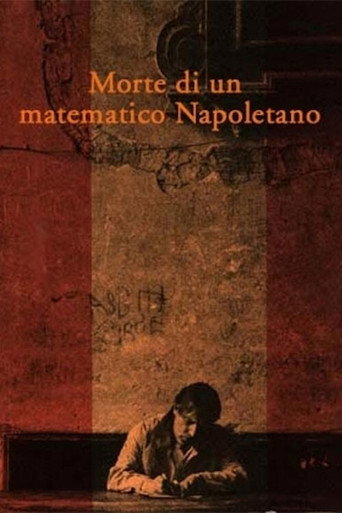
Naples, 1959. Pure Mathematics professor Renato Caccioppoli, Bakunin's grandson, is a tortured soul. Recently discharged from the psychiatric hospital, left by his wife, and increasingly disillusioned with academia and the Communist Party, he lives his last days with painful detachment.
Set in the 1790s, this historical drama follows the travails of an idealistic noblewoman who helps lead a daring revolution in Italy.
An elderly trio tries to adjust to each other when they all move into an apartment in Rome. When Giovanni (Ricardo Cucciolla) inherits the unit, he invites the Russian immigrant Maria (Marina Vlady) and his shy friend from college Teo (Luigi Pistilli) to live with him. Maria tries to get Teo to marry her friend so she can receive Italian citizenship. The three do their best to live in harmony in this bittersweet drama.
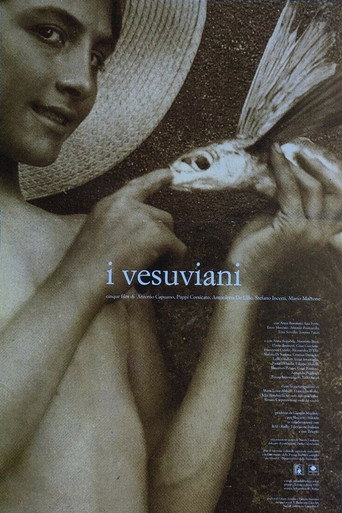
Five Neapolitan directors depict life in the city under the shadow of Mount Vesuvius for this anthology film of comedy, drama, surrealism, and political commentary.
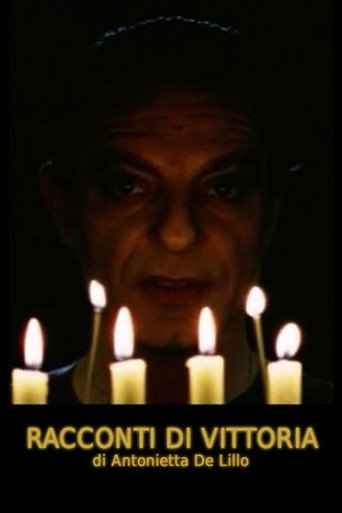
Vittoria Belcastro, a Calabrian oncologist, telis of her long battle against cancer, which she won. Her therapy is based on respect for life, but also for the disease. Two literary testimonies serve to counterpoint her touching words: "Pozzi d'amore (Wells of Love)", a theatrical monologue by Enzo Moscato, the portrait in which fragments the rhythm of the film, and "In alto a sinistra (Top left)", the transposition of a tale by Erri De Luca, in which the themes of pain, memory and absence emerge from the story of a father-son relationship.
A portrait of Alda Merini, one of the most important and renowned literary figures of the twentieth century, realized with the inedited footage of a long conversation that the director Antonietta De Lillo had with her in 1995.
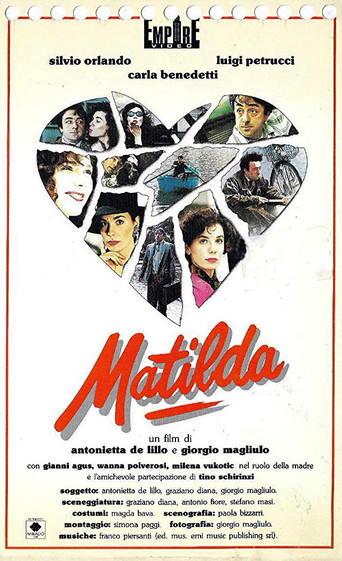
Matilda is an unlucky girl: her boyfriends keep dying in strange accidents. The last of them, Torquato, a shy filing clerk, is a little afraid of this situation and doesn't know how to continue the relationship.