Anton Spieker Movies, TV Shows, and Filmography

Anton Spieker
Acting
Biography
Anton Spieker is a professional German actor born on March 7, 1989, in Berlin, Germany. He trained at the prestigious Hochschule für Schauspielkunst Ernst Busch in Berlin and started his career with roles in theatre before transitioning to film and television. Spieker is recognized for his nuanced performances in diverse genres including drama, crime, and thriller.His notable works include the lead role in the award-nominated film "Von jetzt an kein Zurück" (2014), and important appearances in television series such as "Tatort," "Polizeiruf 110," "Das Boot," and "Das Quartett." He gained significant acclaim for his role as Jan in the feature film "303" (2018), which showcases his ability to deliver deeply emotional and complex characters. Spieker's performances have earned him multiple nominations including the Deutscher Schauspielerpreis as Best Young Actor and nominations at the Jupiter Awards and Filmkunstfest Mecklenburg-Vorpommern. Fluent in German and English, he continues to work actively in film and television, bringing a dynamic presence to both leading and supporting roles.
Filmography Movies
Acting
Coming home
Chrissi has spent years abroad proving that she can handle cars as a stunt driver. When she has to return to her father's childhood village after a serious accident, she is caught up in the tormenting memories of her family history. But her father is still trapped in his pain and unable to be there for her. In desperation, he offers her money so that she can build a life elsewhere, independent of the German social system - the relationship between the two is about to be put to the test...
The Flood - Death on the Dike
During a storm surge on the North Sea coast in 2007, farm worker Iven takes 3-year old Wienke, the daughter of dike warden Hauke Haien and his wife Elke, to Hamburg and leaves her outside a children’s home. Iven becomes a doorman in St. Pauli. 15 years later, he is visited by a young woman. She wants to know who she is and where she comes from. And she wants him to find her parents. Unwillingly, for he too has a past he would prefer to forget, Iven takes her to the village of Stegebüll on the coast. For the pair, a dramatic journey back in time begins to the fateful events in Stegebüll and the downfall of Hauke Haien and his family.

Das Leben ist sonnig und schön
Tobias is in the final stage of his doctoral thesis. He almost misses his big sister Mitzi's birthday. Aspiring young lawyer Tobias is in the middle of his doctoral thesis. He almost missed his sister Mitzi's birthday in the process. He races from the capital to his home village. The party is being held in the home for the disabled where Mitzi has recently moved in. After a danced sun ritual, an unexpected encounter with a dog placenta and a brutal outburst of rage in front of his family, Tobias' professional future as an elite lawyer for European law is at stake.
Mutter, Kutter, Kind
Heddi is a self-confident and battle-hardened coastal fisherwoman. She only has one weak point: her daughter Eva. Eva is an environmental activist and just as militant as her mother. But despite their resemblance, Eva doesn't want to know anything more about Heddi; there has been radio silence between the two for years. But now Eva and her ten-year-old son Jannis turn up unexpectedly in the small Baltic Sea village, ostensibly for a birthday visit to Grandma Lore, where Eva spent most of her childhood. In reality, however, Eva is in big trouble: She has to serve a prison sentence for resisting law enforcement - and a repeat offender at that! - she has to serve a prison sentence. But who will look after her little Jannis while she is away?

Nächte vor Hochzeiten
Rough Road Ahead
Germany, 1967. Ruby & Martin, a young couple, are rehearsing their uprising. The price is high: expulsion from school, parental violence, and ultimately institutionalization. But they are ready to take on the cause of love.
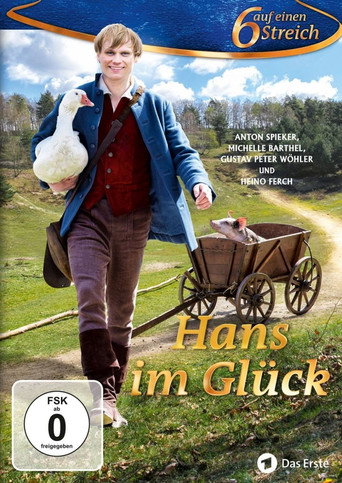
Hans im Glück
Jean receives in payment for seven years of work with a master craftsman a gold nugget. He then exchanges this nugget for a horse, then the horse for a cow, the cow for a pig, the pig for a goose, the goose for a sharpening stone. Finally, he loses the stone by dropping it in a well. After losing the sharpening stone, he is relieved because it weighed heavy, and continues his happy journey to his mother's house. On his way home, he keeps running into Knudsen the Merchant and his beautiful daughter Elisabeth.

Your Will Be Done
For Johannes and Lydia Klare, their faith in God comes first. Together they lead a small community in Stuttgart, successfully. People listen to them, they are becoming more and more close to them. There are even plans to make the donor-funded community much bigger by the generous contributions of Volker. First of all, the couple have quite different, more urgent points to take care of. When one day they watch the homeless street-boy Simon drifting back and forth in drug-related crises, they take him in for a short while. Together they want to help him again on the right path. But it is not just the drugs that are causing conflicts. Simon's homosexuality also presents the two with great challenge, since it is not so easy to unite with their faith.
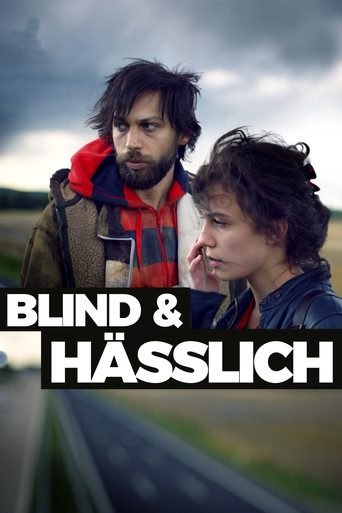
Blind & Ugly
Ferdi thinks he's ugly – but likes the fact Jona is interested in him. Maybe because she's blind. What Ferdi doesn't suspect: She's just pretending to be blind to be able to live cheaply in subsidized housing. How long can she maintain her charade? Can love, which is supposed to make you blind, even work out that way? Director Tom Lass takes a closer look, shooting with blind actors and old Berlin buddies, acting the lead himself – paying tribute to a way of life beyond our way of seeing the world.

303
Two university students gain insight into life and love as they get to know each other during a road trip across Europe.
Gallery