Acting
No biography available.
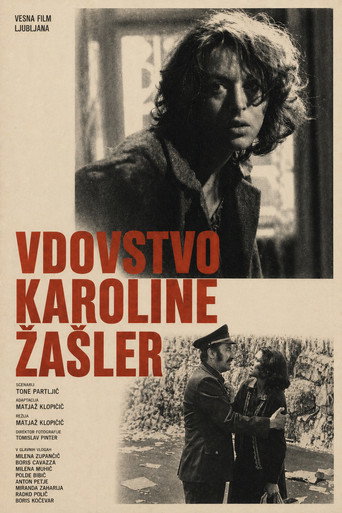
As she tries to cope with the changes in Yugoslav rural life brought about by increasing modernization, the Widow Karolina wishes she had become a mother. As difficult as things are for her, they are nonetheless much more difficult for her more-conservative and less-thoughtful neighbors.
Year 1945. The second World War is over and the soldiers from the disbanded army are returning home. Yet there is still no sign of Joze Malek.
The adaptation of notable work by Slovenian writer France Bevk about catholic priest who maintains national dignity among his villagers, and doesn't fall under fascists' influence during Italian occupation of the area.
Erjavec family (dad, mom, daughter, son) go camping in Slovenian Alps. Instead of a peaceful vacation, they end up involved in detective kind of story.
Slovenian actress with the pseudonym Mary comes from a well-to-do bourgeois family. She falls in love with Petar Kocmur, a final-year architecture student. One day she finds a girl in his bed, but she throws herself into the river because nothing in her life makes her happy.
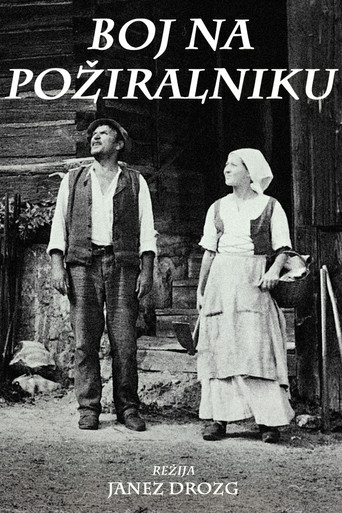
Based on a novel by Prežihov Voranc, it tells a story about a farmer's family who live in Northern Slovenia before WW2.
Vrnitev is a Yugoslavian (Slovenian) Fiction TV Film. Featuring Miha Baloh, Maks Furijan, Ivanka Mežan. It was directed by Anton Tomašič. It was produced by RTV Ljubljana. It has received 1 award.
The manager of a whorehouse is in love with a young woman who works as a maid, there. He believes that his feelings are reciprocated, but the woman chooses instead to marry a rich man who has also been courting her. Punctuating the story of this romance are a magician's show, and an earthquake.
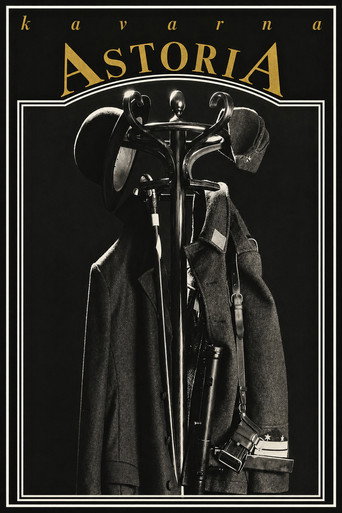
The city of Maribor before the Second World War, and Maribor after its liberation mark the period in which the film Cafe Astoria is set. The story relates with a gentle melancholy and a slight irony the lives of a middle-class family: the cafe owner, his wife and their son. Through their individual destinies we become acquainted with the social and historical background of a by-gone era; the social and national differences of pre-war Maribor, divisions among the wealthy and poor, and nationally minded Slovenes and fanatic Germanophils. The first year after the war introduced the absurd characteristic cruel measures of the so-called revolutionary social transformations in which calamity and coincidence intervene, resulting in events of comic nature, of course, as seen from a safe distance of fifty years.
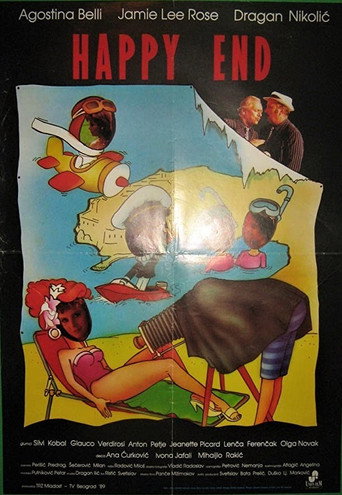
Father goes on a honeymoon with his American wife, but the children go along with them.