Acting
No biography available.
Thanks to new excavations in Mauritius and Madagascar, as well as archival and museum research in France, Spain, England and Canada, a group of international scholars paint a new portrait of the world of piracy in the Indian Ocean.
In 1923, the young French writer Raymond Radiguet (1903-23) published The Devil in the Flesh, a novel that caused a great scandal by telling the story of the love affair between a married woman and a teenager in the middle of World War I.
More than 2.000 years ago, Narbonne in today's Département Aude was the capital of a huge Roman province in Southern Gaul - Gallia Narbonensis. It was the second most important Roman port in the western Mediterranean and the town was one of the most important commercial hubs between the colonies and the Roman Empire, thus the town could boast a size rivaling that of the city that had established it: Rome itself. Paradoxically, the town that distinguished itself for its impressive architecture, today shows no more signs of it: neither temples, arenas, nor theaters. Far less significant Roman towns like Nîmes or Arles are full of ancient sites. Narbonne today is a tranquil town in Occitania
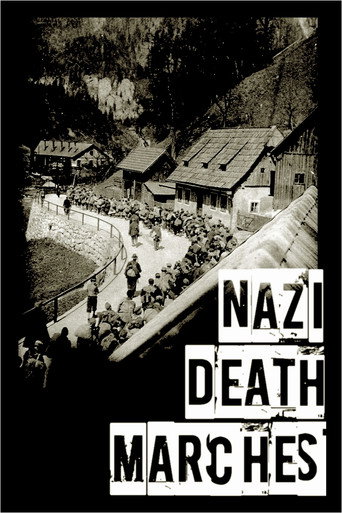
Faced with the relentless and unstoppable advance of the Soviet Red Army, from the spring of 1944 until the capitulation of the Third Reich in May 1945, the Nazis evacuated the labor, concentration and extermination camps, factories of pain and death which, during years of nightmare, they had established in the occupied eastern territories. Forced to travel enormous distances, thousands of people died along the way from hunger, thirst and exhaustion.
How can we prevent epidemics? Why do viruses and bacteria move? Rather than trying to contain epidemics one after another, why not stop the processes that encourage their emergence? The challenges are enormous, but scientists argue that solutions exist. Because if emerging diseases are the collateral consequences of our lifestyles, our lifestyles are under our control.
The lastest neuroscience discoveries show surprising results: false memories, distortion, modification, déjà vus. Our memory is affected in many ways, and deceives us every day. The very fact of recalling souvenirs modifies them. The everyday consequences are manyfold. To what extent can we rely on our souvenirs? How much credit can we give them during trials? Even more shocking, scientists have proved to be able to manipulate our memory: creating artificial souvenirs, deleting, emphasizing or restoring them on demand.
Why do 600 inhabitants of the small southern Spanish town of Coria del Río bear the surname "Japón"? It is the legacy of an unusual expedition that took place 400 years ago: In October 1613, the samurai Hasekura Tsunenaga boarded the galleon "San Juan Bautista" on behalf of the ruler Date Masamune in Sendai, Japan. In addition to merchants, warriors and Spanish sailors, the Spanish Franciscan monk Luis Sotelo, who spoke fluent Japanese, also embarked. The legation wanted to obtain permission from the Spanish King Philip III and Pope Paul V to open a new sea route to India alongside the spice route; in return, Christian missionaries were to be sent to Japan. When he set off, Hasekura Tsunenaga had no idea that the journey would take seven years. Who was this Japanese samurai? What is known about his motives and what is known about the actual background to the expedition?
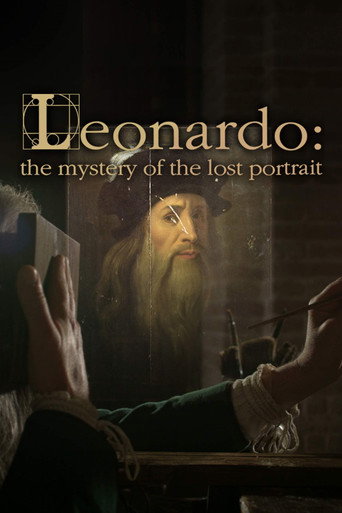
Leonardo da Vinci is not just the most famous and most admired of all painters - he is an icon, a superstar. Yet, the man himself remains elusive. Accounts during his lifetime describe a man too handsome, too strong, too perfect to be accurate. But in 2009, the chance discovery in the South of Italy of an ancient portrait with strangely familiar features takes the art world by storm. Could this be an unknown self-portrait by Leonardo da Vinci? Controversy erupts among the experts. The implications of such a discovery have far-reaching consequences for our understanding of the work of this great Renaissance master.
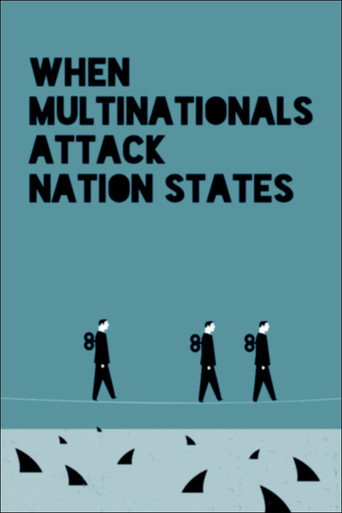
In autumn 2016, demonstrations sprang up all over Europe against the CETA free-trade agreement between the European Union and Canada. The reason? An obscure clause which allows multinationals to sue nation states if they feel their profits may be damaged by government decisions. An investigation into the hidden world of international arbitration.