Anna Brüggemann Movies, TV Shows, and Filmography

Anna Brüggemann
Acting
Biography
No biography available.
Filmography Movies
Acting

Berlin am Meer
Tom and Malte are best friends; they make music together, DJ in Berlin clubs, dream of a career together, party until they drop, wait tables at a casting service and yet they are very different: Tom struggles with himself, his life and the future. When one day Mavie, Mitsch's "little" sister from Munich, moves into the Berlin flat share, Tom's emotional rollercoaster begins. Daredevil Malte, on the other hand, seems to have his luck in his pocket: Everything he touches succeeds. Tom sees no other way out than to escape: out of the city and into another life. His friends try to stop him, but even they know: Tom has to make this decision himself if he doesn't want to stand in the way of his happiness forever.
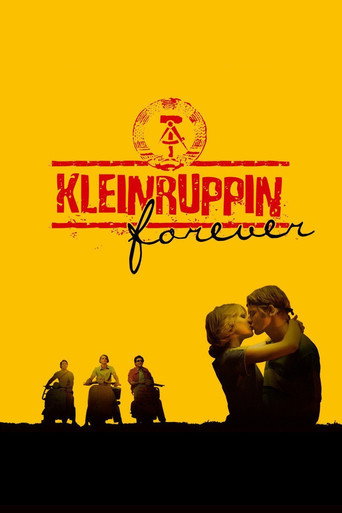
Kleinruppin Forever
Two twin brothers are living on a different sides of Berlin Wall after being separated after birth.
Sometime in August
Thomas and Hanna, a deliriously happy couple in their late 30s, buy an old house in the country with plans to fix it up over the summer. Hanna is looking forward to their time together – so when Thomas invites his older brother, Friedrich, who is deeply depressed over the failure of both his business and his marriage, to join them, she is disappointed by the intrusion. Easygoing, charming, and talkative, Thomas seeks to counterbalance the cloudier mood with an impetuous frenzy of activity, but Hanna retreats into sullenness and retaliates by bringing in her nubile young godchild Augustine until things smooth themselves out. Augustine’s youthful sexiness has anything but a soothing impact on Thomas, however, whose adolescent impulses linger just below the surface.

Baal
Baal, a young artist whom society regards as a genius, does not want to be monopolized by the culture and business.
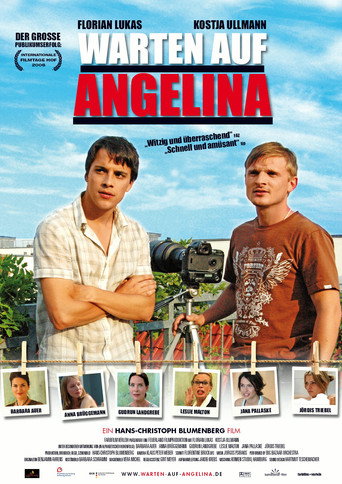
Warten auf Angelina
Nothing is more persistent than an unconfirmed rumor. And the less likely it sounds, the more seriously some people take it. Years ago, when reports circulated in the German media that Angelina Jolie and Brad Pitt were about to take up residence in Berlin, the media were mesmerized and kept churning out new reports where there was actually nothing to report. Film critic Hans-Christoph Blumenberg has made this initial situation the focus of his film Waiting for Angelina, which, in the guise of a summery light comedy, takes aim not only at the media's lust for celebrities, but also at the trials and tribulations of supposedly "normal" relationships.
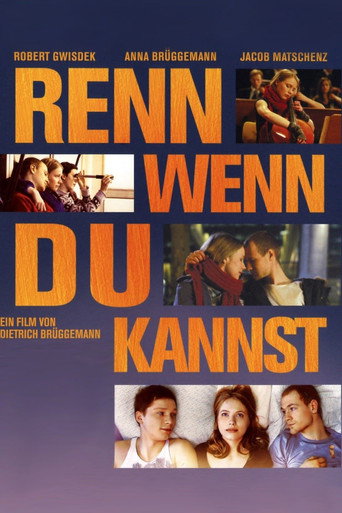
Run If You Can
An independent tragicomedy, Run If You Can is the debut feature for director Brüggemann who, along with his sister, also wrote the compelling screenplay. Forced to spend the rest of his life in a wheelchair, Ben is deeply desperate, despite his humor and vivaciousness. When he meets Christian, his new assistant, Ben treats him like every other helper he’s had. Things suddenly change when Christian meets Annika, “the cello player” whom Ben has been observing from his window for years. The three become close friends, putting Annika in the middle of an emotional, and somehow dangerous, ménage à trois. While conquering Annika is nothing very serious for career-focused Christian, Ben’s love for Annika reminds him of his past and forces him to face his most remote fears. A character-driven story, Run If You Can owes much of its power to the actors’ performances, especially Robert Gwisdek’s outstanding interpretation of Ben.

Sommer der Gaukler
Summer 1780: On the way to Salzburg Emanuel Schikaneder's theatre group gets held up in a small mountain village on the Austrian border due to a missing performance permit. In this village a dispute between mine owner Paccoli and the rebelling mine workers is escalating. The situation immediately inspires Schikaneder with the idea for a new play- but before long not only the mineworkers, but also Schikaneder's performers take to the picket line. This is because Schikaneder seems to care more about spending time with high society than his actors, who the Landlord refuses to feed until Schikaneder pays the outstanding bill. A hastily put together open air performance by the troupe leads to major disruption....
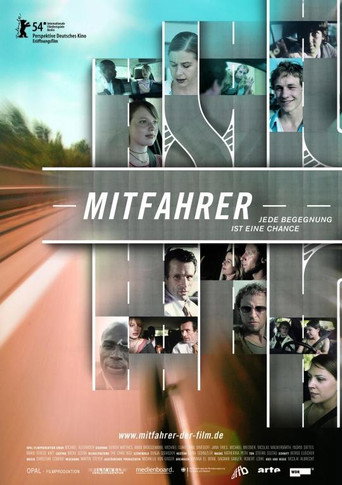
Traffic Affairs
Eight people on a journey across Germany. Each has a destination in mind, each has worries as well as wishes. Fate brings them together. The carpooling agency throws them together in three cars. They have to spend several hours together in a very confined space. A shy wallflower, a pushy swimwear salesman, a boy who wants to get out of the provinces for a weekend... Their lives become intertwined for a few hours during the trip. But how do such different people fit together at all? This question is the source of the movie's suspense.
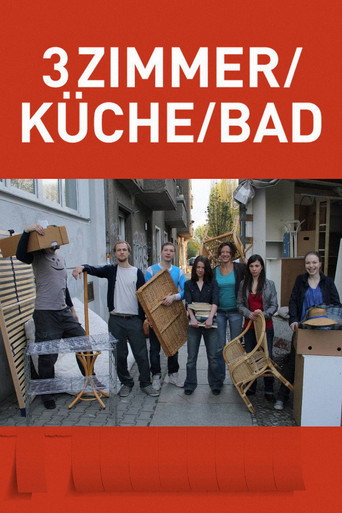
Move
Eleven moving dates, eight friends: Philipp, Wiebke, Jessica, Maria, Swantje, Michael, Thomas, Dina – all in their twenties and mutually lonesome. And always searching: For a new city, a new job, an own apartment, a new, or even an old love. The search is never-ending, and so they repeatedly find themselves at a ritual gathering: someone moving. Boxes are shifted from one side of Berlin to the other, or the length and breadth of Germany, from one abode to the next as one life is exchanged for another. In 3 ZIMMER/KÜCHE/BAD, director Dietrich Brüggemann portrays existences in which relationships, social networks and backdrops are in a constant state of flux; where best friends are the only, and therefore the most valuable constant. Humorous sketches of the self-conception of a generation for whom moving has become the symbol of a life on the go.
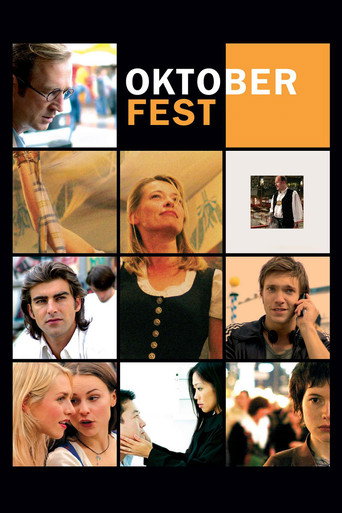
Oktoberfest
On the last day of the Munich Oktoberfest, the paths of different people cross: While Birgit questions her marriage to Max, single father Richard is caught in a conflict between his young lover and paternal responsibility - his son, whom he only sees very rarely, has been looking forward to an evening with him; but Richard also needs to talk things out with his young love. Meanwhile, some crazy Italians come to Munich. Alessandro falls in love with a newly married Japanese woman. A traditional showman's family fights against ruin and an embittered young wheelchair user who keeps the officers at the local police station in suspense with hidden threats...
Production

No
Isn’t the trajectory of a shared life determined in advance? Get married, have kids, be like everyone else… According to Dietrich Brüggemann, who competed in Vary six years ago, 30-somethings conceivably have it all, yet they fail in their attempts to achieve their set ideals. Nö delivers a critique of contemporary values, while also highlighting the struggle to find and nurture love.
Run If You Can
An independent tragicomedy, Run If You Can is the debut feature for director Brüggemann who, along with his sister, also wrote the compelling screenplay. Forced to spend the rest of his life in a wheelchair, Ben is deeply desperate, despite his humor and vivaciousness. When he meets Christian, his new assistant, Ben treats him like every other helper he’s had. Things suddenly change when Christian meets Annika, “the cello player” whom Ben has been observing from his window for years. The three become close friends, putting Annika in the middle of an emotional, and somehow dangerous, ménage à trois. While conquering Annika is nothing very serious for career-focused Christian, Ben’s love for Annika reminds him of his past and forces him to face his most remote fears. A character-driven story, Run If You Can owes much of its power to the actors’ performances, especially Robert Gwisdek’s outstanding interpretation of Ben.
Move
Eleven moving dates, eight friends: Philipp, Wiebke, Jessica, Maria, Swantje, Michael, Thomas, Dina – all in their twenties and mutually lonesome. And always searching: For a new city, a new job, an own apartment, a new, or even an old love. The search is never-ending, and so they repeatedly find themselves at a ritual gathering: someone moving. Boxes are shifted from one side of Berlin to the other, or the length and breadth of Germany, from one abode to the next as one life is exchanged for another. In 3 ZIMMER/KÜCHE/BAD, director Dietrich Brüggemann portrays existences in which relationships, social networks and backdrops are in a constant state of flux; where best friends are the only, and therefore the most valuable constant. Humorous sketches of the self-conception of a generation for whom moving has become the symbol of a life on the go.

Stations of the Cross
Maria finds herself caught between two worlds. At school this 14-year-old girl has all the typical teenage interests, but when she’s at home with her family she follows the teachings of the Society of St. Paul and their traditionalist interpretation of Catholicism. Everything that Maria thinks and does must be examined before God. And since the Lord is a strict shepherd, she lives in constant fear of committing some misconduct...
Superbusen
Gisela involuntarily ends up studying in the cosmopolitan city of Chemnitz. There she meets her friends Jana, Fred and Meryam, with whom she spends her nights out, fights with Nazis, eventually founds the band Superbusen and, through music, hopes to find answers to all the problems life throws at her.
Neun Szenen
Magdalena has to wash glasses at her own graduation ball. Rudi, who is in love with her, has to endure the presence of her boyfriend Julian. Julian doesn't have to do anything, but lets his mother look after him. They are united by one wish: To find their own path in life - not an easy task when, firstly, there is no guidance and, secondly, the dear family with all its lived compromises, lost ideals and a good dose of resignation stands in the way.

When Hitler Stole Pink Rabbit
In 1933 in Berlin. Anna is only nine years old when her life changes from the ground up. To escape the Nazis, her father Arthur Kemper, a well-known Jewish journalist, has to flee to Zurich. His family, Anna, her twelve-year-old brother Max and her mother Dorothea, follow him shortly thereafter. Anna has to leave everything behind, including her beloved pink rabbit, and to face a new life full of challenges and privations abroad.
Gallery