Writing
No biography available.
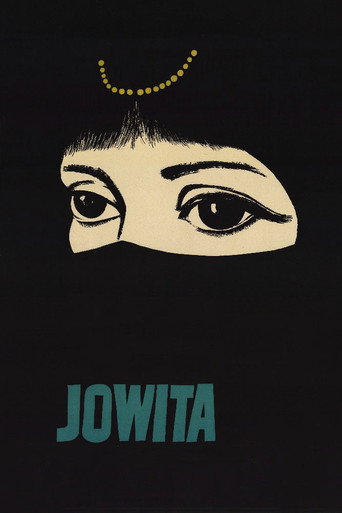
Marek is a promising athlete having his share of affairs with women. One day at masquerade ball he meets a an enigmatic Jowita and becomes obsessed with her, even when he finds seemingly true love in Agnieszka.
The fourth of six episode compilations of the TV series, featuring episodes 8 and 9.
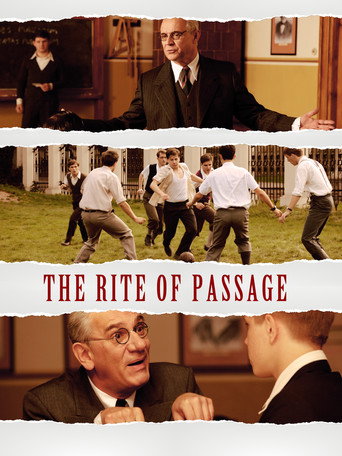
Ludwik starts one of the best high schools in Krakow. His life changes with a growing storm of conflicting emotions. First love infatuations, sexual contacts, a rebellion against unjust authorities and the desire to imitate his idol, Marek, an older boy who who fought in the Warsaw Uprising in 1944.
A man suffering from tuberculosis returns from abroad to stay at his brother's farm, hoping to make amends, while also beginning a love affair with a farm girl.
Through various misunderstandings young Basia gets into the custody of several people after her mother's death.
An actor is married to a dancer whose drug addiction drives them to desperation when World War II breaks out.
Spring 1923. Krzysztof Grabień, the son of a teacher from a village near Przeworsk, arrives on the Polish coast encouraged by news of the construction of a port in Gdynia. Next to a point recruiting workers, Krzysztof meets Volodya Yazovetsky. The peer persuades him to go into an illegal but profitable business. At the garkuchnya works Lucka Konka, whom Krzysztof likes with reciprocity. Volodya meets French engineers who are to help build the wharves of a future port.
Rafał is suspected of killing a turtle that fell out of the balcony.
This film is a sequel to Munk's Zezowate Szczescie and it's much the same, only more so. The film begins in a cinema, where the last scenes of Zezowate Szczescie are being shown. Born unlucky, a victim of the errors and distortions of Stalinism, he is released in 1956. He meets a politically feverish woman, her influential parents, and finally becomes the father of her child. But bad luck, or perhaps an unlucky era, will not let him forget.
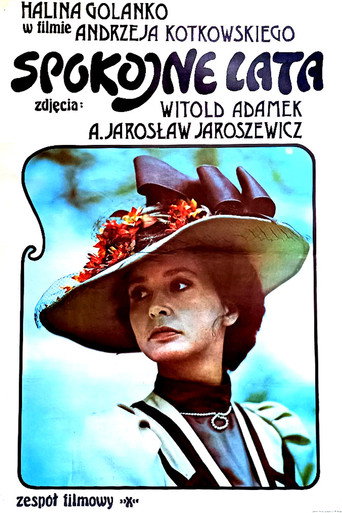
Young Poland period in Kraków before WWI. Young doctor Edward comes back from Paris and meets his friends belonging to artistic bohema.
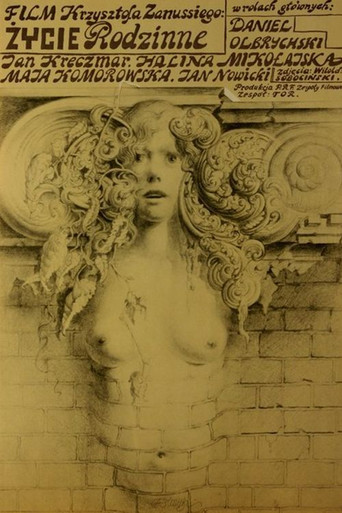
A young industrial designer named Wit reluctantly returns to his family home to look after his gravely ill father. Upon entering the dark confines of a house he has not visited in six years, Wit once again finds himself exposed to the idiosyncratic pathologies of his father, sister, and aunt.
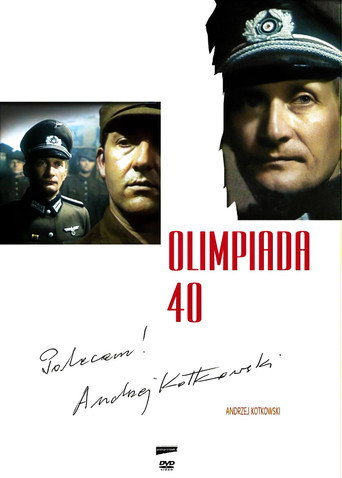
The film deals with the a clandestine Olympiade held in a German POW camp during WW II, housing many Poles, but also French and Brits. A spit and a Polish German lieutenant is added to the staff of a prison camp. He sees a Pole, the acknowledged leader of the Polish prisoners, against whom he had competed during the Berlin Olympics in 1936. He asks the Pole to train with him but is refused; the Pole points out out that he is a prisoner and nothing more. But that plants the seed and the Pole proposes and Olympics 40 to be held among the prisoners. They ingeniously make a flag and medals, set up a number of races; a croaching hop race is unwittingly organized by a German prison guard who uses it as a torture. The German lieutenant knows that something is going on but cannot find out. Finally the Germans realize the idea and the Polish chief is sent to concentration camp but the others disobey the orders.
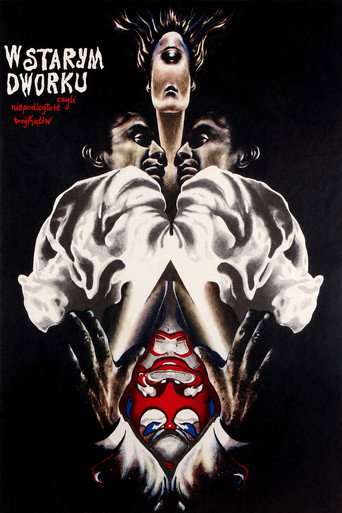
In a country house at the turn of a century live a family of eccentrics. Anastasia, the beautiful mistress of the manor, enjoys the amorous attentions of her stepson Blarney so openly that her husband Diapanasius takes out his shotgun and shoots her. The rest of the family accepts her end as a matter-of-fact, and soon - her return as a voyeuristic ghost who interferes with their love lifes. Anastasia has a posthumous son Tadeusz, "born" by clambering out of the tree trunk. Anastasia seduces him too, and drives another men so crazy that they kill her another couple of times. Finally, Tadeusz, the arch-rebel, leads a mob on a raid of the old manor.