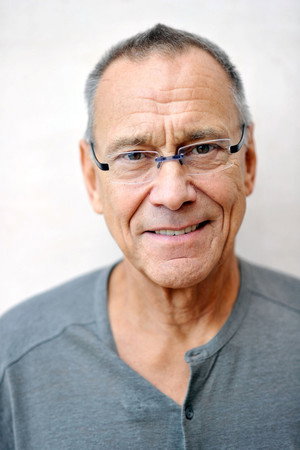
Andrei Konchalovsky Movies, TV Shows, and Filmography
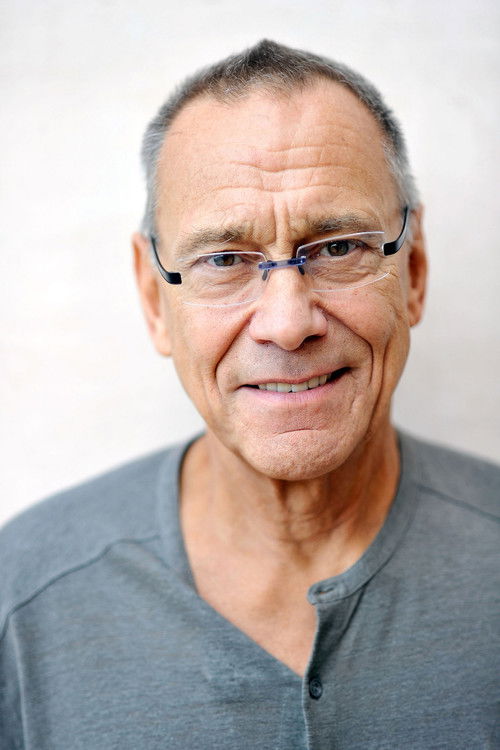
Andrei Konchalovsky
Directing
Biography
Andrei Sergeyevich Mikhalkov-Konchalovsky (Russian: Андре́й Серге́евич Михалко́в-Кончало́вский; born 20 August 1937, Moscow) is a Russian filmmaker, screenwriter, actor, producer and theater, TV director, who works in Russia and USA. His father was the writer Sergey Mikhalkov (1913) and the brother of Nikita Mikhalkov (1945), who is also a well known Russian filmmaker. Andrei Konchalovsky was a frequent collaborator of Andrei Tarkovsky (1932) earlier in his career. His work has won numerous accolades, including the "Cannes Grand Prix Spécial du Jury", a "FIPRESCI Award", two "Silver Lions", three "Golden Eagle Awards", and a "Primetime Emmy Award". He studied for ten years at the Moscow Conservatory, preparing for a pianist's career. In 1960, however, he met Andrei Tarkovsky and co-scripted his movie Andrei Rublev (1966). His first full-length feature, The First Teacher (1964), was favourably received in the Soviet Union and screened by numerous film festivals abroad. His second film, Asya Klyachina's Story (1967), was suppressed by Soviet authorities. When issued twenty years later, it was acclaimed as his masterpiece. Thereupon, Konchalovsky filmed adaptations of Ivan Turgenev's A Nest of Gentle Folk (1969) and Chekhov's Uncle Vanya (1970), with Innokenty Smoktunovsky in the title role. His epic Siberiade upon its 1979 release was favourably received at Cannes and made possible his move to the United States in 1980. His most popular Hollywood releases are Maria's Lovers (1984), Runaway Train (1985), based on a script by Japanese director Akira Kurosawa, and Tango & Cash (1989), starring Sylvester Stallone and Kurt Russell. In the 1990s, Konchalovsky returned to Russia, although he occasionally produced historical films for U.S. television, such as his adaption of The Odyssey (1997) and the award-winning remake, The Lion in Winter (2003). Konchalovsky's full-length feature, House of Fools (2003), with a cameo role by Bryan Adams as himself, set in a Chechen psychiatric asylum during the war, won him a Silver Lion at the Venice Film Festival. In 2010, Konchalovsky released a longtime passion project of his, The Nutcracker in 3D, a musical adaptation of Peter Ilyich Tchaikovsky's ballet. A musical film, it mixed live action and 3D animation, and starred Elle Fanning, John Turturro, Nathan Lane, and Richard E. Grant. The film was scored with music from the ballet, with additional lyrics by Tim Rice. In 2012, Konchalovsky wrote, directed and produced "The Battle for Ukraine", which provided an in depth analysis of how Ukraine to this day struggles to escape from the close embrace of its former big brother. His film "The Postman's White Nights" won the Silver Lion at the 71st Venice International Film Festival. The script is centred around the true story of Aleksey Tryaptisyn, a real life postman based in a remote Russian village surrounding the Kenozero lake. In 2016 "Paradise" directed by him won the Silver Lion at the 73rd Venice International Film Festival. It was selected as the Russian entry for the Best Foreign Language Film at the 89th Academy Awards. In 2020 at the 77th Venice film festival, his film "Dear Comrades" won a special jury prize.
Filmography Movies
Acting
An All Round Maid
A video derived from footage Godard kept from his 1981 visit to Francis Ford Coppola's Zoetrope Studios at the time he was making Passion.
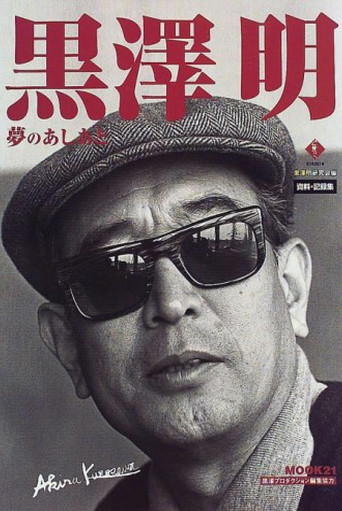
Kurosawa: The Last Emperor
A profile and history of film director Akira Kurosawa.

The Go-Go Boys: The Inside Story of Cannon Films
Cousins Menahem Golan and Yoram Globus relive the creation, rise and fall of their independent film company, Cannon Films. This documentary recounts their many successes and discusses their eventual downfall.
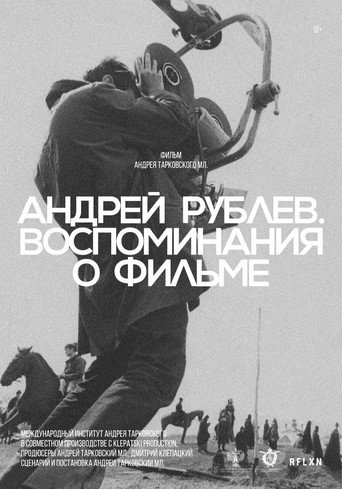
Andrey Rublev. A Memory of the Film
About the creation of the film "Andrei Rublev", about its deep philosophical and artistic meaning, the figure of Andrei Rublev himself and about the influence of the great iconographer on the work of Andrei Tarkovsky.
Age One Hundred
The first century of one of the most famous Moscow scenes has come to its logical conclusion. Now the theater is looking into the future, into a new century, but what does it see there? How does the theater feel, having crossed the century-old threshold?What is he thinking about? What is he talking about? Where is he going? What is the temperature of his "body"?
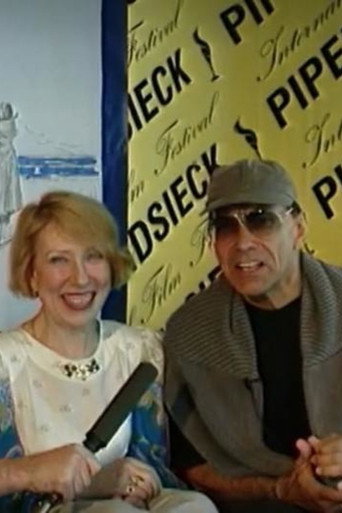
Andrey Konchalovsky’s Cinema Odyssey
The film “Andrey Konchalovsky’s Cinema Odyssey” is a tribute to the creative path of one of our outstanding contemporaries, Andrey Konchalovsky, spanning from his debut film, “The Boy and the Dove”, which was immediately invited to the Venice International Film Festival, to the present day. The documentary features notable figures who starred in the master’s films, from Sergei Shakurov to Tom Holtz, from Inna Churikova to Irina Kupchenko. Dividing his work into ‘periods’ — classical, American, and the perestroika era — Konchalovsky, with the help of the cinema, embarks on a cinematic journey akin to Odysseus, ultimately returning to his own ‘Penelope’: Moscow.
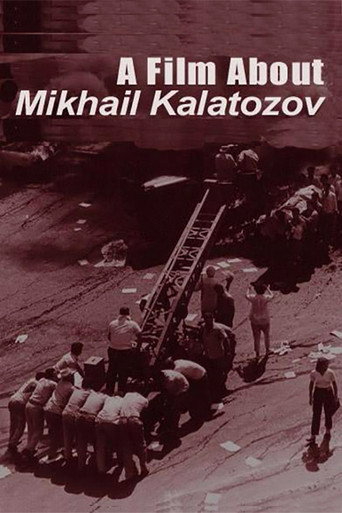
A Film About Mikhail Kalatozov
The career of revered Russian filmmaker Mikhail Kalatozov is explored in this documentary film comprised of rare behind-the-scenes footage, interviews with French director Claude Lelouch, and conversations with some of the biggest names in contemporary Russian cinema. Kalatozov's grandson Mikhail Kalatozishvili pays tribute to the director of such timeless classics as I Am Cuba, Salt for Svanetia, and The Cranes are Flying as such notable fans as Andrei Konchalovsky, Sergei Solovyov, and Alexei Batalov discuss the remarkable influence Kalatozov had on their own film careers.
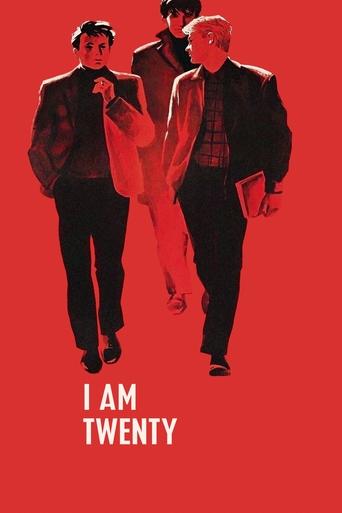
I Am Twenty
Having returned from the army, 20-year-old Sergei settles down at the thermal power station and merges into ordinary life. Every day he meets and spends time with childhood friends — the young family man Slava and the merry fellow Nikolai, and once at first sight he falls in love with a stranger on the bus. A lyrical story about a generation of young people entering adulthood, a reappraisal of values, life principles, traditions in culture and art.
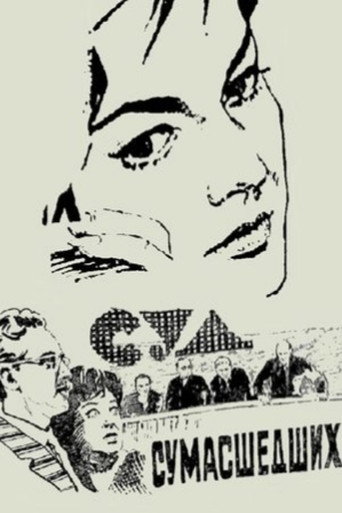
The Trial of Madmen
Germany, the 1930s. A young scientist, Professor Johannes Werner discovers rays of life-giving power. The scientist refuses to give up his invention for military use and, breaking the equipment, runs to the USA, where he hides for a long time under the name of Martini. One day, after being invited to a military industrial concern to see a new European invention, Werner meets his former pupil Huber. Huber, a traitor and fascist, has restored the professor's apparatus according to stolen plans and is demonstrating it as his own invention. Werner rejects the proposal for joint cooperation and, at a meeting in the hall of scientific associations, reveals his real name and resolutely reveals the criminal intentions of the revanchists.
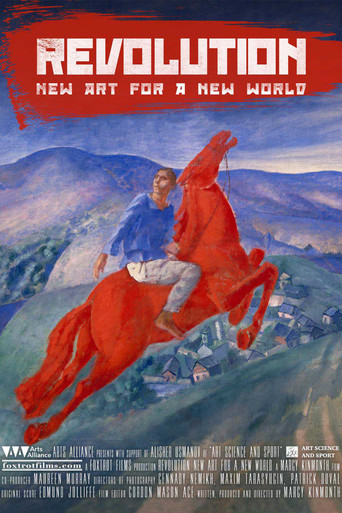
Revolution: New Art for a New World
Drawing on the collections of major Russian institutions, contributions from contemporary artists, curators and performers and personal testimony from the descendants of those involved, the film brings the artists of the Russian Avant-Garde to life. It tells the stories of artists like Chagall, Kandinsky and Malevich - pioneers who flourished in response to the challenge of building a new art for a new world, only to be broken by implacable authority after 15 short years and silenced by Stalin's Socialist Realism.
Production
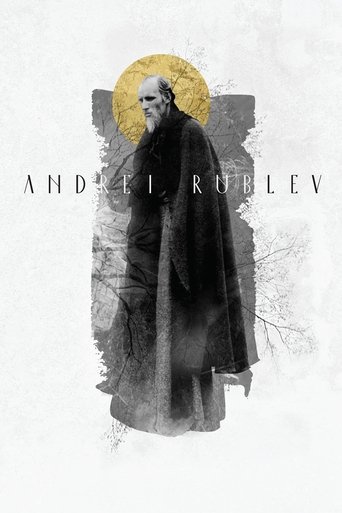
Andrei Rublev
An expansive Russian drama, this film focuses on the life of revered religious icon painter Andrei Rublev. Drifting from place to place in a tumultuous era, the peace-seeking monk eventually gains a reputation for his art. But after Rublev witnesses a brutal battle and unintentionally becomes involved, he takes a vow of silence and spends time away from his work. As he begins to ease his troubled soul, he takes steps towards becoming a painter once again.
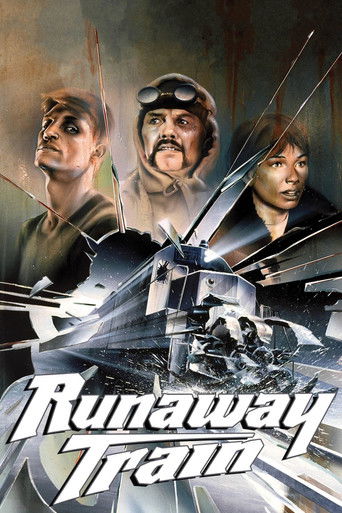
Runaway Train
A hardened convict and a younger prisoner escape from a brutal prison in the middle of winter only to find themselves on an out-of-control train with a female railway worker while being pursued by the vengeful head of security.
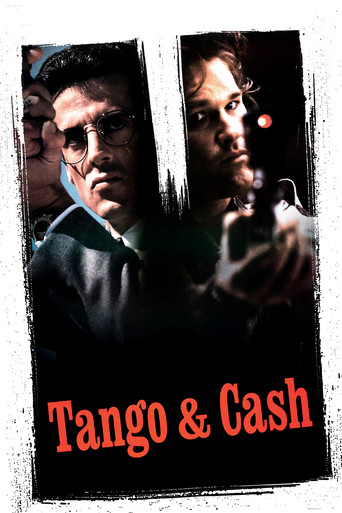
Tango & Cash
Ray Tango and Gabriel Cash are two successful narcotics detectives who can't stand each other. Crime lord Yves Perret, furious at the loss of income they have caused him, plots an elaborate revenge against them.
To Each His Own Cinema
Commissioned to mark the 60th anniversary of the Cannes Film Festival, "To Each His Own Cinema" brought together 33 of the world's pre-eminent filmmakers to produce short pieces exploring the multifarious facets of cinema and their perspective on the state of their chosen artform in the early 21st century.
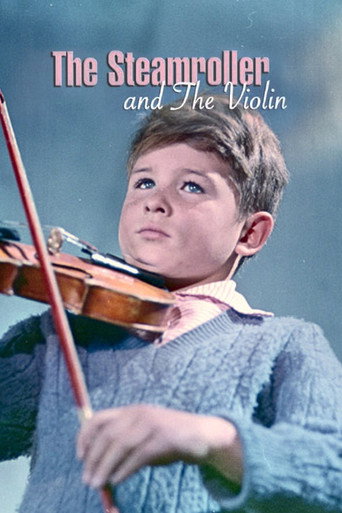
The Steamroller and the Violin
Seven year old Sasha practices violin every day to satisfy the ambition of his parents. Already withdrawn as a result of his routines, Sasha quickly regains confidence when he accidentally meets and befriends worker Sergei, who works on a steamroller in their upscale Moscow neighborhood.
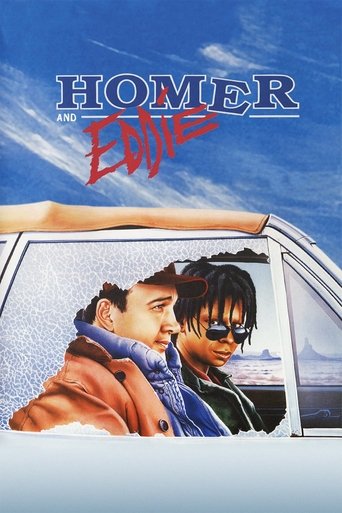
Homer and Eddie
A mentally disabled man gets help from a sociopath when he tries to reunite with his dying father, who years earlier disowned him.

Gloss
A pretty, young girl from a coal-mining town comes to Moscow with dreams of becoming a supermodel in this satirical look at the fashion industry.
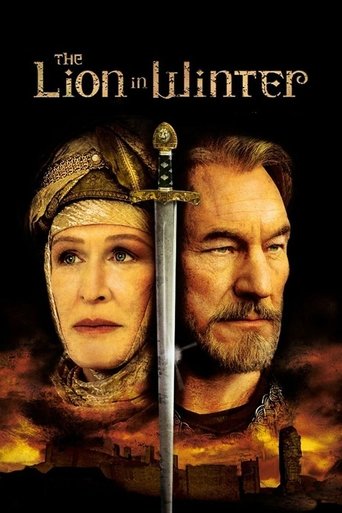
The Lion in Winter
King Henry II keeps his wife Eleanor locked away in the towers because of her frequent attempts to overthrow him. With Eleanor out of the way he can have his dalliances with his young mistress. Needless to say the queen is not pleased, although she still has affection for the king. Working through her sons, she plots the king's demise and the rise of her second and preferred son, Richard, to the throne. The youngest, John, is an overweight buffoon and the only one holding his father's affection is the king's choice after the death of his first son, young Henry. But John is also overly eager for power and is willing to plot his father's demise with middle brother Geoffrey and the young king of France, Phillip. Geoffrey sees his younger brother's weakness and sees that route as his path to power. Political and court intrigue ensues.
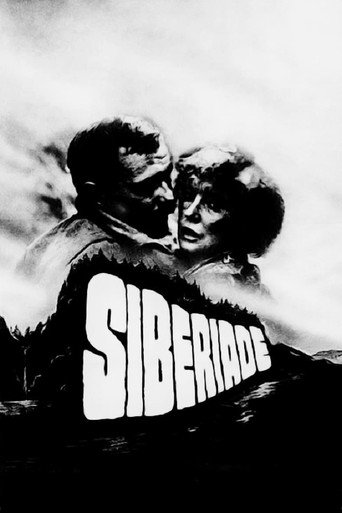
Siberiade
The story about a very small god-forgotten village in Siberia reflects the history of Russia from the beginning of the century till the early 1980s. Three generations try to find the land of happiness and to give it to the people. One builds the road through taiga to the star over horizon, the second 'build communism' and the third searches for oil.
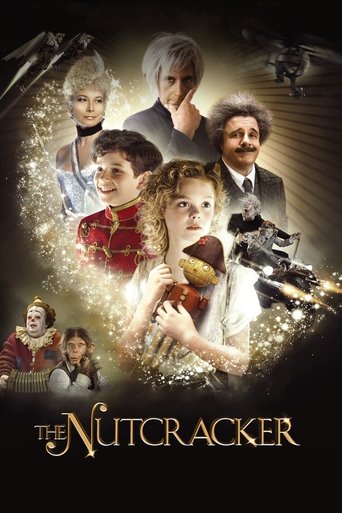
The Nutcracker
In 1920s Vienna, a young girl receives a magical doll on Christmas Eve.
Gallery