Camera
No biography available.
Returning to her small town, Anna, the widow of an Italian soldier whom she married during the occupation, revives her old teenage love in the face of a young worker, whom she marries with her stepdaughter, in order to keep him close to her. At the same time, a neighbour tries by all means to take her house to build a hotel.
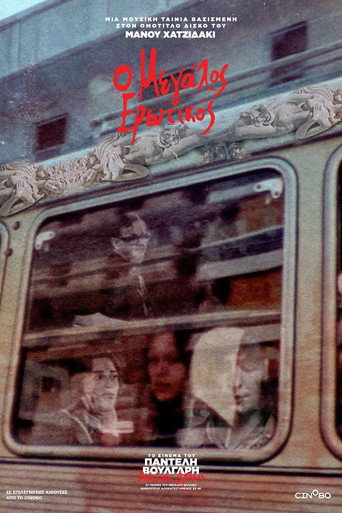
A documentary about Greek music. Τhe Great Love Songs is series of ten poems by, among others, Sappho, Elytis, Myrtiotissa, Sarantari, and cavafy, put to music by Manos Hadjidakis. In the film, the camera lens illustrates the emotions stirred by the erotic atmosphere of the music. We follow the camera as it wanders through Athens; the nostalgic Athens of yesteryear; the big modern-day city; the Athens of lovers; the Athens of tourists. Our journey through the city is intercut with footage from the studio recordings of the songs, while there also scenes featuring the film crew. The film is a game between image and sound.
Can witnesses a murder in a small town. The police don't allow him to leave after his testimony. On the other hand, a quarantine is declared due to rabid dogs. The whole town turns into purgatory with no exit is almost at the edge of insanity.
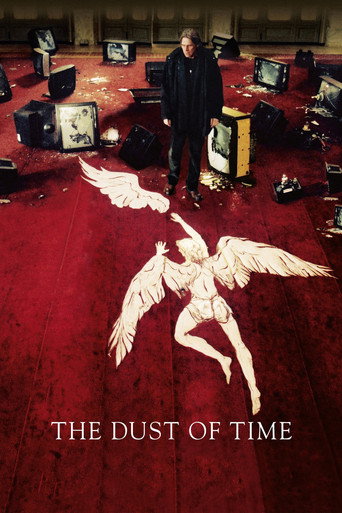
To trace the fading past of his parents, a grizzled Greek-American filmmaker decides to shoot a movie. By recounting the painful efforts of his mother to reunite with his musician father, his film spans more than half of the 20th century.
In his film, Menelaos Karamaghiolis attempts to trace the evolution of the gypsy race in Europe, particularly in Greece, through four different points of view. These are expressed in the narrations of four people: the Teacher, the Photographer, Tamara, the old gypsy lady and the young girl Aima.
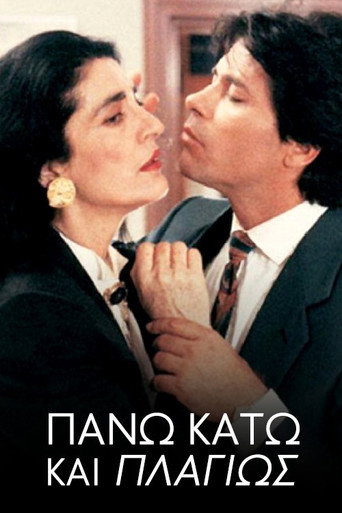
A prosperous widow with a gay son falls for a young gym instructor in Athens.
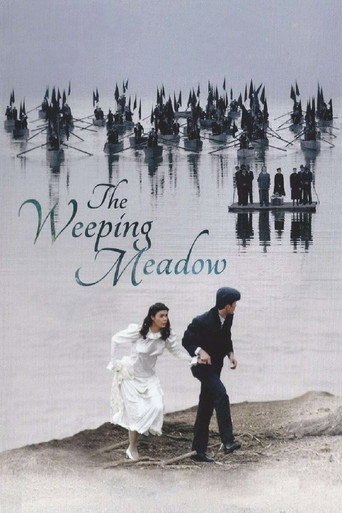
The story follows a family of refugees from the early twentieth century through to the Civil War. Through movements, separations, and reunions, personal lives intersect with Greece’s major historical transformations. Space and time are in constant flux, while the characters remain trapped in an unending search for a homeland.
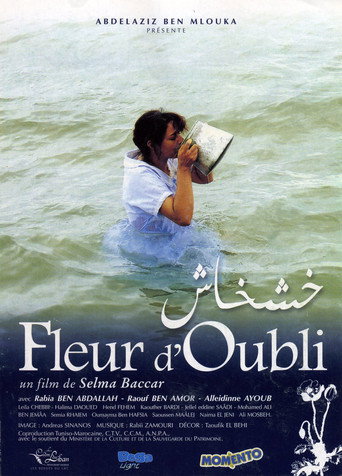
Following a painful childbirth, Zakia, a young woman from the Tunisian bourgeoisie becomes dependent on the Khochkhach plant (Poppy). After a few years of slow descent into the hell of dependence, she will meet in a Khémais asylum, with whom she will rediscover the taste of loving and living.
A reporter notices an old man in a border town who may be an important Greek politician who disappeared mysteriously years ago.
The residents of a small town set between a stormy sea and an ominous forest are becoming insane. They are convinced that successive signs appearing in the town are indications of doomsday.
Still Burning tells the unexpected reunion in Paris in June 1998 of André, a Lebanese filmmaker living and working in France, and Walid, the very close friend he has not seen for years. In their youth, in Beirut, during the civil war, they were both possessed by the same artistic vocation: Cinema, but also by the same woman: Amira. Their reunion, all night long, will not fail to awaken their old repressed demons for better or for worse.
Nihat, an introverted employee in a hospital cafeteria, is confused by Ayşe, a mysterious woman who just started working there as a dishwasher. Her obvious seductive approaches embarrass Nihat and make him nervous at the same time. Despite the rumors about her husband having been sentenced to many years in jail, Nihat reluctantly accepts Ayşe’s invitation to dinner at her house. This is the beginning of a strange and dangerous liaison. When Nihat discovers a picture of the woman’s husband and realizes that he looks astoundingly like him, the relation becomes even more toxic.