Sound
No biography available.
When people think of DEFA, the film heritage of the GDR, they probably don't just think of film images, but also some of the timeless melodies that were created in Babelsberg.
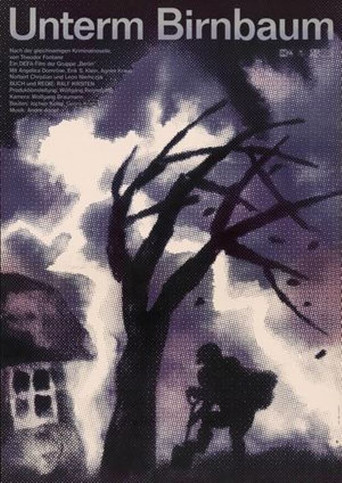
Abel Hradscheck, the owner of an inn in the Oderbruch country, faces financial ruin. For this state of affairs, Ursula, his wife and former actress, is by no means free of blame. She is a "newcomer" to the area and even after eleven years in the area, still a "stranger". A Cracow company announces that a money-collector is on his way to the innkeeper. Mr. Szulski arrives and the debts are settled - with money supposedly stemming from an inheritance. The next day, Szulski departs but according to the maid and the stable-boy, behaves in a very strange manner. Soon afterwards, his carriage is discovered in the Oder River, but there is no trace of the drowned man. Hradscheck's neighbor starts casting suspicion on the innkeeper. The Counselor of Justice, who heads the investigations has the spot under the pear tree dug out. A dead body is exhumed...
In San Marengo, master thief Cesare Giovanini’s heists leave local merchants profiting from hefty insurance claims. When captured, he’s granted luxury prison comforts, and even nightly “private visits”, in exchange for continuing his work under police supervision. Bored, Cesare escapes, only to be recaptured with an unexpected offer: a lucrative board position instead of bars.
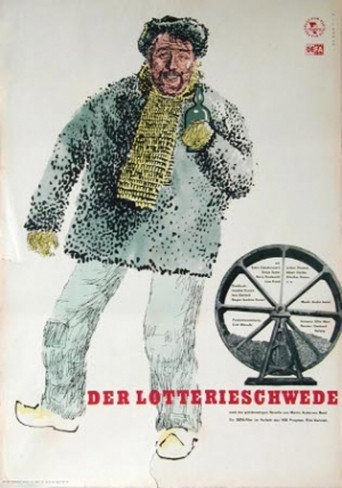
Bornholm island in 1880, where quarry worker Johan Jönsson lives a miserable life with his wife and children. He hopes to escape his poverty by winning a lottery ticket. But it doesn't bring him any luck. Instead of spending his little money on a doctor to have his sick child treated, he extends the lottery ticket. The child dies and Johan, plagued by remorse, turns to alcohol. After he has gambled away everything, the lottery ticket brings someone else the main prize. Johan commits suicide, but his son Per has realized that gambling is not the way to change the miserable existence of the workers.
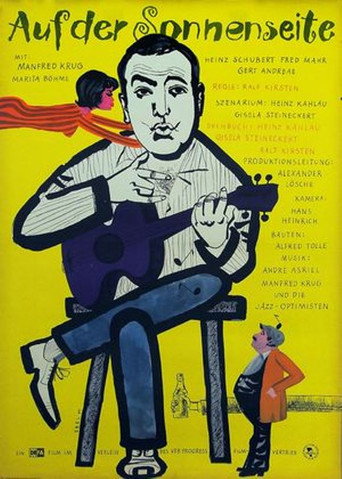
The film deals with the problem of choosing a partner for 16 to 20-year-olds. Third part of the "Relationships Between Boys And Girls" series.
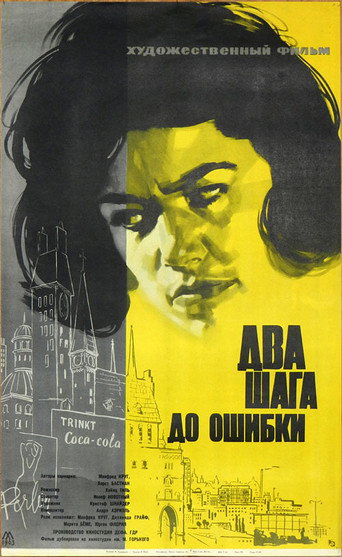
Carolin lives in the East and works in a West Berlin bar. After the building of the wall she tries to persuade Georg, a soldier of the border regiment, to let her cross over. He falls in love with her and defends her against a West German pimp with a punch to the jaw.
The story of the steel melter Martin Hoff, whose factory delegates him to a drama school, corresponds to the real life of the actor Manfred Krug. Like his (film) hero, Krug works as a steel melter, does artwork, sings and acts, and is sent to drama school. Like his hero, who behaves anarchically and conspicuously, Krug is soon expelled from school.
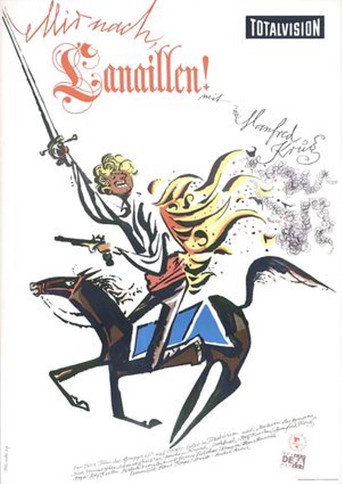
A wild story set in eighteenth-century Prussia. Alexander can do everything that a real devil of a fellow must be able to do: ride, shoot, love and devise clever plots. As a result, he is able to climb the ladder from herder to chamber master, where he makes a fool of the feudal lords.
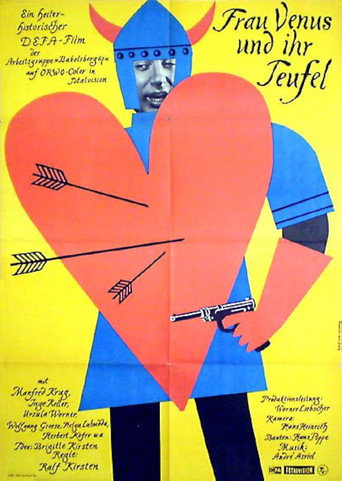
Hans Müller finds himself on a trip in Thüringen, accompanied by his loving female friend, Moritz. Hans doesn't understand much about trust, which constantly leads to problems between the two of them. During one of their fights, Lady Venus intervenes and sends the young man back to the Middle Ages - so he can learn the true meaning of love. Disguised as Tannhäuser, he has to stand his ground against a horde of minstrels. At a singing competition, he blunders, without the support of Moritz, who had also been thrown back into the 13th century. And with the help of Frau Venus, his adventure will surely turn out even worse...
August 24, 1937: a day in the life of expressionist sculptor and author Ernst Barlach (Fred Düren). Barlach lives in the small town of Güstrow, keeping to himself and wanting to steer clear of politics. On this day he learns that the Nazis have dragged his famous 1927 sculpture The Hovering Angel out of the Güstrow Cathedral. Barlach begins to reflect on his life of “inner emigration” and on his work.
A conference is to be held once again to discuss the construction of a new dam, which Professor Paul Satie rejects. During a train journey, he spontaneously leaves the train. Here in Wolfsgrün, from 1948 to 1950, he helped build the old, now far too small dam as a youth brigadier. He and the others who helped build it have erected a monument to this. A monument with his name on it. Is that perhaps why he is against the new dam?