Amar Mullick Movies, TV Shows, and Filmography
Amar Mullick
Acting
Biography
No biography available.
Filmography Movies
Acting
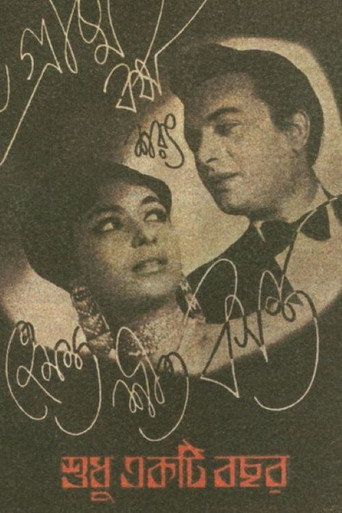
Shudhu Ekti Bachhar
Shudhu Ekti Bachhar is a romantic comedy that is based on a comical situation which finds the female protagonist having to marry a complete stranger according to her father's will. The stranger she is to be married is a funny boy whom she is at cross ends with. The story goes on with this baseline, that they agree to stay married for a year and the comedy rolls on there forth. There are many quarrels, misunderstandings and childlike fights, which all add to the comical content of the movie. All characters add life to the story with hilarious punch-lines and comical episodes. And in the end the two main leads falling in love with each other and living happily ever after.
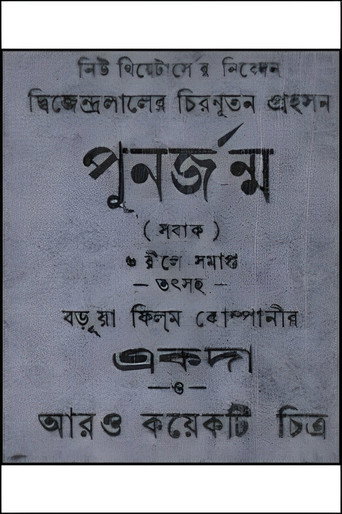
Punarjanma
Punarjanma is a Bengali drama film released in 1932 and directed by Premankur Atarthi.
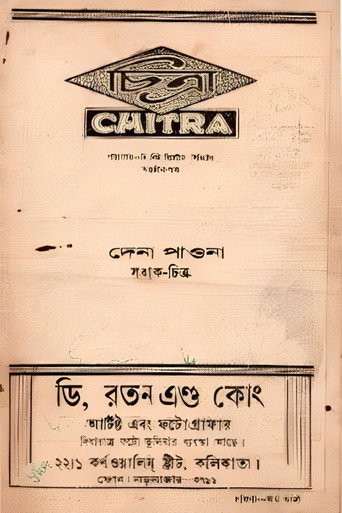
Dena Paona
Dena Paona is a dramatic exploration of societal pressures and personal redemption. The film follows Sorashi, a strong-willed temple priestess, as she confronts the challenges of a troubled marriage and a disapproving community. Her journey towards self-discovery and reconciliation with her husband forms the heart of this compelling story.
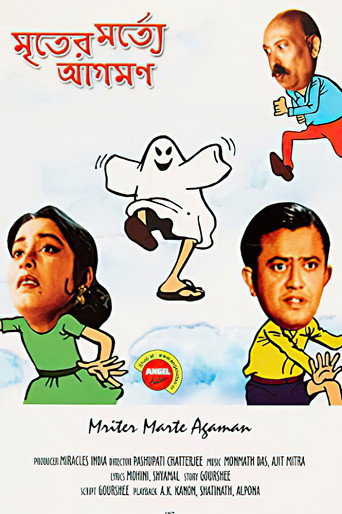
Mriter Marte Agaman
Biswanath or Bishu a young warm-hearted man, made a "Mukti Fauj" in Hell against Jamraj. He also planned to escape with Lolita, Heena, Rita, Ghosai babu and others. After a lot of hurdles, they managed to fly away from Hell. They came back to Earth with expectations, but unfortunately, time was changed. All of them faced some unbearable situations which really made them sad. Bishu came to know his wife got married to a wrestler. Lolita's boyfriend Montu da was busy with some other lady. All these experiences helped them realize the changing time. As a result, Bishu with his mates decided to go back to Hell. Earth was unable to give them sufficient space to live a happy life.
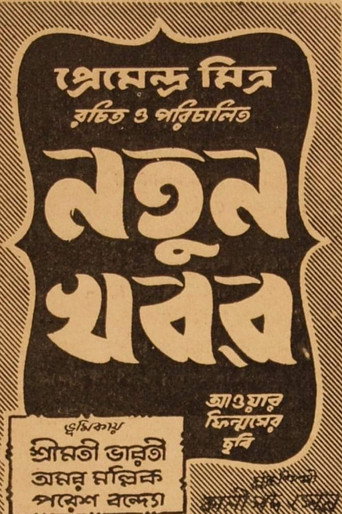
Natun Khabar
A 1947 Bengali Film directed by Premendra Mitra.

The Desolate Beach
A writer meets five widows on a train to Puri. As the six lives begin to intertwine, the theme of the taboos of widowhood emerge; but so, too, does a philosophy of life and hope for the future. The performers collectively won Best Actress at India's National Film Awards in 1964.
Vidyapati
Classic celebration of Mithila's King Shiva Singha's (Bannerjee/Kapoor) love for his wife while chronicling the influence of the pacifist court poet Bidyapati (Sanyal). Invited to the royal court by the king, Bidyapati arrives with his faithful follower Anuradha (Kanan Devi). Queen Laxmi (Chhaya Devi) falls in love with the poet, much to the distress of the king. The king falls ill and starts neglecting his royal duties until Anuradha persuades him that true love does not need reciprocation. The queen, equally distressed by her divided loyalties, contemplates suicide, encouraged by the prime minister who is worried by the nefarious impact of Bidyapati's poetry on the king.
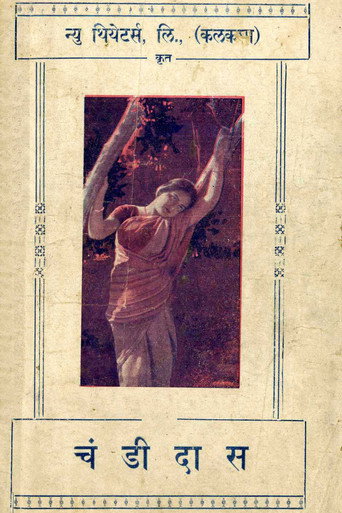
Chandidas
This film is about Chandidas, a legendary 15th-C. Bengali Vaishnavite poet whose biography remains obscure but was an influence on the better documented Chaitanya (1486-1533), a school teacher who promoted the Vaishnavite ideology in Bengal, mostly through hymns about the Radha-Krishna legend.
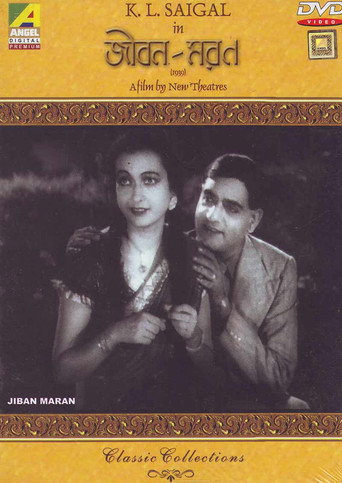
Jiban Maran
A famous radio singer Mohan (Saigal) is in love with Geeta (Leela Desai). When he goes to his friend a doctor, TB Specialist, Bijoy (Bhanu) for a check-up, he is found to be in an advance stage of TB. Meanwhile Leela's dominant mother and aunt (Nibhanani and Manorama) had been against the poor Mohan and had set their eyes on same Dr. Bijoy, the son of a family friend. When Mohan comes to know of it, and also his sickness, he decides to walk away from them. He is intercepted by a doctor who ran a sanatorium for TB patients, with some new method of treatment. Geeta couldn't forget Mohan and waited, but in the end she had to relent. Then it was known that Mohan was alive and cured. What would now Bijoy and Geeta do? There wedding was the next day, and they have to go ahead with it, the honour of both the families were at stake. Mohan too aware of his being exposed, disappears from the sanatorium and is untraceable.
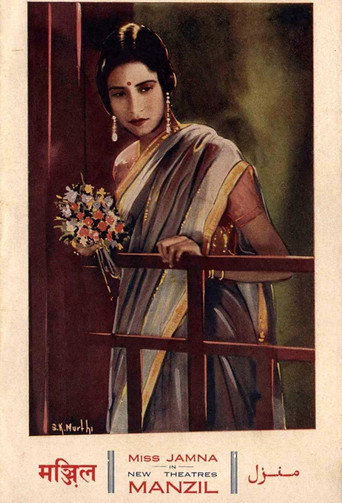
Grihadaha
The poor but educated Mahim and his childhood friend, the rich but conservative Suresh, both fall in love with the same woman, the liberated Achala. Mahim marries her and they move to a village but she cannot forget Suresh. Her smoldering unhappiness takes the form of resentment towards the orphaned Mrinal, raised by Mahim's father, and receives a dramatic visual embodiment when their house burns down. Mahim falls ill, is rescued by Suresh, and nursed back to health by Achala. On a train (a metaphor for the irreversibly linear course of life) to a health resort where Mahim is supposed to convalesce, Suresh on a rainswept night gives in to temptation and elopes with Achala. At the end of the film, there is a dubious reconciliation as Achala is shown following Mahim's 'good' traditionalism with Sharatchandra's barely concealed hostility towards Achala's liberated Brahmo Samaj upbringing.
Production
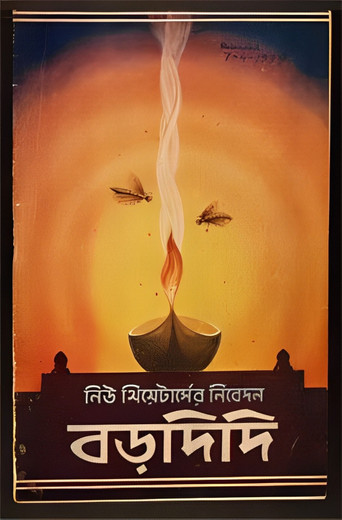
Baradidi
Suren, prevented by his family from pursuing a university career, leaves home and becomes a tutor to Pramila. He falls in love with her widowed elder sister Madhavi who, although returning his love, has him sacked to save the situation.
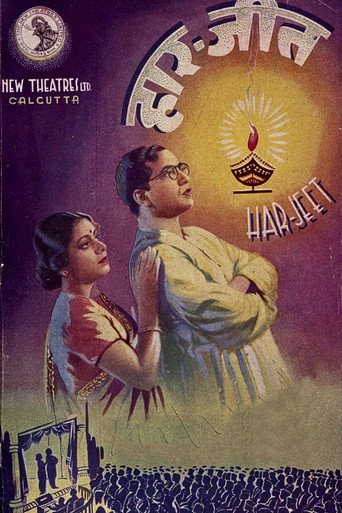
Har Jeet
Set in the early 20th C. Calcutta Theatres industry. Kamala (Kanan Devi) is the star of the Ruby Theatre owned by her guardian Maheshbabu. Narendra (Sanyal) is the equally popular star in the rival Bina Theatre, which he abandons to join the Ruby repertoire when he falls in love with Kamala. In a lyrical sequence in the countryside, they marry in a poor peasant setting. Narendra then shows his true colours and forbids Kamala to continue her acting career. She returns to the stage anyway while Narendra stays among the peasants. He later returns to the Bina Theatre and its success is intercut with the bankruptcy of the Ruby Theatre.
Har Jeet
Set in the early 20th C. Calcutta Theatres industry. Kamala (Kanan Devi) is the star of the Ruby Theatre owned by her guardian Maheshbabu. Narendra (Sanyal) is the equally popular star in the rival Bina Theatre, which he abandons to join the Ruby repertoire when he falls in love with Kamala. In a lyrical sequence in the countryside, they marry in a poor peasant setting. Narendra then shows his true colours and forbids Kamala to continue her acting career. She returns to the stage anyway while Narendra stays among the peasants. He later returns to the Bina Theatre and its success is intercut with the bankruptcy of the Ruby Theatre.
Swami Vivekananda
1955 Hindi language Indian feature film