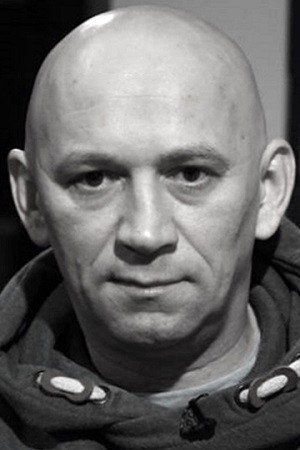
Alexandr Rastorguev Movies, TV Shows, and Filmography
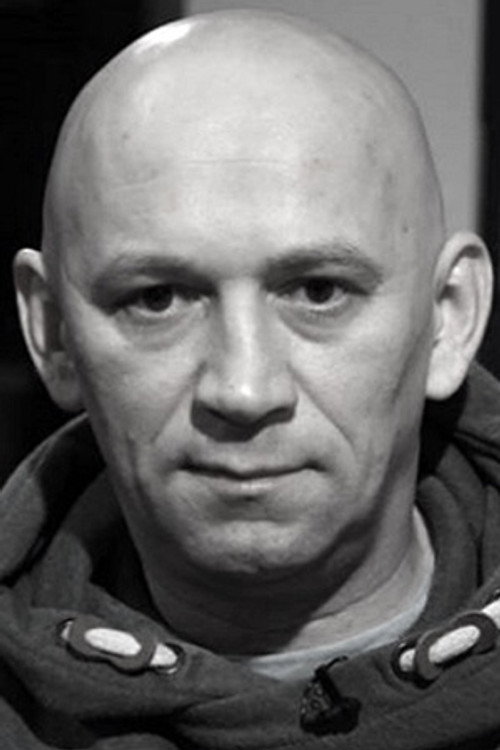
Alexandr Rastorguev
Directing
Biography
Alexander Yevgenyevich Rastorguev (Russian: Алекса́ндр Евге́ньевич Расторгу́ев; born 26 June 1971, Rostov-on-Don — died 31 July 2018, Sibut, CAR) was a Russian documentary filmmaker, cinematographer and producer. He is considered one of the main and iconic Russian documentary director. He is close in his search for the "new drama", the direction of work Theatre.doc. He collaborated with Vitaly Mansky as a screenwriter and producer. Born in 1971 in Rostov-on-Don (USSR, Russia). He studied at the Faculty of Philology of Rostov State University. In 1999, he graduated from the State Academy of Theater Arts in St. Petersburg (1998). He worked as a director of GTRK "Don-TR". For shooting the film "Clean Thursday", the creative team of the film was dismissed by the management of "Don-TR". He worked in the St. Petersburg edition of the NTV TV channel. In 2001, he organized the Kino Studio. As a director, he co-directed the documentary films "I Love You" (2010) and "I Don't Love You" (2012) with the documentary filmmaker Pavel Kostomarov. The films were presented at several foreign film festivals (France, the Netherlands). In 2011, Alexander Rastorguev presented his film "I Love You" in the competition program of the Rotterdam Festival. In 2009, Alexander Rastorguev wrote specifically for OpenSpace.ru manifesto of the new cinema. He was killed on July 30, 2018, along with two colleagues — Orhan Dgemal and Kirill Radchenko — in the Central African Republic. There, according to media reports, he made a film about the activities of the "Wagner Group".
Filmography Movies
Acting
Rastorhuev
On July 30, 2018, documentary filmmaker Alexander Rastorguev was killed in the Central African Republic. He left a unique mark on Russian cinema, but managed to do much less than he could. "Rastorguev" - a portrait of one of the brightest and most free filmmakers of our time; direct speech and fragments of films, forming a single statement about the meaning of art, homeland and pain.
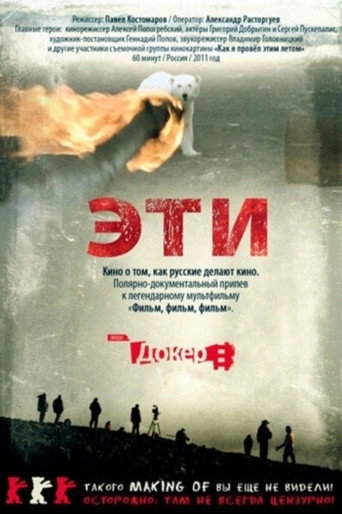
These
The film is about Alexey Popogrebsky's film "How I spent this summer". In the film, there are no tedious reflections of the actors and the director about their film against the background of posters of the same film. But there is life itself, real, unmasked, and, despite the sea of comicality, it makes you horrified at how the Russian film process can take place…
More Than Love
A program on the relationship between the filmmaking couple Larisa Sheptiko and Elim Klimov.
Production
These
The film is about Alexey Popogrebsky's film "How I spent this summer". In the film, there are no tedious reflections of the actors and the director about their film against the background of posters of the same film. But there is life itself, real, unmasked, and, despite the sea of comicality, it makes you horrified at how the Russian film process can take place…
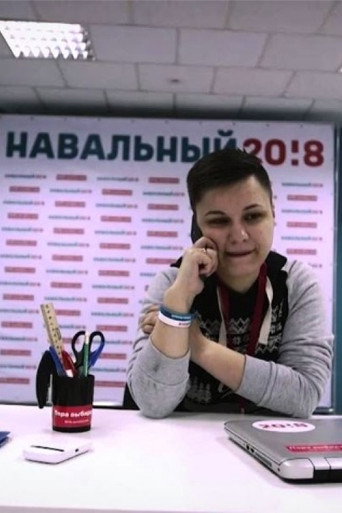
I am Nobody
Alexey Navalny began his election campaign in the regions of Russia with a trip to Murmansk. Thousands of citizens came to his rally, and in the rain. This is the success of local activists who organized the rally and selflessly campaigned. Alexander Rastorguyev and Dmitry Kuvaldin spent several days together with the coordinator of Navalny's Murmansk headquarters, Violetta Grudina , an LGBT activist who was attacked because of her sexual orientation.
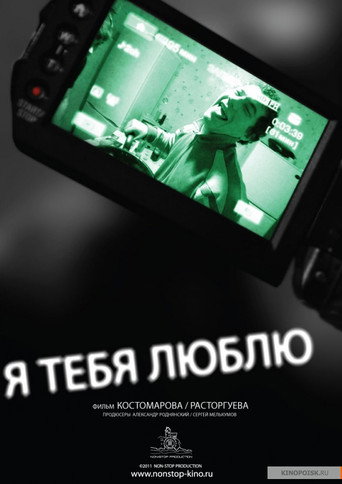
I Love You
These are the stories of the three guys,three friends, living in a city in the south of Russia. In the course of a year they recorded their everyday lives with a small HDcam. This record is what comprises the movie and to what it is dedicated. Our heroes are eighteen years old and they live average lives: work, have parties and, fall in love. But finally they will have to make those most important of personal choices which will define their future.

I Don't Love You
A youth comedy about the tragedy of the first love. An experiment in the area of the film language. REC, accidentally pressed in the middle of a fight. Jealosies, breakups, reunions. A few bedroom scenes, shot with a home camera. Cries and whispers of the urban outskirts. The audience of the film are both Bergman fans and YouTube viewers.
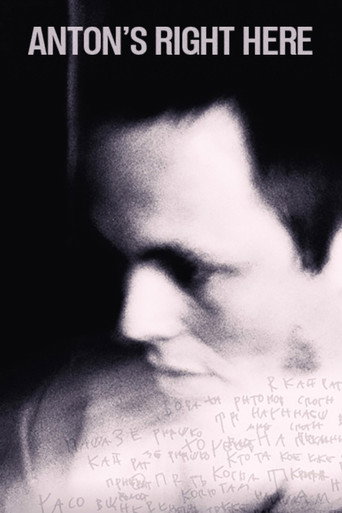
Anton's Right Here
How is it possible to feel someone elses pain? The hero of this film is an autistic boy. His life is divided between an apartment with peeling walls on the outskirts of a large city, and a mental hospital. Anton comes into the frame when he is on the point of becoming a patient at a residential neuropsychiatric institution, a place where people with the sort of diagnosis that he has do not live long. The author, the camera, the hero. The distance between them shrinks with every passing minute, and the author has to enter the shot and become a character in the story. However, it is not a story about how one person helped another, but about how one person recognized herself in another. About how there is Another who lives in each of us and must be destroyed every day inside of us in order to survive.
The Term. Beginning of a Big Story
The documentary project The Term was conceived in May 2012. When the directing trio commenced mapping the Russian sociopolitical landscape, Vladimir Putin had just settled into the Kremlin for his third term. The original experimental format of “documentary bulletins,” which were published daily online, allowed for wide-ranging content; in the feature film version, however, the filmmakers focused solely on the members of various opposition groups. Nevertheless, the work’s neutral position remains and viewers have to interpret the objectively presented situations for themselves. The main characteristics of this strongly authentic movie include close contact with the protagonists, precise editing, and an effectively controlled release of information.
Kids and Mothers
Irina Gora, without a roof over her head, at the age of 39 inadvertently gave birth to her friend's son. Vanka turned out to be smart. We have been observing him, eight years old, from the moment of his birth. A kaleidoscope of events: a zoo, marmons, a city bath. But everything in the life of mother and son turned Vanya's letter to Putin.
Norilsk in the First Person
Producer Aleksey Pivovarov and director Alexander Rastorguev started working on a documentary film dedicated to the 80th anniversary of Norilsk Nickel, moving away from the traditional form and choosing the web-doc genre. As a result, the project team created an interactive website, norilskfilm.com, filled with many short stories, archival materials and virtual panoramas.
Contract
Competition for the post of personal secretary.
Gora
Gora is a frail middle-aged woman who works as a janitor in one of the sleeping areas of Rostov-on-Don. She has neither a residence permit nor a medical policy, and in order to somehow save money, she lives with a friend in a barracks for 500 rubles. The two-storey densely populated hut survived only because it stood in the landfill for its entire history. People have been living here for more than forty years. They grow geese and goats in summer kitchens, boil themselves, drink, love, die. A nunnery is located a hundred meters from the barracks. There are 15 girls of all ages in it, in essence, this is the same barrack, only completely whitewashed and surrounded by a brick fence. They say the abbess is a former prison guard. Passion is no worse than in the cool Mexican series.
Gallery