Albert Hetterle Movies, TV Shows, and Filmography
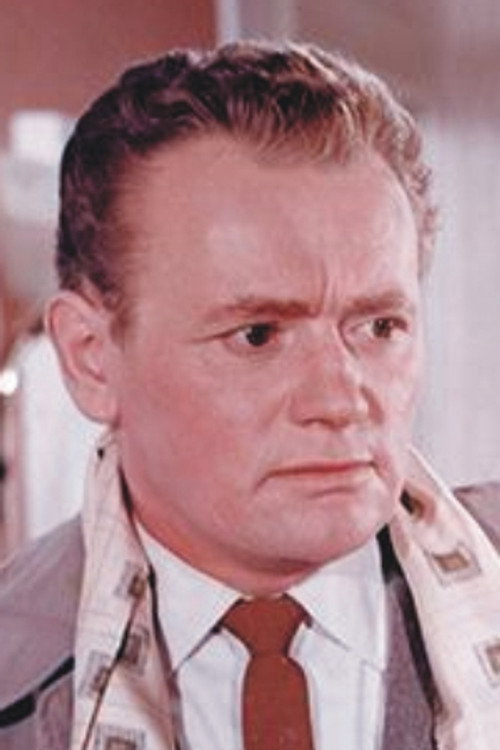
Albert Hetterle
Acting
Biography
No biography available.
Filmography Movies
Acting
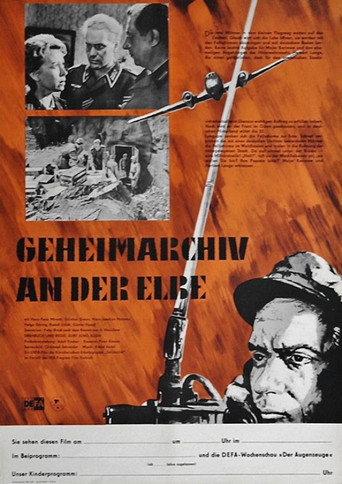
Secret Archives on Elbe
The World War II. 1944. Nazis staged a cache which stores archival documents of its agents, rescued from the east during the retreat, near a small German town Ostburga.

The Second Track
In this German drama, Brock, a railroad inspector, witnesses a robbery at a train depot. He recognizes the thief, but turning the man in would mean acknowledging he knows him, thus revealing his own complicity with the Nazi war machine. When Brock’s daughter and her boyfriend begin to question him about the incident, will the secret he’s kept for nearly 20 years finally be exposed?
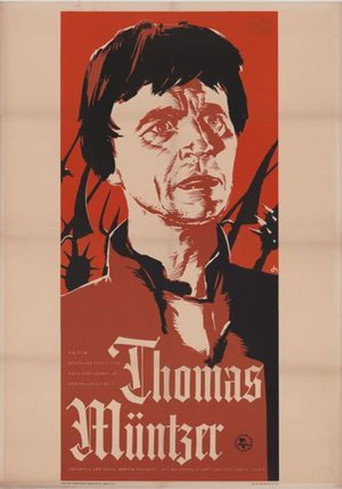
Thomas Müntzer
In 1523, young Thomas Müntzer arrives with his wife Ottilie in the Thuringian village Allstedt to assume the rectorate. As a follower of Luther′s teachings, he finds in the Bible not only reasons for clerical, but also for secular reforms. But when Luther turns away from the rural population after a discord with Müntzer, it is Müntzer who becomes the peoples′ spokesman. He is forced to go to Southern Germany, where he convenes with revolting farmers. But his way leads him back to Thuringia. In 1525, he and Heinrich Pfeiffer form the centre of the Thuringian peasant uprising in Mühlhausen, but their success is diminished by the fact that peasants and craftsmen don′t seem to be able to work together. In Frankenhausen, Müntzer becomes the leader of a peasants′ army that is set to fighting the ruler′s army – and sustains a devastating loss. Müntzer is arrested and sentenced to death by decapitation for his insurgency.
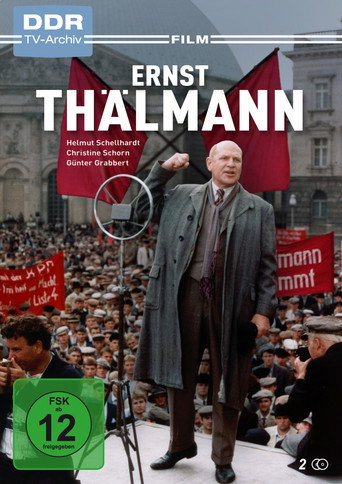
Ernst Thälmann
This elaborate two-part television film features a section from the life of communist worker leader Ernst Thälmann. It begins with the bloody riots on May 1, 1929 in Berlin, in which police officers shot at demonstrating workers, and ends with February 7, 1933, when Thälmann appeared as a speaker at the illegal meeting of the Central Committee of the Communist Party of Germany in goat neck. This period was marked by the struggle of the Communists against the ever stronger National Socialists and the rise of Adolf Hitler.
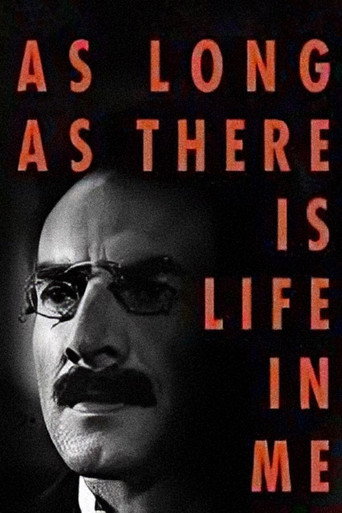
As Long as There’s Life in Me
This is part one of a two-part biopic about Karl Liebknecht. In 1914, Germany is arming itself for war. Karl Liebknecht, left-wing revolutionary Social Democrat, workers’ leader and a virulent antimilitarist, is one among 110 SPD members of Parliament who vote against approving war loans. From then on, he is considered un-German and a traitor to the fatherland, and his own party’s leadership turns against him. Despite threats, Liebknecht speaks up against the war and writes the manifesto “The Main Enemy Is at Home.” Even when he is arrested and charged with treason, he does not surrender.
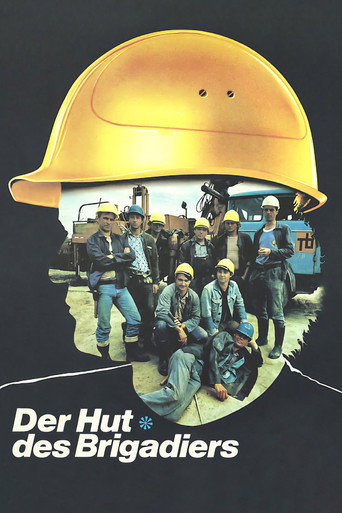
The Brigade-Leader’s Hat
Young construction worker Ralf Reider leaves his home village Katzsprung in the Rhön mountains during the "Berlin Initiative". In the capital, he wants to earn enough money in construction to build his own house for his wife and his child. But Ralf is an unconventional character who soon becomes an outsider because of his behaviour.

Antigone
A fearless Antigone, refusing to allow the dishonored body of her murdered brother Polynices to be devoured by vultures and dogs, defies the Thebian tyrant Creon by burying him.
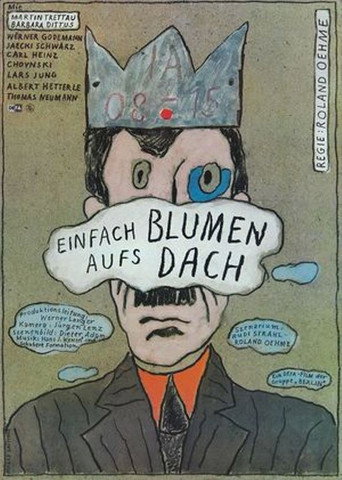
Einfach Blumen aufs Dach
Mechanic Hannes Blaschke and his wife Maxi, who works as a bus driver, have just become happy parents of twins. Now they have a serious transportation problem: Their Trabant is far too small for the grown family that furthermore includes two sons and a dog. Thanks to the support of a state secretary and of his brigade, Hannes acquires a Tschaika – a limousine that is normally restricted to representational purposes – for a small price. Whereas Maxi views the state carriage only as a useful means of transportation, Hannes enjoys the unusual pre-emption he is receiving for the spectacular car. Hannes, who normally is just a humble guy, starts to grate his colleagues with his new affectations. Thus, they teach him an effective lesson: They decorate the state carriage with flowers and thus bring Hannes back down to earth in a humorous way.
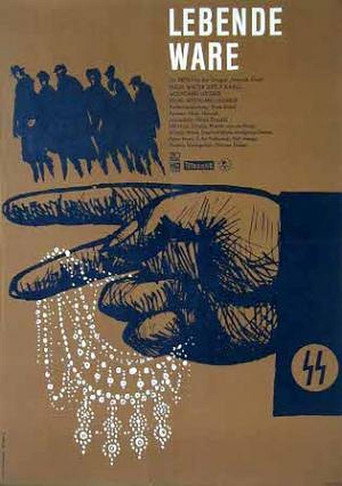
Lebende Ware
In 1944, SS-Obersturmbannführer Becher arrives in Budapest in order to obtain material for the Waffen-SS. At the same time, he starts to gather private property by offering an insidious choice to the corporation′s Jewish majority shareholder, Dr. Chorin: Either Chorin assigns the company to Becker "on his own free will" – thereby obtaining the permission to travel abroad - or he his family will end up in an extermination camp.
Stine
Gallery