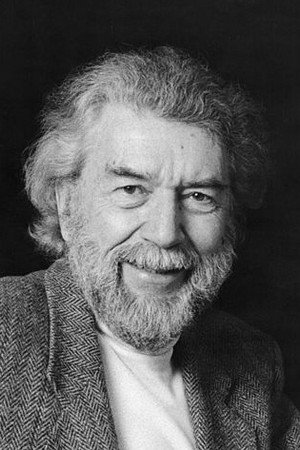
Alain Robbe-Grillet Movies, TV Shows, and Filmography
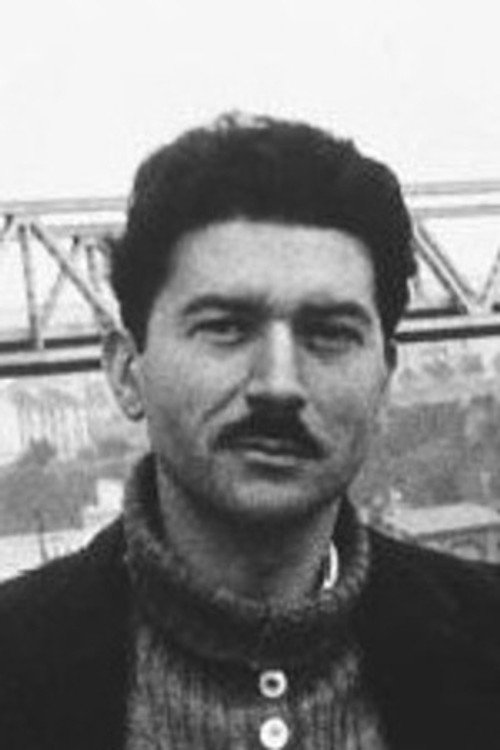
Alain Robbe-Grillet
Writing
Biography
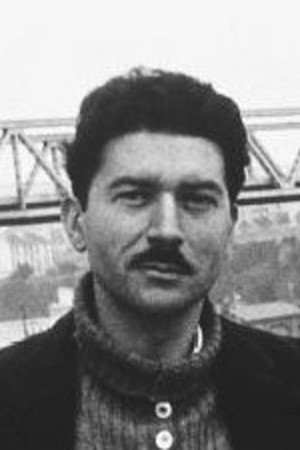
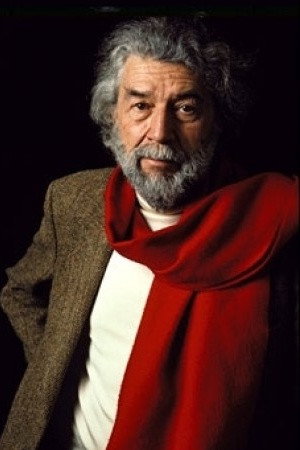
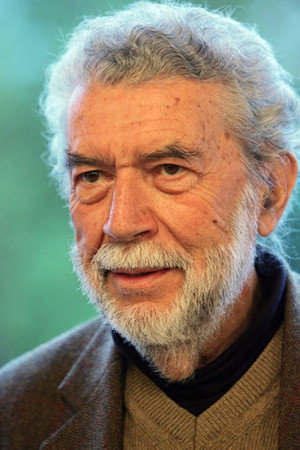
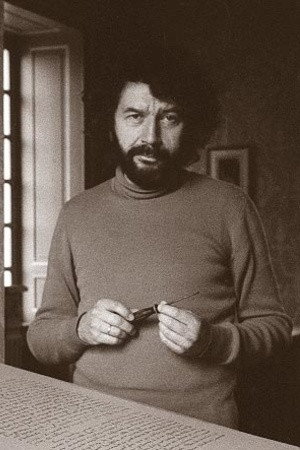
Alain Robbe-Grillet was a French writer and filmmaker. He was, along with Nathalie Sarraute, Michel Butor and Claude Simon, one of the figures most associated with the Nouveau Roman (new novel) trend. Alain Robbe-Grillet was elected a member of the Académie française on March 25, 2004, succeeding Maurice Rheims at seat No. 32. He was married to Catherine Robbe-Grillet (née Rstakian). Robbe-Grillet's career as a creator of fiction was not restricted to the writing of novels. For him, creating fiction in the form of films was of equal importance. His film career began when Alain Resnais chose to collaborate with him on his 1961 film Last Year at Marienbad. The film was nominated for the 1963 Academy Award for Writing Original Screenplay and won the Golden Lion when it came out in 1961. In the credits it was presented as a film equally co-authored by Alain Robbe-Grillet and Alain Resnais. Robbe-Grillet then went on to launch a career as a writer-director of a series of cerebral and often sexually provocative feature films which explored similar themes to those in his literary work (e.g. Voyeurism, The Body as Text, The 'Double'). He commenced with L'Immortelle (The Immortal One) (1962) which won the much-coveted Louis Delluc Prize of 1962. This was followed by his most commercially successful film after Last Year at Marienbad: Trans-Europ-Express (1966) starring Jean-Louis Trintignant, who continued to work with Robbe-Grillet on his next four films: his French-Slovak film L'homme qui ment/Muž, ktorý luže (The Man Who Lies) (1968), L'Eden et après/Eden a potom (Eden and After) (1970), Glissements progressifs du plaisir (Progressive Slidings towards Pleasure) (1974) and Le jeu avec le feu (Playing with Fire) (1975). It was almost a decade before the appearance of his next feature film, La belle captive (The Beautiful Captive) (1983), but Alain Robbe-Grillet was fortunate enough to enlist the services of Henri Alekan as cinematographer, the visionary master of cinematography for the films of Jean Cocteau. Subsequently more than a decade passed before Alain Robbe-Grillet got behind the lens again, this time filming a mystery thriller on a small Greek island with Fred Ward starring as the confused Frank in Un bruit qui rend fou. Robbe-Grillet (A Maddening Noise, aka: The Blue Villa) (1995). Before his death in 2008 Robbe-Grillet was to direct one more film, Gradiva (C'est Gradiva qui vous appelle) (2006) which brought once more to the fore his preoccupation with sadism and bondage in his fiction. Perhaps the best introduction to the film works of Alain Robbe-Grillet is the volume The Erotic Dream Machine by Professors Roch C.Smith and Anthony N. Fragola. Also of great value is the volume In the Temple of Dreams: The Writer on the Screen in which Robbe-Grillet himself explains the relationship between his literary fiction and his cinematic fiction (ed. Edouard d'Araille, 1996).
Filmography Movies
Acting
Alain Robbe-Grillet
A “Cinéastes de notre temps” series episode directed by french film critics Noël Burch and André S. Labarthe, originally aired in two parts.

Trans-Europ-Express
A movie producer, director and assistant take the Trans-Europ-Express from Paris to Antwerp. They get the idea for a movie about a drug smuggler on their train and visualize it while taping the script.
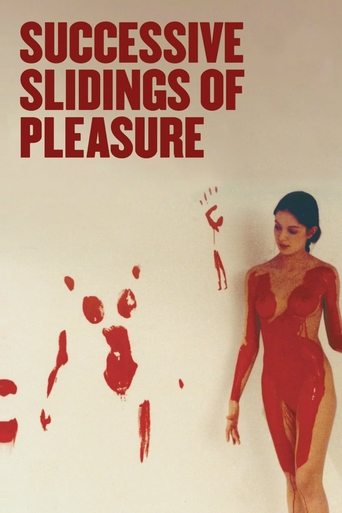
Successive Slidings of Pleasure
A young woman is questioned by the police and the judges, suspected of being a modern witch. The girl who shared her apartment has been found dead, and a pair of scissors impaled through her heart, as she lay attached to the bedposts. Apparently, the girl does have powers, to make all people around her fall prey to her spell, glissing progressively into desire, lust, and the unknown.
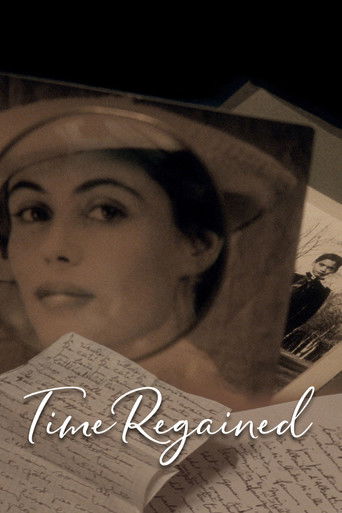
Time Regained
In early 1920s France, an author, lying on his deathbed, looks at various photographs and is flooded with memories of the people and events that have shaped his life.
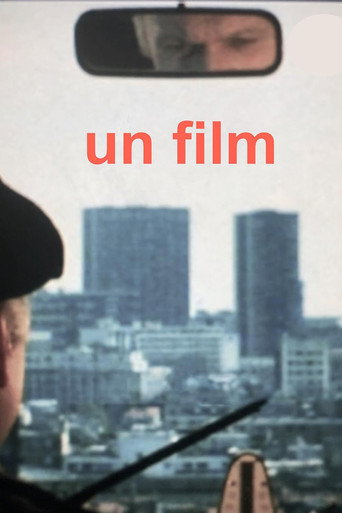
Un film (autoportrait)
The shooting diary of a film shot in France and in the United States. Using photos of Paris and of New York City, excerpts of his former films, statements by friends of his and shooting sequences of the film itself, tormented filmmaker Marcel Hanoun has made a heterogeneous and unclassifiable film about the difficulty of filming.
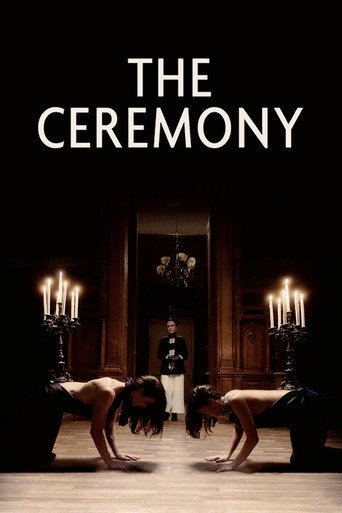
The Ceremony
In an extravagant house in Paris, people gather for sexual ceremonies in luxurious environments. The 83-year-old author, Catherine Robbe-Grillet is the brains and heart behind the erotic role playing. She is the dominatrix who controls what goes on and her partner, who is 31 years her junior, has promised to submit to her smallest command. Lina Mannheimer portrays a puzzling, intellectual and deeply fascinating woman who, accompanied by her husband Alain Robbe-Grillet, has dedicated herself to investigating sex both in life and in literature. The sadomasochistic ceremonies are presented with an intense presence and cinematic focus in this beautiful and thought-provoking debut film about desire, power and silk scarves.
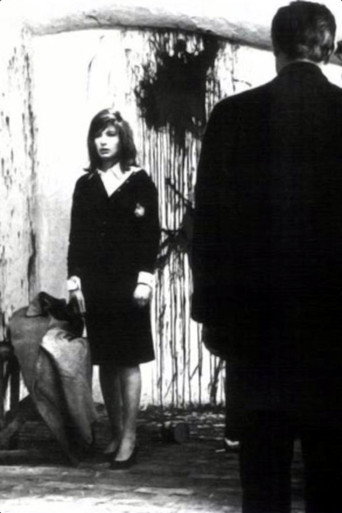
Dear Antonioni
A documentary portrait of Michangelo Antonioni based on Roland Barthes' essay.
The Battle for 'I Am Curious-Yellow'
A documentary about the film, I am Curious-Yellow (1967), and how it made it into the USA and changed film in USA forever by breaking the USA Obscenity Codes.

Alain Robbe-Grillet
Documentary on Alain Robbe-Grillet, part of the TV series "Un Siècle d'écrivain"
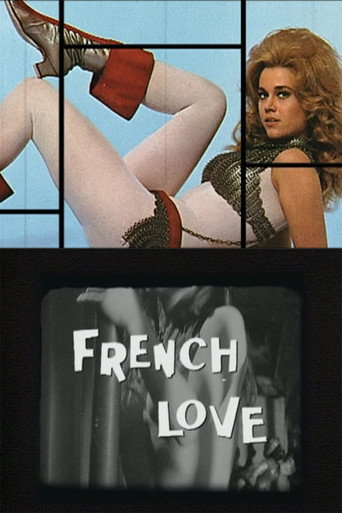
French Love
Between the first stripping of Brigitte Bardot, at the end of the 1950s, and the beginning of the 1980s, French cinema developed a certain taste for eroticism and pornography.
Production
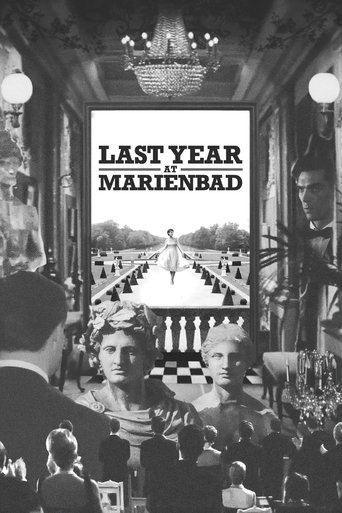
Last Year at Marienbad
At a weekend gathering, a man tells a woman that they had spent time there together a year prior. But, the woman has no recollection whatsoever and is convinced that he is simply fabricating the encounter. The more he speaks about their activities the previous year however, the more compelling he becomes. The question remains however – did they meet previously or not?
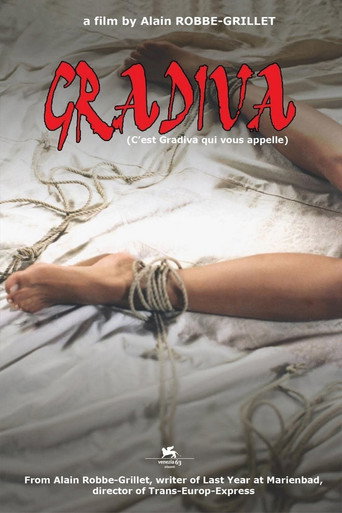
It's Gradiva Who Is Calling You
An English historian travels to Morocco to work on a study of the painter Delacroix. He hears of a rare series of engravings and embarks on a search for them that takes him through the mysterious streets of the ancient medina. He becomes obsessed with the figure of a beautiful blond woman dressed in white that he sees there. but it appears that she may have died years before.
It's Gradiva Who Is Calling You
An English historian travels to Morocco to work on a study of the painter Delacroix. He hears of a rare series of engravings and embarks on a search for them that takes him through the mysterious streets of the ancient medina. He becomes obsessed with the figure of a beautiful blond woman dressed in white that he sees there. but it appears that she may have died years before.
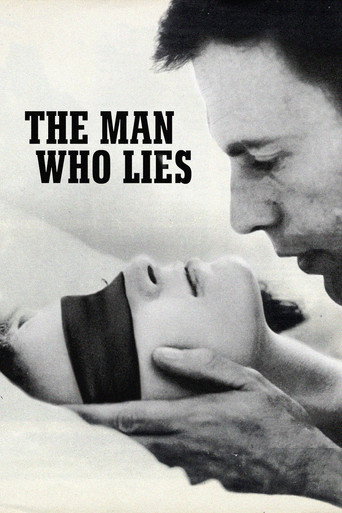
The Man Who Lies
A man may or may not have betrayed a resistance fighter during World War II. He has supposedly been shot down by the Nazis and wanders into town. Mourning the death of an unseen comrade, he is taken in by the family of the dead rebel. He engages in a superfluous affair and witnesses the lesbian relationship between the man's sister and a female servant. When passions subside, the family has doubts about the reliability of the man's story.
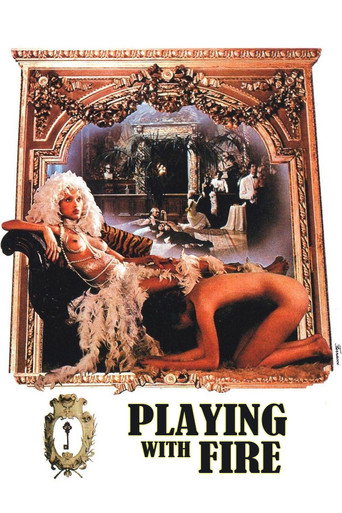
Playing with Fire
A banker hires a seedy detective to find his daughter and keep her safe from kidnappers.
Playing with Fire
A banker hires a seedy detective to find his daughter and keep her safe from kidnappers.
N. Took the Dice
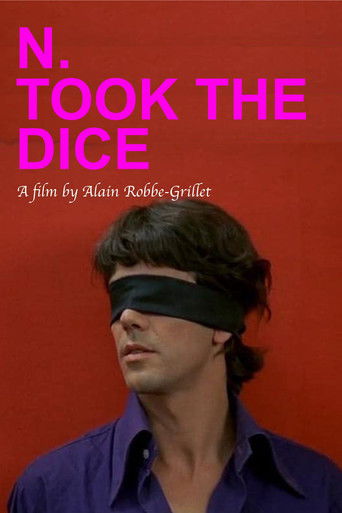
N Took the Dice is essentially a reworking of Eden and After made possible by the roll of a dice (scenes from the 1970 film were combined with outtakes and additional footage in an aleatory way). Robbe-Grillet was always interested in music and since he perceived Eden and After to be serial in nature, it only made sense that its sister film would stand in opposition to that.
N. Took the Dice
N Took the Dice is essentially a reworking of Eden and After made possible by the roll of a dice (scenes from the 1970 film were combined with outtakes and additional footage in an aleatory way). Robbe-Grillet was always interested in music and since he perceived Eden and After to be serial in nature, it only made sense that its sister film would stand in opposition to that.
Trans-Europ-Express
A movie producer, director and assistant take the Trans-Europ-Express from Paris to Antwerp. They get the idea for a movie about a drug smuggler on their train and visualize it while taping the script.
Eden and After
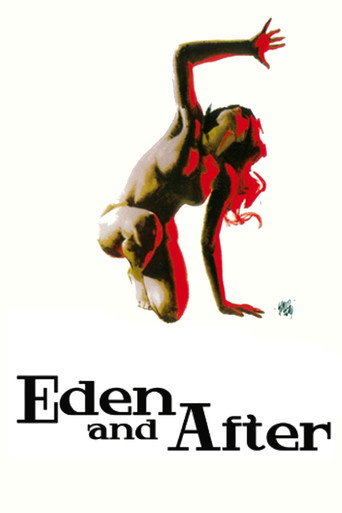
A group of French students are drawn into the psychological and sexual games of a mysterious man called Duchemin. Once they sample his "fear powder" the students experience a series of hallucinations.
Gallery