Adam Levý Movies, TV Shows, and Filmography
Adam Levý
Sound
Biography
No biography available.
Filmography Movies
Production
Cook F**k Kill
Jaroslav is a handsome and seemingly good-natured son, father and decent husband. But in fact he is pathologically jealous of his wife Blanka and very much afraid that she will leave him one day with their three children. Jaroslav and his family do not hesitate to employ violence, deceit and terror against others, which ultimately leads to a family tragedy.
Brotherhood
Jabir, Usama and Uzeir are three young brothers in a Sunni family of shepherds. Since childhood, their father Ibrahim has rigidly trained them in the principles of the Quran and has filled their minds with stories of the Bosnian War.
Czech children
One of the most notable anti-communist initiatives in the late 80s was the movement called Czech Children. They published their manifesto in May 1988, and the signatories were mostly young people. The movement expressed independent thinking and significantly contributed to the demonstrations in 1988 and 1989, especially during the so-called Palach Week in January 1989. In the document "Czech Children," the authors focus primarily on a young audience, aiming to remind them that the need to stand against injustice is not bound by age.
The Shadow over Prague
The Nazis decided to awaken the dark forces of the Old Prague legends in order to use (and abuse) them to destroy the world. The only one who can stop them is Perak.
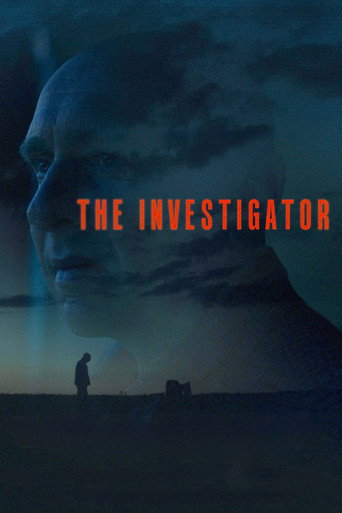
The Investigator
Even after more than 25 years since the dreadful war crimes had been taking place in former Yugoslavia, this tragic history is far from over – be it for the victims’ families, conflicting nations or for a Czech investigator who comes back to the region to carry on in his work after so many years. The documentary return voyage follows not only the paths of fleeing war criminals, but is driven by an effort to capture a part of the ethic mission of the then newly formed International Criminal Court in The Hague along, in its double nature: based on an independent investigation of war crimes, to strive for reconciliation in cases of multifarious ethnic, national and other conflicts.
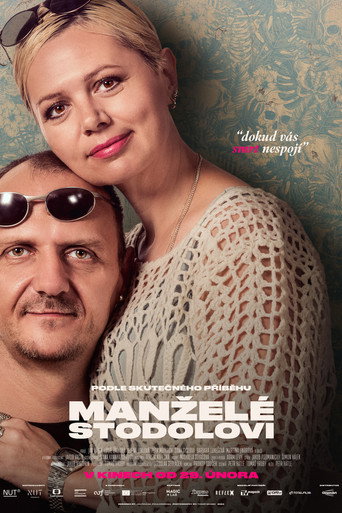
Mr. and Mrs. Stodola
During an unsuccessful burglary attempt, Jaroslav accidentally kills his old neighbour. His wife, Dana, concocts a plan to make the murder seem like an accident. Another neighbour stands in the way, however, whom they also have to eliminate. Dana convinces Jaroslav to help her. They attempt to use this incident to solve some of their financial problems. With the vision of easy money, the Stodolas start killing elderly people. Initially, they proceed to cover up the murders as accidents or suicide and the police do not do much to prove it otherwise.
Mr. and Mrs. Stodola
During an unsuccessful burglary attempt, Jaroslav accidentally kills his old neighbour. His wife, Dana, concocts a plan to make the murder seem like an accident. Another neighbour stands in the way, however, whom they also have to eliminate. Dana convinces Jaroslav to help her. They attempt to use this incident to solve some of their financial problems. With the vision of easy money, the Stodolas start killing elderly people. Initially, they proceed to cover up the murders as accidents or suicide and the police do not do much to prove it otherwise.
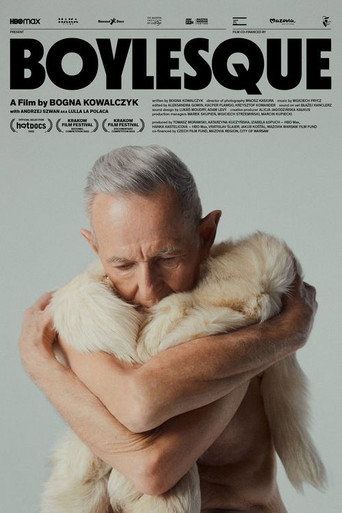
Boylesque
At 82 years old, Lula is every inch the rebel. An openly gay man in communist Poland, he organized underground parties and after-curfew salons of men inside private apartments. He enthusiastically took up drag, despite a fiercely homophobic culture, to free himself from the stifling correctness of the 80s. But now, he's an old, single man in a youth-obsessed world. His friend was crushed by depression and killed himself, but somehow Lula, now Poland's oldest drag queen, remains buoyant. Is he escaping loneliness with his constant clubbing, looking for love yet again to insulate himself against what he knows is coming? Lula isn't waiting for approval. Filmmaker Bogna Kowalczyk's energetic portrait pairs with her subject's kinetic drive, right down to the stellar soundtrack and nimble camerawork. Whether it's meeting fans at Pride or selecting an artist to sculpt his specialty crematorium urn, try to keep up with a man who knows life is to be lived out loud.
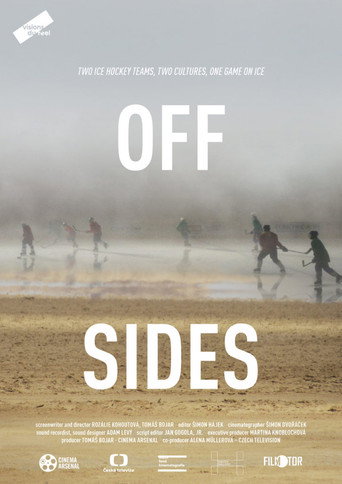
Off Sides
When the junior ice hockey team from the small town of Náchod, in the Czech Republic, sets off in a bus to Morocco to play the away game in an exchange programme, the players and their coach expect an easy victory and a cultural shock: “bring ear plugs”, the coach suggests them with a touch of undisguised condescendence, so as not to hear the call to prayer early in the morning. Both on and off the ice, Rozálie Kohoutová and Tomáš Bojar’s camera focuses on a few teenagers and their exchanges, simultaneously funny and cruel, in a clumsy English.
Over the Hills
Father and son Vít and Grisha travel to Russia to visit the boy’s mother and sister. Why did their previously harmonious family split in two? A documentary road movie about the distance between two Slavic countries, the difficulties of fatherhood and puberty, and the alienation between people who should, in theory, be the closest of all.